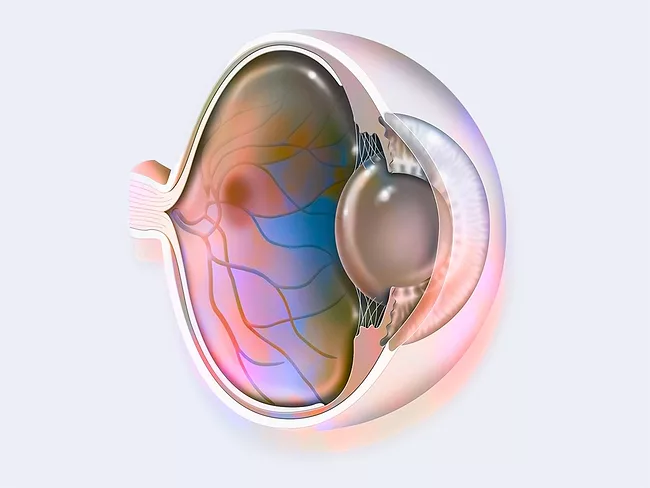
Hypoxia-inducible factors (HIFs) play a central role in how retinal cells respond to low oxygen, but their chronic activation has been linked to the development of age-related macular degeneration (AMD) and related retinal disorders.
Cirrus Therapeutics Inc. has closed an $11 million seed financing to advance its pipeline of gene and cell therapies designed to preserve sight and extend ocular healthspan in patients with chronic blinding diseases.
To say the team at Ollin Biosciences Inc. has some experience in ophthalmology would be an understatement. The company, which emerged from stealth with $100 million in venture capital and two in-licensed assets with plans to add more, brings to the table years of expertise from work on blockbuster retinal disease drugs Lucentis (ranibizumab, Roche AG) and Vabysmo (faricimab, Roche AG).
After Outlook Therapeutics Inc. took receipt of another complete response letter (CRL), Wall Street focused on the odds that the U.S. FDA will demand a new study with ONS-5010, or Lytenava (bevacizumab-vikg) against wet age-related macular degeneration (AMD).
After announcing in April that it would discontinue development of its lead candidate, sozinibercept (OPT-302), in wet age-related macular degeneration (AMD), Opthea Ltd. has come to a settlement agreement that will allow it to avoid bankruptcy and continue operations.
After announcing in April that it would discontinue development of its lead candidate, sozinibercept (OPT-302), in wet age-related macular degeneration (AMD), Opthea Ltd. has come to a settlement agreement that will allow it to avoid bankruptcy and continue operations.
Aussie gene therapy company Mirugen Pty Ltd. has emerged from stealth mode from the Center for Eye Research Australia in Melbourne, toting a AU$4.5 million (US$2.9 million) seed round that will see it optimize its lead candidate to treat retinitis pigmentosa.
Aussie gene therapy company Mirugen Pty Ltd. has emerged from stealth mode from the Center for Eye Research Australia in Melbourne, toting a AU$4.5 million (US$2.9 million) seed round that will see it optimize its lead candidate to treat retinitis pigmentosa.
Valitor Inc. has presented preclinical results on VLTR-559, its long-acting anti-VEGF biologic candidate for durable wet age-related macular degeneration (AMD). VLTR-559, developed using Valitor’s proprietary Multivalent Polymer (MVP) technology, demonstrated prolonged ocular retention and maintained high potency even after months in ocular tissues.




-and-Raymond-Wong-(R).webp?height=488&t=1755204408&width=650 "Mirugen co-founders Keith Martin (L) and Raymond Wong (R)")