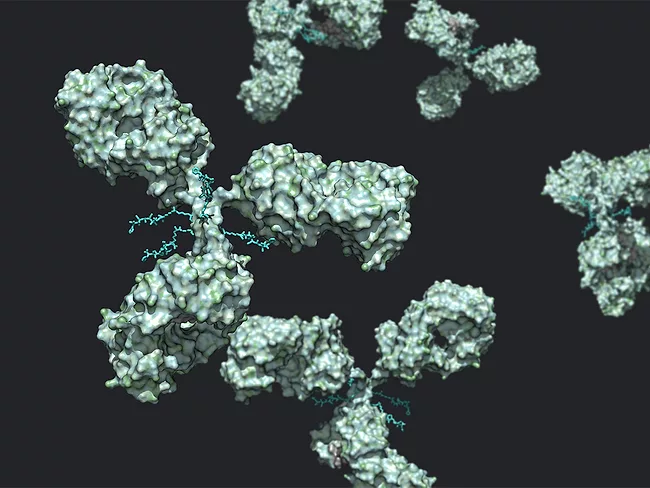
The U.S. FDA issued a complete response letter in October 2023 for Dupixent (dupilumab) in treating chronic hives but has now approved the monoclonal antibody for the indication. The approval makes Dupixent the first targeted biologic the agency has approved in the past 11 years for chronic spontaneous urticaria.
Despite missing a phase II study’s primary endpoint in moderate to severe asthma, Sanofi SA sees a way forward to a phase III program in the crowded disease space. Preliminary results showed the annualized exacerbation rate endpoint wasn’t met at the highest dosage of amlitelimab. Those numbers, at week 48, showed nominal significance at the medium dose.
In a roadmap to change animal testing requirements for INDs, the U.S. FDA said its new approach will improve drug safety, hasten the evaluation process, and lower costs for companies and patients. It’s another step in a process of changing rules put in place decades ago.
Beigene Ltd. said it is shutting down development of its anti-TIGIT antibody, ociperlimab (BGB-A1217), after the humanized IgG1-variant monoclonal antibody failed a phase III trial in lung cancer. The move is one of many in a string of anti-TIGIT immunotherapy failures.
Roivant Sciences Ltd. CEO Matt Cline said the firm’s unit Immunovant Inc. with FcRn blocker batoclimab has established “frankly a new bar” in myasthenia gravis (MG) as the New York-based firm reported top-line results from its phase III study and first data from period 1 of the phase IIb study with the same drug in chronic inflammatory demyelinating polyneuropathy. The data look promising, and Immunovant intends to use the findings to help advance second-generation FcRn prospect IMVT-1402 in both indications. Potentially registrational trials are planned. The U.S. FDA has granted IND clearance.
China’s National Medical Products Administration (NMPA) approved the country’s first injectable teprotumumab biosimilar from Innovent Biologics Inc. under the brand name of Sycume (teprotumumab N-01) to treat thyroid eye disease on March 14. The NMPA on March 15 accepted Simcere Pharmaceutical Group Ltd.’s NDA of deunoxavir marboxil (ADC-189) tablets, a product originally developed by Jiaxing Andicon Biotech Co. Ltd. to treat influenza A and B.
Leyden Laboratories BV added a fresh $70 million in financing to advance Panflu, its phase II-ready intranasal pan-influenza prophylactic medicine, while acquiring Cov Biotechnology Pte. Ltd. (Covbio) and its zoonotic virus-targeting portfolio to prepare for the next pandemic.
Yesterday’s first part of this two-part series surveyed bispecific antibodies for immunological and inflammatory (I&I) disease. Apart from bispecifics, Leerink analyst Thomas Smith lately has proven interested in I&I overall, unveiling his “five for 2025” in a January report that listed five indications with “potential for disruption” in the year ahead.
Analysts were pleasantly surprised by the positive phase III data reported for Kyowa Kirin Co. Ltd./Amgen Inc.’s rocatinlimab, a T-cell rebalancing therapy, in moderate to severe atopic dermatitis.
Antibody-drug conjugate (ADC)-focused Callio Therapeutics debuted on March 3 with the closing of a $187 million series A financing round based on cancer drug technology and assets in-licensed from Hummingbird Bioscience Pte Ltd.
 RSS
RSS