Interleukin-18 (IL-18) is a pro-inflammatory cytokine that plays a crucial role in promoting antitumor immunity by activating T and natural killer (NK) cells. However, the therapeutic use of wild-type IL-18 has faced limitations due to its susceptibility to neutralization by IL-18 binding protein (IL-18BP), short in vivo half-life and unfavorable physicochemical properties.
Forx Therapeutics AG has discovered new bicyclo heteroaryl poly(ADP-ribose) glycohydrolase (PARG) inhibitors reported to be useful for the treatment of cancer.
Hanmi Pharmaceutical Co Ltd. has synthesized new heterobicyclic compounds acting as transcriptional coactivator YAP1/transcriptional enhancer factor (TEAD) interaction inhibitors and reported to be useful for the treatment of cancer.
Colorectal cancer (CRC) accounts for 9.3% of cancer-related deaths worldwide. The levels of circulating immune cells in patients with CRC have been reported to undergo significant alterations, concretely in lymphocyte subsets.
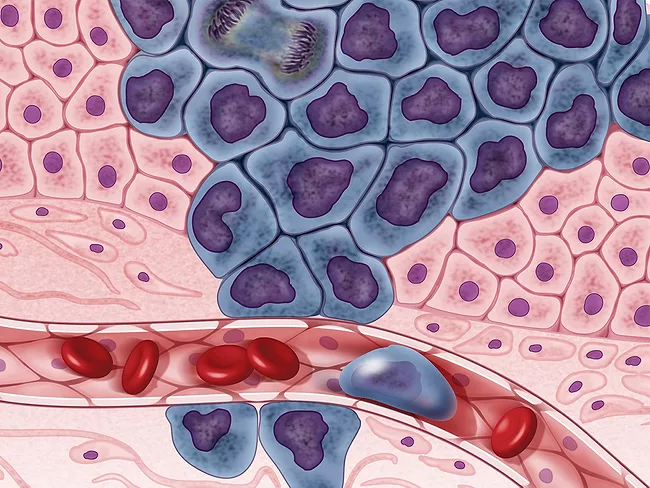
In the current landscape of cancer research, much attention is focused on the tumor microenvironment (TME) at both the primary site and established metastases. However, the early micrometastatic niche remains poorly understood. Researchers from the Hospital del Mar Research Institute (HMRI) have pinpointed T cell immunoglobulin and mucin domain 3 (TIM3) as a key vulnerability in tumor micrometastasis, revealing a new target to halt metastatic progression at its origin.
Compounds acting as histone acetyltransferase KAT6A (MOZ; MYST-3) and KAT7 (HBO-1; MYST-2) inhibitors are reported in an Ideaya Biosciences Inc. patent as potentially useful for the treatment of cancer.
Deciphera Pharmaceuticals LLC has described new dual serine/threonine-protein kinase B-Raf (BRAF) and/or RAF proto-oncogene serine/threonine-protein kinase (RAF1; c-Raf) and microtubule destabilizers (tubulin polymerization inhibitors) potentially useful for the treatment of cancer.
Malignant gliomas, which include glioblastomas, are the most frequent primary brain cancer and are associated with extremely poor prognosis. They nearly always recur after treatment, rapidly leading to death.
Lung cancer is the most frequent cause of cancer-related death in both men and women worldwide. Current treatments can fail because of variable responses in different types of patients, drug resistance, poor tumor penetration and systemic toxicity, prompting the continuing search for better therapeutics.

 RSS
RSS