The FDA’s device center is required to develop and publish special controls for devices that are deemed class II items via the de novo petition process, and five such declarations were posted Dec. 1 to the Federal Register. One of these de novo classifications, for conditioning tools for eating disorders, was the subject of a de novo petition filed in 2007 and granted in 2011.
Device makers have historically struggled to maintain adequate procedures for corrective and preventive action (CAPA) and complaint handling (CH), and two warning letters posted to the FDA website suggest these are still sore spots. Invacare Corp., of Elyria, Ohio, and Smiths Medical ASD Inc., of Minneapolis, were both cited for CAPA and CH deficiencies.
While the FDA’s reaction to the results of the Nov. 30 advisory hearing for the COVID-19 therapy molnupiravir is difficult to predict, demand for rapid antigen tests may jump considerably when this or any such product is approved. That increased demand could crunch supplies of these tests due to the convergence of any such approvals, the upcoming holiday season, and the 2021-22 flu season, a convergence that could hamper efforts to roll out these new therapies.
A number of members of the U.S. House of Representatives have penned a letter to the Centers for Medicare & Medicaid Services (CMS) in support of the Medicare Coverage of Innovative Technology (MCIT) rule, the second time in recent weeks the agency has heard from Congress. The net effect of these letters is to suggest that Cures 2.0, which would provide Medicare coverage of breakthrough devices, is not on solid footing, which if true would suggest that the Biden administration’s Advanced Research Projects Agency for Health (ARPA-H) is similarly endangered.
The U.K. National Institute of Health and Care Excellence (NICE) issued two health technology assessments dated Nov. 24, including one that gives a guarded recommendation for devices used to narrow the coronary sinus as a treatment for refractory angina. Neovasc Inc., of Richmond, British Columbia, touted the news as a positive for its Reducer device, given that this is the first instance in which NICE has lent any support for a device to treat the condition.
The U.S. Court of Appeals for the Federal Circuit recently decided an appeal of a patent lawsuit involving Cardionet LLC, of Conshohocken, Pa., invalidating the Cardionet patent for lack of subject matter eligibility. While the patent offers a significant improvement in the functionality of any computer that uses the Cardionet algorithm, the Federal Circuit declared that the invention does nothing more than use the computer as a tool to express an abstract idea.
The FDA has continued a series of device risk classifications with the formal announcement that general containment systems used with power morcellators will henceforth be deemed class II, moderate-risk devices.
Medical science has not yet convincingly duplicated the remarkable properties of cartilage, an omission that sustains an epidemic of life-altering knee replacement surgeries. Anthony Ratcliffe, CEO of Synthasome Inc., of Del Mar, Calif., said on a recent FDA webinar that companies might want to consider the lowly goat as the animal model of choice in preclinical studies of cartilage products because “the cost, ease of management, and the social aspects were all manageable” with goats.
The FDA has issued new risk classification orders for two series of products, including in vitro diagnostics for hepatitis C, two of which the agency down-regulated from class III to class II. However, blood lancets for multiple uses on more than one patient has been elevated from class I to class III, a change that has no impact on any products currently available on the U.S. market.
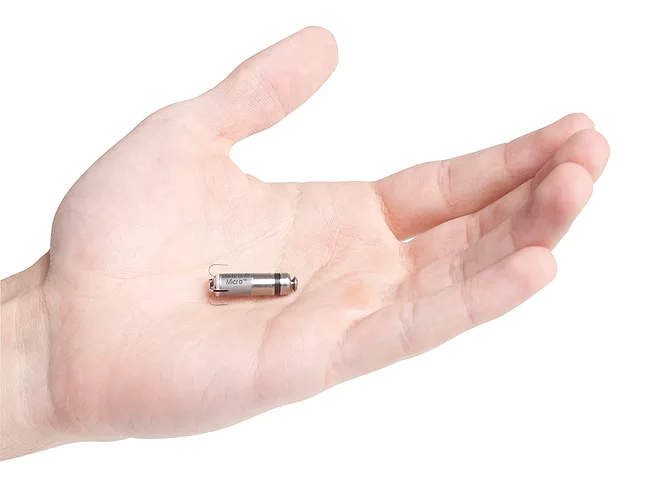
Dublin-based Medtronic plc’s Micra pacemaker was a groundbreaking device when the FDA approved the leadless pacemaker in 2016, thanks to the elimination of the hazards associated with pacemaker leads. However, the FDA said recently that the risks associated with cardiac perforation with leadless pacemakers, such as tamponade or death, might be higher with the Micra than with pacemakers with leads.