BioWorld. Link to homepage.

Clarivate
  • BioWorld
  • BioWorld Science
  • BioWorld Asia
  • Data Snapshots
    • Biopharma
    • Medical technology
    • Infographics: Dynamic digital data analysis
    • Index insights
    • NME Digest
  • Special reports
    • Infographics: Dynamic digital data analysis
    • Trump administration impacts
    • Under threat: mRNA vaccine research
    • BioWorld at 35
    • Biopharma M&A scorecard
    • Bioworld 2025 review
    • BioWorld MedTech 2025 review
    • BioWorld Science 2025 review
    • Women's health
    • China's GLP-1 landscape
    • PFA re-energizes afib market
    • China CAR T
    • Alzheimer's disease
    • Coronavirus
    • More reports can be found here

BioWorld. Link to homepage.

  • Sign In
  • Sign Out
  • My Account
Subscribe
BioWorld - Thursday, February 12, 2026
Home » Topics » Software » Algorithm

Algorithm
Algorithm RSS Feed RSS

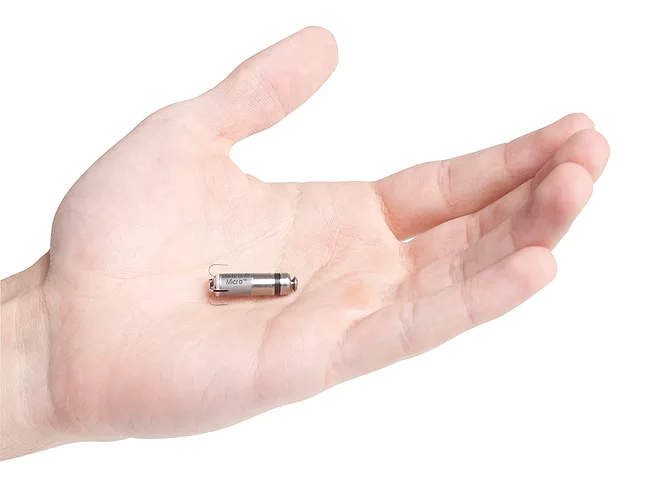
Medtronic-Micra-11-12.png

Medtronic study shows potential of pacemaker to treat more patients

Nov. 12, 2019
By Liz Hollis
Dublin-based Medtronic plc is highlighting results from the MARVEL 2 study showing that an investigational set of algorithms in the Micra Transcatheter Pacing System (TPS) helps those with normal sinus node function and atrioventricular (AV) block.
Read More

Pilot study finds AI algorithm bests surgeons in post-op triage to the ICU

Oct. 31, 2019
By Stacy Lawrence
Deciding which patients should go into the intensive care unit (ICU) after surgery is a difficult call and typically made entirely at the surgeon's discretion. The result is that surgeons typically err on the side of caution by putting more post-operative patients in the ICU than necessary. To aid in better ICU decision-making, physicians at New York University Langone Hospital System (NYU Langone) developed a machine learning algorithm that combs through a patient's electronic medical record to identify relevant factors to determine if they needed the ICU after surgery.
Read More

Physiq gets FDA nod for new vital signs algorithm

Aug. 7, 2019
By Meg Bryant
The U.S. FDA has cleared the way for Physiq Inc., of Naperville, Ill., to market its continuous ambulatory respiratory rate algorithm, adding to the company's portfolio of cloud-based analytics for biopharma and health insurance companies. The 510(k) notification will allow Physiq to boost its higher-level artificial intelligence (AI) platform with validated vital signs inputs.
Read More

Olive Healthcare receives FDA approval for abdominal fat monitoring device Bello

July 29, 2019
By Jihyun Kim
HONG KONG – Olive Healthcare Inc., a South Korean biotech startup, said its abdominal fat scanner Bello has received an FDA approval to sell the device in the U.S. The company said it plans to launch the scanner in the country this December, after a market test. The miniature device is portable with a weight of 3.8 oz (107 g), measuring 3.9 inches (10 centimeters) long, 3.1 inches wide and 1.9 inches high.
Read More

Study finds startup Paige's cancer pathology algorithms have clinical-grade accuracy

July 23, 2019
By Stacy Lawrence
Deep learning algorithms developed at the Memorial Sloan Kettering Cancer Center (MSK) were able to distinguish prostate, skin and breast cancer with nearly perfect accuracy in a recent clinical trial. The technology has already been licensed exclusively by New York-based startup Paige.AI, which snapped up a $25 million series A early last year to continue to advance it.
Read More

Algorithms use EHRs to identify candidates for HIV prophylaxis

July 17, 2019
By Mark McCarty
Getting on top of the persistent HIV epidemic requires getting ahead of new cases, but only about 7% of at-risk patients have been advised of a prophylactic drug regime approved by the FDA seven years ago. Two new studies appearing in The Lancet HIV suggest that an algorithm that uses electronic health record (EHR) data can help physicians identify their at-risk patients who are good candidates for pre-exposure prophylaxis (PrEP), thus improving the odds that modern medicine might finally put an end to the scourge of acquired immunodeficiency syndrome.
Read More

AI detection of cardiac arrest breathing sounds via smart speakers developed by UW

June 24, 2019
By Stacy Lawrence
A fast response with cardiopulmonary resuscitation (CPR) for cardiac arrest victims can save their lives, but older adults often are alone in their home or a bedroom when symptoms strike. Researchers at the University of Washington (UW) have developed a machine learning-based system that listens to ambient audio via dedicated smart speakers or smartphones for agonal breathing, the distinctive sound that a person in cardiac arrest makes.
Read More

Apple Heart study seen as first salvo in digital war on AF

March 19, 2019
By Mark McCarty
NEW ORLEANS – The Apple Heart study has accumulated data from more than 400,000 participants in its evaluation of the ability of an algorithm to detect abnormalities that may be indicative of atrial fibrillation (AF), although the enrollment came up short of the target of half a million users. Nonetheless, Mintu Turakhia, a cardiologist at Stanford, Calif.-based Stanford University, said that while the study has some significant limitations, "we now have a footprint for evaluating technology such as this, and how to do this in an appropriate and scalable way."
Read More

Teijin Pharma signs distribution agreements for febuxostat in multiple regions worldwide

April 19, 2011
Previous 1 2 3 4 Next

Popular Stories

  • Today's news in brief

    BioWorld
    BioWorld briefs for Feb. 12, 2025.
  • Illustration of SCAN in Parkinson’s vs healthy subcortex

    SCAN is core circuit affected in Parkinson’s disease

    BioWorld Science
    Parkinson’s disease (PD) is a neurodegenerative disorder that affects movement, and tremor is one of its signatures. But it is a much more wide-ranging disorder,...
  • Woman and 3D brain

    Astellas’ ASP-2246 shows promise in stroke management

    BioWorld Science
    Astellas Pharma Inc. recently presented data regarding ASP-2246, a drug candidate comprised of an mRNA encoding the transcription factor NeuroD1 encapsulated in...
  • News in brief

    BioWorld Asia
    BioWorld Asia briefs for Feb. 10, 2026
  • 3D illustration of skin layers

    TL1A is overexpressed in hidradenitis suppurativa

    BioWorld Science
    Despite the availability of advanced therapeutic options, about 40%-50% of patients with hidradenitis suppurativa do not achieve significant improvement in...
  • BioWorld
    • Today's news
    • Analysis and data insight
    • Clinical
    • Data Snapshots
    • Deals and M&A
    • Financings
    • Medical technology
    • Newco news
    • Opinion
    • Regulatory
  • BioWorld Science
    • Today's news
    • Biomarkers
    • Cancer
    • Conferences
    • Endocrine/metabolic
    • Immune
    • Infection
    • Neurology/psychiatric
    • NME Digest
    • Patents
  • BioWorld Asia
    • Today's news
    • Analysis and data insight
    • Australia
    • China
    • Clinical
    • Deals and M&A
    • Financings
    • Newco news
    • Regulatory
    • Science
  • More
    • About
    • Advertise with BioWorld
    • Archives
    • Article reprints and permissions
    • Contact us
    • Cookie policy
    • Copyright notice
    • Data methodology
    • Infographics: Dynamic digital data analysis
    • Index insights
    • Podcasts
    • Privacy policy
    • Share your news with BioWorld
    • Staff
    • Terms of use
    • Topic alerts
Follow Us

Copyright ©2026. All Rights Reserved. Design, CMS, Hosting & Web Development :: ePublishing