SK Biopharmaceuticals Co. Ltd. is doubling down on AI-powered drug discovery through a new collaboration with Insilico Medicine Inc. valued at more than $2.5 billion. The milestone-heavy deal, announced at the BIO International Convention in San Diego June 22, will pair Insilico’s Pharma.AI platform with SK Biopharm’s central nervous system (CNS) drug development and commercialization capabilities, underscoring Korean and global biopharma efforts to embed AI across the entire R&D lifecycle.
MPM Bioimpact-spawned K2 Therapeutics Inc. inked a license deal plus option agreement, worth $980.5 million apiece, to gain ex-China rights to two of Antengene Corp. Ltd.’s preclinical anticancer bispecific T-cell engager (TCE) assets. The deal, announced June 21, will grant Singapore-based K2 exclusive rights to develop and commercialize Antengene’s ATG-106 outside of mainland China, Hong Kong, Macau and Taiwan.
Laekna Inc. is handing ex-China rights to internally discovered PI3Kα pan-mutant selective inhibitor LAE-118 to U.S.-based Vasque Bio Inc. in a deal worth up to $527 million, marking another asset-monetization move by the Shanghai company as it looks to fund and accelerate development across its oncology and metabolic disease pipeline.
Biopharma deal value through the first five months of 2026 reached $135.36 billion, outpacing every prior year and topping 2025’s previous high of $103.92 billion. May was the year’s biggest month so far at $41.78 billion in transactions, making it one of the strongest individual months on record, and far outpacing April’s $13.87 billion.
Fresh off a deal with Travere Therapeutics Inc. for civorebrutinib worth more than $1.14 billion, Everest Medicines Ltd. went on a shopping spree, striking three deals in six days to expand its pipeline and geographic reach across Asia Pacific.
Agios Pharmaceuticals Inc.’s potential $665 million deal for Oscotec Inc.’s cevidoplenib, a phase III-ready oral SYK inhibitor to treat immune thrombocytopenia, marks a new chapter of development focused on cancer therapy resistance for Oscotec, CEO Yoon Tae-young said.
On the heels of the multibillion-dollar licensing deal between Bristol Myers Squibb Co. and Jiangsu Hengrui Pharmaceuticals Co. Ltd., Chairman John Moolenaar (R-MI), of the House Select Committee on the Chinese Communist Party, sent a letter to Treasury Secretary Scott Bessent urging him to add biotechnology as a prohibited technology under the Comprehensive Outbound Investment National Security (COINS) Act of 2025.
Hanmi Pharmaceutical Co. Ltd. secured a $1.26 billion deal with Eli Lilly and Co. to out-license ex-Korea rights to sonefpeglutide (HM-15912), a Lapscovery-based glucagon-like peptide-2 analog in development for multiple indications, including an ongoing phase II study of short bowel syndrome. It was one of two billion-dollar Asian company deals signed by Lilly on June 1, with the second transaction involving Haisco Pharmaceutical Group Co. Ltd., of Beijing.
Pfizer Inc. is paying Innovent Biologics Co. Ltd. $650 million up front and up to $9.85 billion in milestones, plus royalties, to collaborate across 12 early stage and de novo antibody-drug conjugates (ADCs) and multispecific antibodies for oncology.
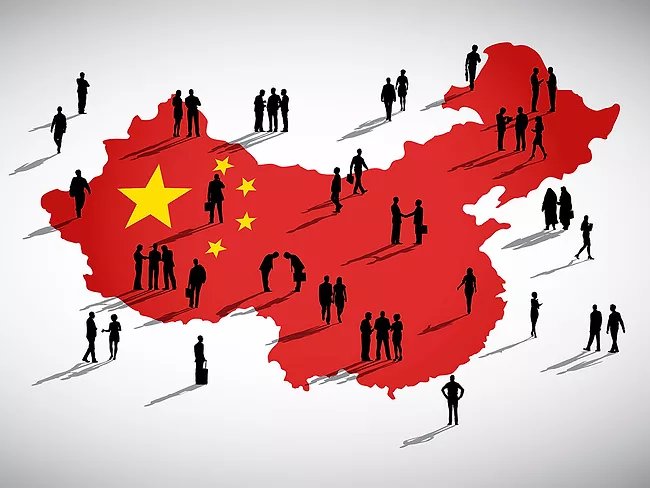
In 2025, China’s outbound life sciences and biopharma deals reached nearly $100 billion, about 12 times the level seen in 2021, underscoring how quickly global appetite for Chinese assets has accelerated, according to a recent report by L.E.K. Consulting.
 RSS
RSS