Wuxi Apptec isn’t going down without a fight after the U.S. Department of Defense added it to the Section 1260H list June 8 as a designated “Chinese military company,” which makes it a “biotechnology company of concern” under the Biosecure Act. “Such designation is mistaken and baseless,” the global contract research, development and manufacturing organization said in an open letter to its life sciences partners. “We will pursue every available avenue to correct this mistake.” That includes appealing the designation.
Wuxi Apptec isn’t going down without a fight after the U.S. Department of Defense added it to the Section 1260H list June 8 as a designated “Chinese military company,” which makes it a “biotechnology company of concern” under the Biosecure Act. “Such designation is mistaken and baseless,” the global contract research, development and manufacturing organization said in an open letter to its life sciences partners. “We will pursue every available avenue to correct this mistake.” That includes appealing the designation.
Japan has granted marketing approval to Oncolys Biopharma Inc.’s oncolytic adenovirus product, Telomelysin (suratadenoturev, OBP-301), for treating esophageal cancer in patients who are not eligible for curative resection or chemoradiotherapy. The approval marks the first oncolytic adenovirus product approved for esophageal cancer.
China’s National Medical Products Administration (NMPA) on June 4 granted conditional approvals to two oncology drugs from Lupeng Pharmaceutical Co. Ltd. and Vcare Pharmatech Co. Ltd., as well as one hemophilia drug developed by Staidson Biopharmaceutical Co. Ltd.
The recent introduction of the bipartisan Biotech Investment National Security Act in the U.S. House has industry and venture capitalists urging lawmakers to take a breath, step back, and consider a less invasive approach than restricting U.S. biopharma deals with Chinese innovators.
Agios Pharmaceuticals Inc.’s potential $665 million deal for Oscotec Inc.’s cevidoplenib, a phase III-ready oral SYK inhibitor to treat immune thrombocytopenia, marks a new chapter of development focused on cancer therapy resistance for Oscotec, CEO Yoon Tae-young said.
If the 2026 American Society of Clinical Oncology (ASCO) annual meeting in Chicago from May 30 to June 3 demonstrated anything about the evolution of China’s biotechnology sector, it was that the industry’s center of gravity is shifting. While Chinese companies once relied heavily on PD-1 antibodies and licensing deals to gain international visibility, this year’s oral presentations showcased a broader innovation base.
Innovent Biologics Co. Ltd.’s Claudin18.2-targeted antibody-drug conjugate (ADC), arcotatug tavatecan (IBI-343, TAK-921), met the primary endpoint in the international multicenter phase III G-Hope-001 trial in advanced gastric cancer, according to interim results.
After a major breach of trust when its data were advertised for sale in China, the UK Biobank will now attempt to recall data previously downloaded by legitimate researchers and seek assurances information has been deleted from local servers.
Total biopharma financing through the first five months of 2026 reached $49.46 billion, the third-highest total for the period in the dataset and more than doubling of 2025’s $21.4 billion over the same stretch.
Biopharma deal value through the first four months of 2026 reached $92.98 billion, outpacing every recent year and running well ahead of 2025’s strong $79.82 billion over the same period. January and February each cleared $30 billion, while March and April totaled $18.05 billion and $13.3 billion,...
Of all the issues that could be on the table at the talks between U.S. President Donald Trump and China President Xi Jinping, the life sciences sector is the “sweet spot” for collaboration between the two countries in a way that would benefit the world, Sen. Thom Tillis, R-N.C., said in a Brookings...
On Sunday, May 17th, 2026, the World Health Organization classified the ongoing Bundibugyo ebolavirus outbreak in the Democratic Republic of Congo (DRC) as a public health emergency of international concern (PHEIC). The rapid escalation to PHEIC is due to several factors. Given the high number of...
Biopharma financing activity is continuing its rebound in early 2026 compared to the past several years. Total funding reached $38.66 billion in the first four months of 2026, more than doubling 2025’s $15.85 billion in the same period and also exceeding 2022 and 2023. While still below the peak...
Chinese biotech Longbio Pharma Co. Ltd. announced its IPO on the Hong Kong Stock Exchange to raise HK$1.362 billion (US$174 million) to progress its lead candidate, LP-003, a next-generation anti-IgE antibody.
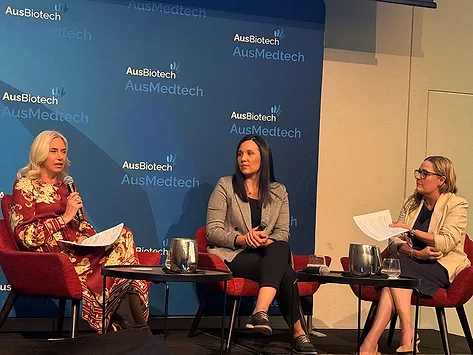
Artificial intelligence, remote monitoring and need-based innovation are beginning to reshape Australia’s medtech sector’s devices, as well as the way health care itself is delivered, according to speakers at the 2026 Ausmedtech conference in Perth May 19-20.
Australian researchers have identified a previously overlooked population of immune cells in the skin that physically restrain melanoma growth by engulfing live melanoma cells, and the discovery could reshape thinking around macrophage-targeted cancer therapies and innate immunity in oncology.
Singapore’s Communicable Diseases Agency on May 7 said that it isolated two residents for hantavirus testing after the individuals disembarked from an Atlantic cruise ship on May 2 and May 6, respectively. The measure comes in response to the cluster of cases from the cruise ship, MV Hondius, that...
China’s National Medical Products Administration has issued final implementation measures for drug trial data protection that mark a significant step toward aligning China’s pharmaceutical intellectual property framework with global standards.
Multiple updates on TROP2-directed antibody-drug conjugates (ADCs) for lung and breast cancers highlight both progress made and opportunities for improvement for the targeted class of cancer therapeutics.
New regulations tighten regulatory oversight of China’s investigator-initiated trials (IITs) but legitimize the pathway that will be open to other modalities beyond cell and gene therapies.
Vincentage Pharma Co. Ltd.’s once-daily oral small-molecule GLP-1 receptor agonist, VCT-220, met the primary endpoints in a pivotal phase III trial in overweight or obese patients in China. Based on the top-line data, the Chengdu, China-based company plans to submit an NDA for chronic weight...
It’s a sure bet when the U.S. Trade Representative releases its annual Special 301 Report that Chile, China, India, Indonesia, Russia and Venezuela will be on the Priority Watch List. The 2026 report was no exception.
The U.S. FDA approved Shionogi & Co. Ltd.’s Xocova (ensitrelvir) as the first oral post-exposure prophylactic option in the U.S. to prevent COVID-19, with the decision coming ahead of a PDUFA target date of June 16.
Pilatus Bio Inc. is working to address a major under-addressed target of current checkpoint inhibitors: metabolic stress within solid tumors. “Traditional immunotherapies release immune ‘brakes,’ but they do not address the underlying metabolic stress in tumors,” Pilatus CEO and cofounder Raven Lin...
Syneron Bio is emerging as one of the most heavily backed new entrants in the macrocyclic peptide space, raising more than $250 million in venture funding and securing a multibillion-dollar deal with Astrazeneca plc as it builds a platform spanning several of the most competitive frontiers in drug...
Excalipoint Therapeutics Inc. launched with an oversubscribed $68.7 million seed financing round to advance a portfolio of T-cell engagers for solid tumors, marking one of the largest early stage financings in China biotech history.
Hematopoietic stem cell research over the past century has shown that leukemia may be driven by an invisible hand of inflammation. The bone marrow and inflammation, then, may hold the keys to preventing blood cancers, according to John E. Dick’s...
Cancer cells expand through mutations – but not just through mutations. They also change their behavior in the absence of underlying genetic alterations. Such plasticity helps the cells both adapt to the cellular stress fueled by out-of-control...
The sea anemone Stichodactyla helianthus, which carpets the Caribbean seafloor, may hold the key to eliminating the senescent cells that survive cancer therapy. A collaboration led by Spanish scientists across several international research...
In October, the Nobel Committee awarded the 2025 Nobel Prize in Physiology or Medicine to Shimon Sakaguchi, Mary Brunkow and Fred Ramsdell for their discoveries in the field of autoimmunity.
Australian researchers have found a drug combination that can bypass the cellular defenses in neuroblastoma that lead to relapse, and the discovery could lead to better treatment strategies for children whose cancers have stopped responding to...
2025 has been the most challenging year in the efforts to fight HIV since at least the advent of antiretroviral therapy. In a report on “Overcoming disruption, transforming the AIDS response,” released last week ahead of World AIDS Day on Dec. 1,...
Breakthrough medicines, billion-dollar deals, spectacular clinical successes and crushing failures all play a part in biopharma’s dynamic story. Developers make scientific advancements with the potential to change everything, only to face regulatory conundrums and ever-fluctuating markets. BioWorld tracks key events in the fast-moving sector every business day. Now, the BioWorld Insider podcast lets you hear directly from the movers and shakers whose collective work is changing how we all live. Join us each week for a new conversation.









 Breakthrough medicines, billion-dollar deals, spectacular clinical successes and crushing failures all play a part in biopharma’s dynamic story. Developers make scientific advancements with the potential to change everything, only to face regulatory conundrums and ever-fluctuating markets. BioWorld tracks key events in the fast-moving sector every business day. Now, the BioWorld Insider podcast lets you hear directly from the movers and shakers whose collective work is changing how we all live. Join us each week for a new conversation.