The U.S. False Claims Act (FCA) is not the only statute governing the submission of false claims to federal agencies thanks to the more than 30 states with their own versions of the FCA. However, the federal government is providing states with more incentives to amplify their FCA-related activities, a development that raises the stakes for companies in the life sciences.
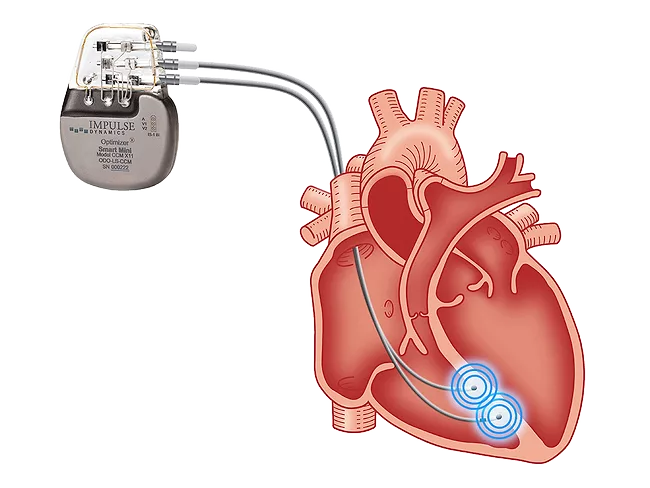
The U.S. Centers for Medicare & Medicaid Services (CMS) has issued a draft coverage memo for cardiac contractility modulation (CCM), which offers coverage with evidence development for the company’s Optimizer line of devices. CMS said it will issue the final coverage memo by Oct. 8, 2025, which will mark the achievement of an objective the company set for itself more than two decades ago.
For the second time in five years, the Centers for Medicare & Medicaid Services (CMS) has proposed to erase the inpatient-onlylist over a span of three years, stating that physicians are capable of deciding which site of service is best for their patients.
The U.K. National Institute for Health and Care Excellence (NICE) has endorsed the use of pulsed field ablation for atrial fibrillation, and while several trusts in the U.K. are already using these devices for their patients, the endorsement is certain to expand utilization in the U.K., which according to data from Clarivate’s Epidemiology Intelligence may come to nearly 4 million.
The U.S. Centers for Medicare & Medicaid Services (CMS) has pulled off the gloves when it comes to spending on skin substitutes in the draft Medicare physician fee schedule for 2026, proposing a payment methodology that would slash spending by 90%. However, the doc fee draft also proposes to simplify the process by which telehealth coverage is provided for a physician service, a move that may significantly expand the types of services that can be handled without an in-office visit.
To the surprise of no one in the device industry, the Medicare national coverage analysis for renal denervation (RDN) includes both radiofrequency and ultrasound technologies, but the agency has listed a range of specialists to be part of the patient’s care team, including but not limited to an endocrinologist.
The continuing proliferation of U.S. state privacy law drew the attention of developers of med-tech wearables for some time, but a recent Senate hearing delivered the news to Congress that a failure to preempt it will slow digital health innovation to a crawl.
The U.S. FDA recently posted three alerts under the agency’s early alert program, including an alert for the V6 and V8 versions of the Sigma Spectrum infusion pumps by Baxter International Inc., which was the result of a mix-up in software installation.
Companies in the life sciences must tread carefully when it comes to the Anti-Kickback Statute, but a recent advisory opinion by the Office of Inspector General lends little clarity on the point.
The med tech patent wars opened a new front in the region of screening tests for colorectal cancer, pitting Exact Sciences Corp., of Madison, Wisc., against St. Louis-based Geneoscopy Inc.