Device makers may find it difficult to avoid running afoul of the Anti-Kickback Statute, but a recent case in the U.S. Court of Appeals for the Seventh Circuit suggests that the statutory definition of a referral is not set in stone.
The U.K. National Institute for Health and Care Excellence (NICE) endorsed the use of the Orbit system by Mindtech Ltd. as a treatment for tics and Tourette syndrome.
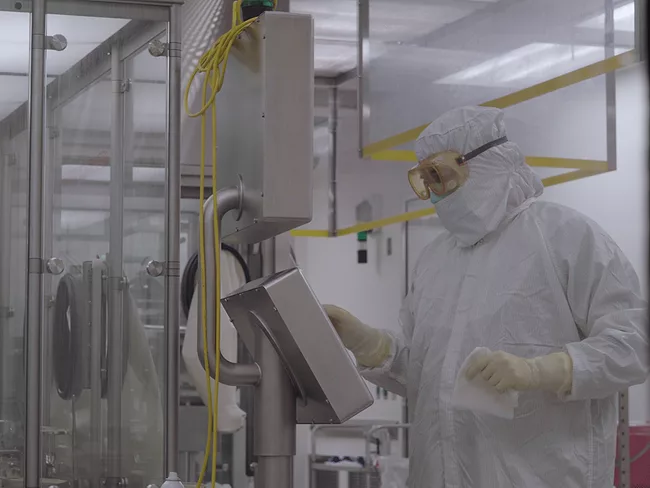
The U.S. FDA typically announces its inspections at facilities located outside the U.S. – a courtesy not extended to domestic manufacturing sites. This is about to change per an agency press release quoting commissioner Marty Makary as describing the disparate treatment as a double standard.
The U.S. FDA in 2018 granted the de novo petition by Seattle-based Adaptive Biotechnologies Corp. for the company’s DNA test for evaluation of residual hematological malignancies, but waited until March 8, 2025, to post notice of the attendant regulation.
Legislators in Washington again are considering a pair of bills that would affect how patents are obtained and sustained including the Patent Eligibility Restoration Act of 2025. This would constitute a big win for companies in the life sciences thanks to provisions that clarify just what is and is not eligible for patent protection.
Few observers think of CPAP machines as common fare where the med-tech patent wars are concerned, but Resmed Corp. recently came away with a win in litigation that resulted in the nullification of the first 20 claims of a CPAP patent held by Cleveland Medical Inc.
The U.K. National Institute for Health and Care Excellence (NICE) opened a late-stage assessment for drug-eluting stents (DES) with an eye toward costs, advising clinicians that they should implant the least expensive DES unit that is clinically appropriate for that patient while the assessment is underway.
Q’apel Medical Inc., of Fremont, Calif., might have thought the company’s withdrawal of the Hippo catheter was nothing but a loss, but Route 92 Medical Inc. managed to shine a positive light on the withdrawal by dropping a patent lawsuit against Q’apel because of the Hippo device.
Physicians aren’t the only ones who see prior authorization (PA) practices as a significant problem, but John Brooks, deputy administrator at CMS, told a med tech audience that a renewed focus on Medicare Advantage plans’ use of PA will not yield tangible results overnight.