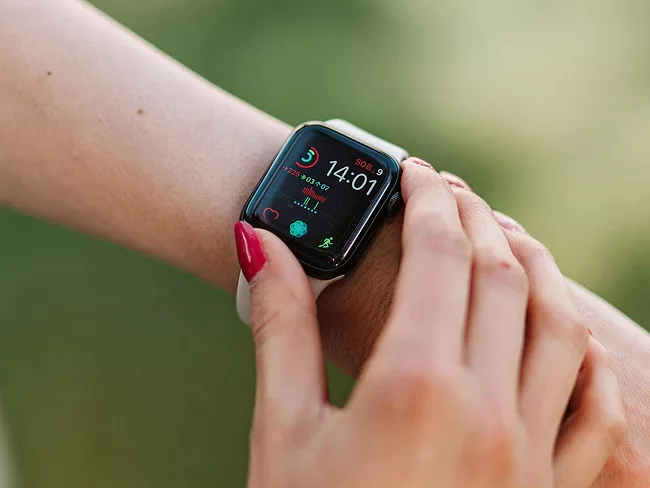
Some Apple Watch users will be able to monitor their blood oxygen levels through their iPhone, thanks to a software update the company planned to issue Aug. 14. The Cupertino, Calif.-based company pulled the feature from its watches in the U.S. in 2024, following a patent dispute with Masimo Corp., of Irvine, Calif., that threatened an import ban.
The question of how skin pigmentation affects the performance of pulse oximeters has drawn the U.S. FDA’s close attention for several years, and the agency issued a draft guidance to address these questions. The draft guidance recommends that new and existing devices be evaluated to establish performance across different pigmentations, a development that would address concerns among clinicians and patients alike.
Movano Inc., dba Movano Health, added some clinical-grade glitz to its Evie ring with a U.S. FDA clearance for the built-in pulse oximeter. Movan’s stock shot up from an all-time low within minutes of the announcement on Dec. 2, as the clearance breathes new life into Movano’s plans to position the ring as a medical device.
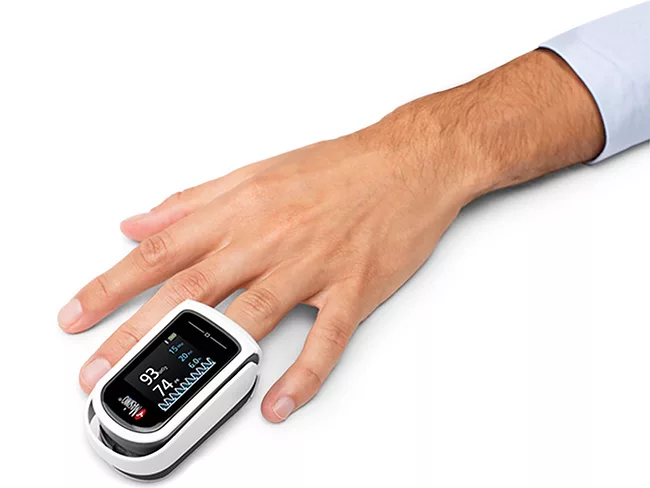
Masimo Corp. received a pinch of good news with the U.S. FDA’s clearance of its medical-grade fingertip pulse oximeter, Mightysat Medical, for over-the-counter (OTC) sale. The device uses the same technology as Masimo’s Set pulse oximetry used in hospitals and clinics.
The story of how pigmentation affects the accuracy of pulse oximetry is still in play in the U.S. even though the FDA issued guidance on the subject in 2013, but the latest advisory hearing on the subject has added a new confounder to the story.
The history of med-tech patent litigation is replete with long-running conflicts that test the willpower of the participants, which increasingly seems to be the case in a series of lawsuits between Masimo Corp. and Apple Inc.
In the latest salvo of the ongoing battle between Apple Inc. and Masimo Corp. over the use of a blood oxygen technology, a U.S. federal appeals court paused an International Trade Commission (ITC) ban on Apple’s watches. Apple reported on Dec. 19 that it would pull the Apple Watch Ultra 2 and Apple Watch Series 9 from its website on Dec. 21 and from its retail locations after Dec. 24, in response to an exclusion order issued by the ITC in October.
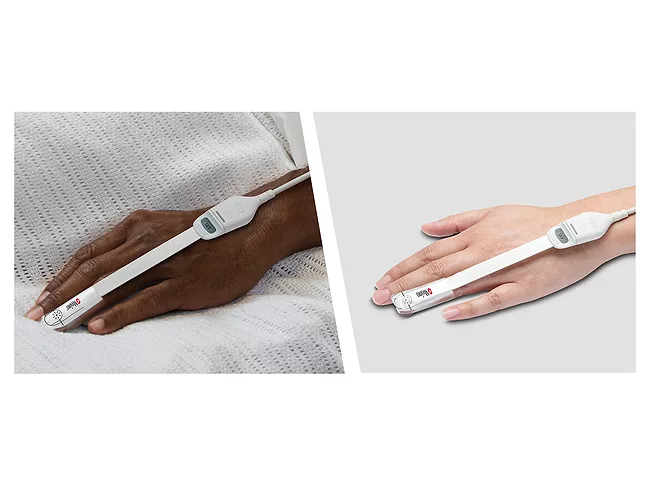
Masimo Corp.’s pulse oximetry technology avoids the dangerous under-recognition of low oxygen levels in people of color that plagues many pulse oximeters on the market, a peer-reviewed study in the Journal of Clinical Monitoring and Computing found. By integrating four additional signal processing engines to the standard algorithm, the Masimo Signal Extraction Technology (SET) system provides equally clinically accurate readings for patients of all skin tones even with movement and at low perfusion.
The U.S. FDA recently convened an advisory committee to address accuracy issues with pulse oximetry devices, with a significant focus on skin pigmentation as a source of noise in the results generated by these class II devices. However, a number of other factors, including obesity and finger size/diameter, also cloud the values generated by pulse oximeters, all of which combine into a large set of variables that premarket studies may have to address before the FDA will issue new marketing authorizations.
Just as the U.S. FDA gathered industry leaders to address the issues posed by pulse oximeters that provide inaccurate measurements for individuals with darker skin, Biointellisense Inc. released its own FDA-cleared technology that provides accurate readings regardless of skin tone. The challenge of inaccurate readings for people with darker skin came to the fore with the COVID-19 pandemic as fingertip pulse oximeters emerged as a convenient method of monitoring for hypoxia at home and in clinics, but frequently overreported oxygen levels in the blood of people of color, leading to delayed treatment.