Despite a strong 2022 for both med-tech deals and M&As, the industry lost ground with both types of transactions in the first quarter of 2023, with deal values falling 32% and M&A values dropping 83%, in comparison with the first quarter of last year.
Quest Diagnostics Inc. evidently found what it was looking for, as it agreed to acquire Haystack Oncology Inc. in an all-cash deal valued at up to $450 million with $300 million at closing and $150 million contingent on meeting specific milestones. Haystack focuses on minimal residual disease (MRD) testing, which can detect residual or recurring cancer in its early stages and help guide therapy decisions using blood samples rather than biopsied tissue. The companies expect the transaction to close before the end of June.
The U.S. Supreme Court has handed down a broadly unanimous decision that allows the targets of Federal Trade Commission (FTC) enforcement action to appeal that action to federal district court prior to the conclusion of the agency’s review or enforcement process. The outcome could prove a boon to life science companies that may now challenge FTC actions against mergers and acquisitions prior to the conclusion of that action, a point at which the company’s options have narrowed drastically.
The U.S. Supreme Court has handed down a broadly unanimous decision that allows the targets of Federal Trade Commission (FTC) enforcement action to appeal that action to federal district court prior to the conclusion of the agency’s review or enforcement process. The outcome could prove a boon to life science companies that may now challenge FTC actions against mergers and acquisitions prior to the conclusion of that action, a point at which the company’s options have narrowed drastically.
Mergers and acquisitions in the U.S. have been under tremendous regulatory pressure over the past two years, a trend that seems likely to continue for the foreseeable future. However, Lina Khan, chairwoman of the U.S. Federal Trade Commission (FTC), said in a March 27 public forum that the agency will not wait for airtight cases to pursue legal remedies in part because the perfect case does not always arise, but also because the courts can be provoked into validating a novel legal theory even if the court does not ultimately side with the FTC.
Detection Technology plc has agreed to acquire X-ray flat panel detector provider Shanghai Haobo Imaging Technology Co. Ltd. to expand in the thin-film transistor (TFT) flat panel detector market. Shanghai-based Haobo Imaging was valued at around €14 million (US$15 million). Finland-based Detection Technology will acquire a 90% stake in the Chinese company while Haobo Imaging’s founder and management will maintain 10% of the shares.
From Carl Icahn’s point of view, Illumina Inc.’s desired reintegration of its former spinoff is more a poisoned chalice than a holy Grail. In his opening salvo to a proxy fight, Icahn published an open letter March 13 to other Illumina shareholders referencing the “extreme displeasure” of investors with Illumina’s “reckless” determination to acquire Grail Inc., despite European regulators’ strong opposition to the deal.
The U.S. Federal Trade Commission (FTC) released its annual premerger notification report, this one for fiscal year 2021, during which more than 3,400 transactions were reported under the Hart-Scott-Rodino Act (HRS Act). Roughly 17% of these were valued at more than $1 billion, but the FTC is facing bad publicity with the resignation of the sole Republican member of the commission, Christine Wilson, who charged FTC chairwoman Lina Khan with abuse of power.
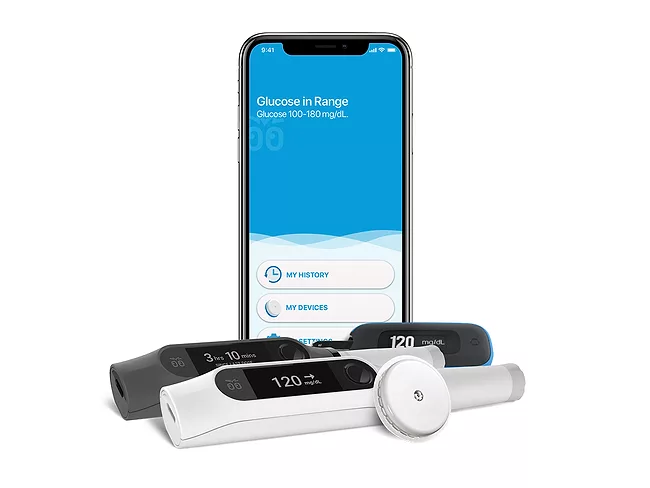
Insulet Corp. went on a buying spree this week with the acquisition of the assets of Automated Glucose Control LLC (AGC) and Bigfoot Biomedical Inc.'s automated insulin delivery (AID) patents. The Bigfoot and AGC deals each rang in at $25 million.