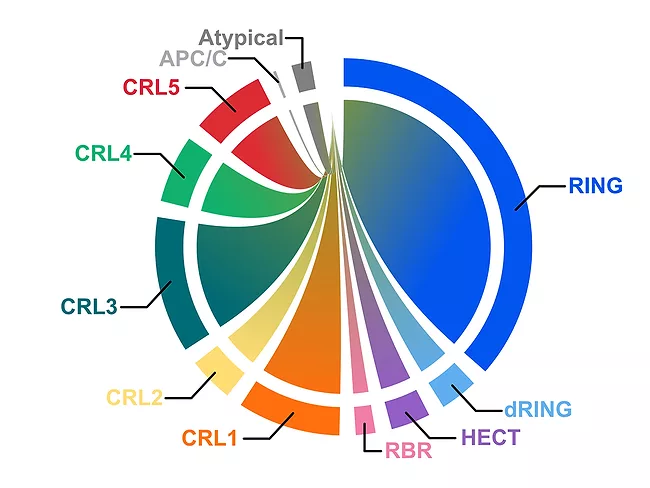
An international team led by Australia’s Walter and Eliza Hall Institute (WEHI) has created the first authoritative atlas for a class of enzymes that regulate almost every cellular process in the human body. The new atlas identifies 672 high-confidence E3 ligases and provides a new reference framework for disease biology and targeted protein degradation research.
Around 10 million people globally live with the life-threatening human T-cell lymphotropic virus type-1 (HTLV-1), yet it remains a poorly understood disease that currently has no preventative treatments and no cure.
Around 10 million people globally live with the life-threatening human T-cell lymphotropic virus type-1 (HTLV-1), yet it remains a poorly understood disease that currently has no preventative treatments and no cure. That could soon change after Australian researchers discovered that existing HIV drugs can suppress transmission of the HTLV-1 virus in mice.
Around 10 million people globally live with the life-threatening human T-cell lymphotropic virus type-1 (HTLV-1), yet it remains a poorly understood disease that currently has no preventative treatments and no cure. That could soon change after Australian researchers discovered that existing HIV drugs can suppress transmission of the HTLV-1 virus in mice.
Researchers have developed a new compound that can prevent long COVID symptoms in mice that could lead to a future drug for the debilitating condition in humans. Developed by researchers at the Walter and Eliza Hall Institute of Medical Research (WEHI) in Melbourne, the world-first study found mice treated with the antiviral compound were protected from long-term brain and lung dysfunction, which are key symptoms of long COVID.
Researchers have developed a new compound that can prevent long COVID symptoms in mice that could lead to a future drug for the debilitating condition in humans. Developed by researchers at the Walter and Eliza Hall Institute of Medical Research (WEHI) in Melbourne, the world-first study found mice treated with the antiviral compound were protected from long-term brain and lung dysfunction, which are key symptoms of long COVID.
Researchers have developed a new compound that can prevent long COVID symptoms in mice that could lead to a future drug for the debilitating condition in humans. Developed by researchers at the Walter and Eliza Hall Institute of Medical Research (WEHI) in Melbourne, the world-first study found mice treated with the antiviral compound were protected from long-term brain and lung dysfunction, which are key symptoms of long COVID.
Researchers from Walter and Eliza Hall Institute of Medical Research, The University of Melbourne and affiliated organizations presented the development of a new reporter mouse model designed to study the role of MDM2 and its transcriptional regulation in p53-mediated tumor suppression.
Researchers at the Walter and Eliza Hall Institute of Medical Research (WEHI) in Melbourne have discovered new cells that drive the aging process in the thymus that could unlock a way to restore function and prevent immunity from waning as we age. The thymus is the first organ in the body to shrink as people age. As this happens, the T-cell growth areas in the thymus are replaced with fatty tissue, diminishing T-cell production and contributing to a weakened immune system.
Because of increasing resistance to current antimalarial drugs, new agents with novel mechanisms of action are needed. Plasmepsins are a family of 10 Plasmodium falciparum aspartic proteases (PMI to PMX), among which plasmepsins IX and X (PMIX and PMX) have been identified as potential targets due to their involvement in egress, invasion and parasite development.