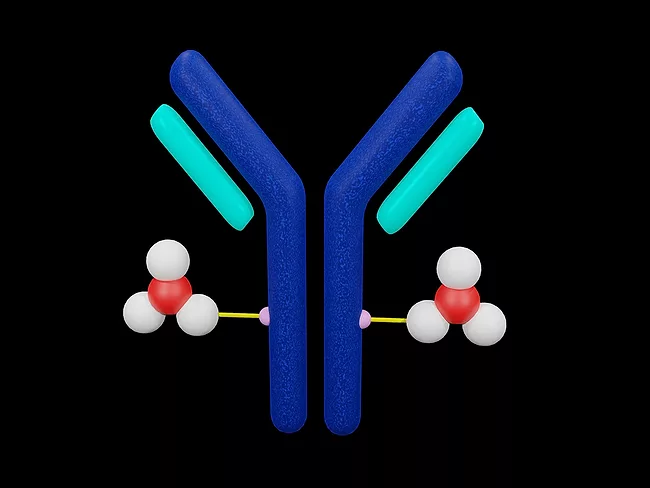
Legochem Biosciences Inc. has entered into a license agreement with Elthera AG to develop and commercialize a novel antibody-drug conjugate (ADC) therapy using a monoclonal antibody developed by Elthera.
Dxcover Ltd. raised $9.25 million (£7.5 million) in a series A fundraising round and received a grant of $2.7 million (£2.2 million) from the European Innovation Council to support development of the company’s liquid biopsy platform for the detection of multiple early-stage cancers. Existing investors Eos Advisory LLP, Mercia Asset Management plc, Scottish Enterprise, University of Strathclyde, SIS Ventures and Norcliffe Capital led the round, which was also joined by Mark Banforth of Thairm Bio.
Recurv Pharma Inc. is set to receive investment of up to $24 million from TVM Capital Life Science GmbH to support development up to phase IIa proof of concept of RP-001 to treat solid tumors.
Tuojie Biotech (Shanghai) Co. Ltd. has divulged cyclin-dependent kinase 2 (CDK2)/cyclin E inhibitors reported to be useful for the treatment of cancer and immunological disorders.
Hangzhou Innogate Pharma Co. Ltd. has identified kinesin-like protein KIF18A inhibitors reported to be useful for the treatment of cancer and viral infections.
Coherent Biopharma Ltd. has divulged peptide-drug conjugates comprising cytotoxic drug covalently linked to folate receptor α (FOLR1; FR- α)-targeting moiety through linker reported to be useful for the treatment of cancer and metabolic, immunological and neurological disorders.
Immunotherapy company Cartherics Pty Ltd. is leading a consortium that received a AU$5.4 million (US$3.6 million) grant from the Medical Research Futures Fund to develop a new approach to enhance cancer therapy by engaging the patient’s own immune system to complement CAR cell therapy.
Transcode Therapeutics Inc. has received clearance from the FDA to proceed with a first-in-human phase 0 trial of TTX-MC138 in cancer patients with advanced solid tumors. A single dose of radiolabeled TTX-MC138 will be followed by noninvasive PET-MRI to quantify the amount of radiolabeled TTX-MC138 delivered to metastatic lesions.