Sumitovant Biopharma Ltd. subsidiary Urovant Sciences GmbH is out-licensing overactive bladder (OAB) treatment vibegron to Pierre Fabre Médicament to register and commercialize the drug in the EU, U,K, and Switzerland. Under the terms of the deal, Basel, Switzerland-based Urovant will receive up to $75 million in up-front payments, regulatory and sales milestones and royalties, while Urovant will retain full commercialization rights to vibegron in the U.S. and certain other markets.
Sumitovant Biopharma Ltd. subsidiary Urovant Sciences GmbH is out-licensing overactive bladder (OAB) treatment vibegron to Pierre Fabre Médicament to register and commercialize the drug in the EU, U,K, and Switzerland. Under the terms of the deal, Basel, Switzerland-based Urovant will receive up to $75 million in up-front payments, regulatory and sales milestones and royalties, while Urovant will retain full commercialization rights to vibegron in the U.S. and certain other markets.
Medtronic plc reported its tibial neuromodulation device was implanted in the first patient with overactive bladder as part of its Titan 2 pivotal study. The device stimulates the posterior tibial nerve near the ankle to assist in regulation of bladder function. Medtronic expects to enroll 130 patients in the study.
Axonics Inc. received FDA approval for its recharge-free sacral neuromodulation (SNM) implantable neurostimulator (INS) for bladder and bowel dysfunction. The F15’s primary cell requires no recharging or replacement for more than 15 years with normal use or 20 years at lower energy settings and the system is compatible with 1.5T and 3.0T full body magnetic resonance imaging scans.
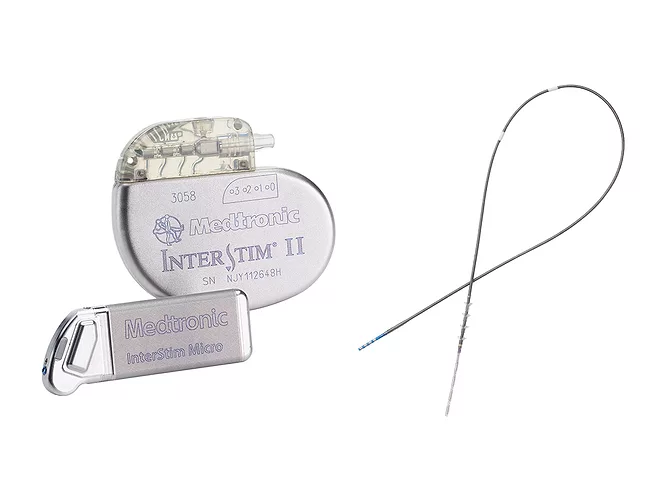
The FDA has approved Medtronic plc’s next-generation sacral neuromodulation (SNM) system, Interstim X, giving patients a recharge-free option with a 10-year+ lifespan. This newest member of the Interstim portfolio joins the rechargeable Interstim Micro as a treatment for overactive bladder (OAB), chronic fecal incontinence (FI) and nonobstructive urinary retention.
Merz Therapeutics GmbH is partnering with Israeli startup Vensica Therapeutics Ltd. on the development of an ultrasound-assisted delivery catheter to deliver Xeomin (incobotulinumtoxinA) to the bladder wall. The catheter, currently in clinical trials for the treatment of overactive bladder (OAB), is expected to be available in the U.S. by 2025.
Following a better-than-expected commercial liftoff for the overactive bladder medicine Gemtesa (vibegron) in its first market, Japan, the Dec. 23 FDA approval for the medicine opens a new commercial chapter for Urovant Sciences, a company that’s on its way to being a wholly owned subsidiary of Sumitomo Dainippon Pharma Co. Ltd.'s Sumitovant Biopharma Ltd.
Following a better-than-expected commercial liftoff for the overactive bladder medicine Gemtesa (vibegron) in its first market, Japan, the Dec. 23 FDA approval for the medicine opens a new commercial chapter for Urovant Sciences, a company that’s on its way to being a wholly owned subsidiary of Sumitomo Dainippon Pharma Co. Ltd.'s Sumitovant Biopharma Ltd.
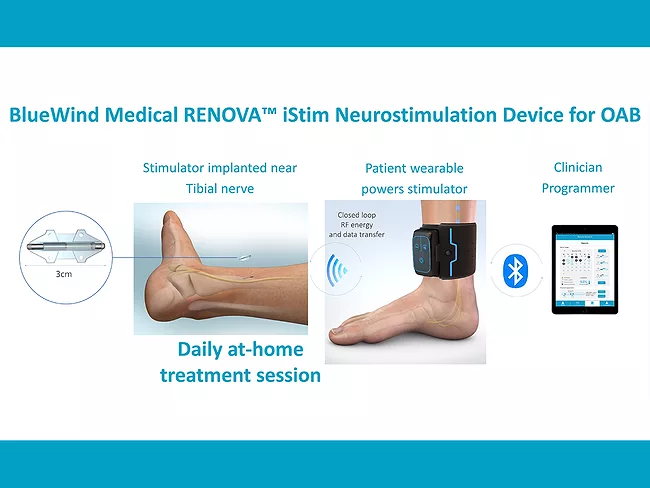
Israeli startup Bluewind Medical Ltd. has begun enrolling patients at U.S. sites in a pivotal trial of its Renova Istim implantable tibial neuromodulation system for the treatment of overactive bladder.
Medtronic plc has won U.S. FDA approval of its Interstim Micro rechargeable sacral nerve stimulator and Interstim Surescan MRI leads for the treatment of urinary and bowel dysfunctions. The new products make Medtronic the only company to offer a choice between rechargeable and recharge-free sacral neuromodulation (SNM) systems, allowing patients to align their treatment with personal lifestyle preferences.