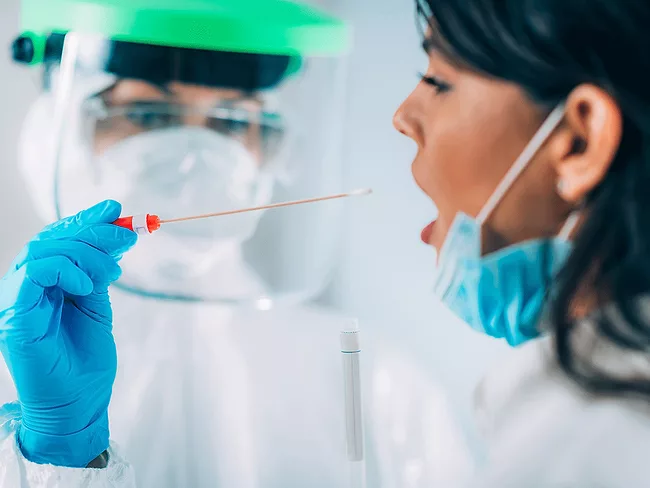
The need for self-administered surveillance testing finally has a few candidates, thanks to labs and test developers across the globe, and the U.S. FDA is keen on exploiting the opening. Tim Stenzel, director of the FDA’s Office of In Vitro Diagnostics and Radiological Health, said on the agency’s Sept. 2 testing town hall that the agency is interested in a test intended to be self-administered multiple times compared to a test validated under a single test approach, a flexibility that may prove critical in advancing the U.S. approach to testing for the COVID-19 pandemic.
NEW DELHI – A COVID-19 diagnostic test kit developed by the Indian Institute of Technology (IIT) in New Delhi is the latest to join a growing pool of low-cost kits domestically developed in a country where the number of cases topped 2 million in August and continues to rise. The push to develop test kits domestically is part of a national effort to shake off a heavy dependence on imports of medical devices, including diagnostic kits.
HONG KONG – Diagnostic kits are in the spotlight as Vietnam battles a resurgence of COVID-19 cases, after a wave of community infections started appearing in late July. A new outbreak has infected more than 220 people since July 25, most of whom came from the coastal city of Da Nang.
New England Biolabs Inc. (NEB) has launched its research use only product that can be utilized for the detection of the novel coronavirus, SARS-CoV-2 RNA. It is intended to serve as an alternative to RT-qPCR, enabling visual detection of amplification of SARS-CoV-2 nucleic acid in half an hour.
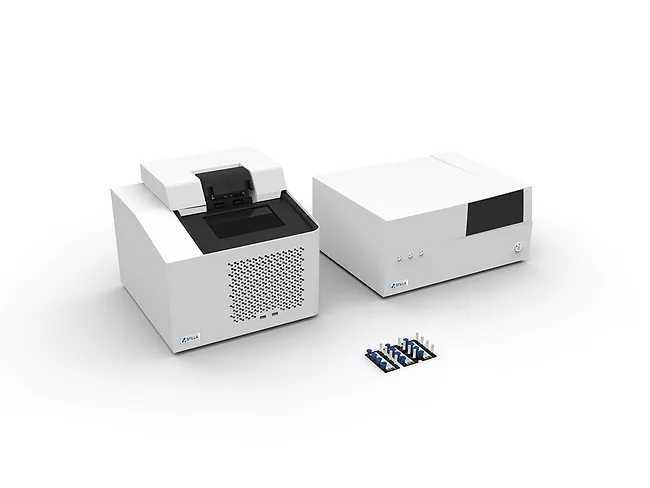
PARIS – Stilla Technologies SAS, of Villejuif, France, is supplying a new, cost-effective approach for COVID-19 testing by combining its digital polymerase chain reaction (PCR) technology with the group testing method. “This approach greatly increases testing capacity and meets the highest quality standards,” Rémi Dangla, co-founder and CEO of Stilla Technologies, told BioWorld.
The U.S. FDA granted an emergency use authorization (EUA) for Quest Diagnostics Inc.’s self-collection kit for COVID-19. The kit allows individuals to collect their own specimens at home or in a health care setting.
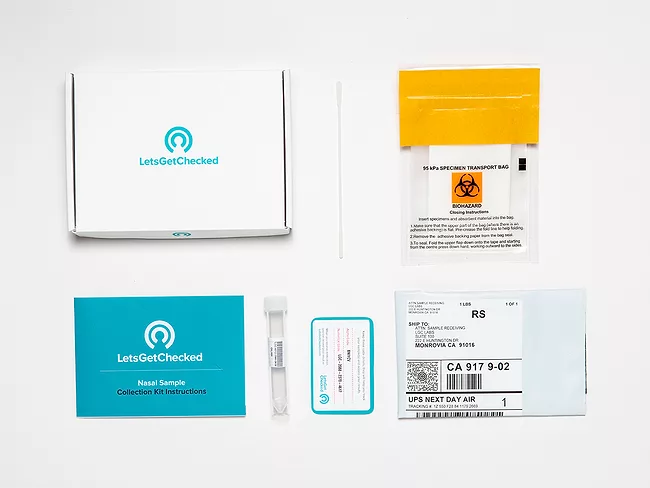
New York-based at-home testing startup Letsgetchecked said Friday that the U.S. FDA has granted emergency use authorization (EUA) for its COVID-19 Sure-track Test for signs of active SARS-CoV-2 infection. The polymerase chain reaction (PCR) nasal swab test is for use by at-risk individuals in the home and delivers results within 24 hours of a sample being received by the company’s CLIA-certified laboratory.
Quidel Corp., of San Diego, has scored another win at the U.S. FDA, receiving emergency use authorization (EUA) for the Lyra Direct SARS-CoV-2 Assay to allow direct sample processing. What’s special about this assay is that it does not require an up-front sample extraction. Instead, it uses a reformulated buffer that replaces that process with a simple 10-minute heat step, saving about 50 minutes in processing time.
The U.S. does not have a universal health care system, which means that it fails to provide a consistent level of minimum care across its population. That means that basic and preventative care often falls through the cracks, even as the U.S. continues to excel at medical innovation and offer the most highly regarded health care in the world to those who can afford it.