The first oral session in the acute myeloid leukemia (AML) translational research track of June 15, was given by Eliza Yankova, from the University of Cambridge, who presented collaborative studies done together with Storm Therapeutics Ltd. outlining pharmacological inhibition of METTL1 as a therapeutic strategy in AML treatment.
Mucosa-associated lymphoid tissue lymphoma translocation protein 1 (MALT1) is a key regulator of physiological antigen receptor signaling in B cells and T cells, as it is the only component of the MALT1-BCL10-CARD11 (CBM) signalosome with proteolytic activity.
Sana Biotechnology Inc. has obtained FDA clearance of its IND application to conduct a study of SC-262 in patients with relapsed or refractory B-cell malignancies, initially in patients who have received prior CD19-directed chimeric antigen receptor (CAR) T therapy.
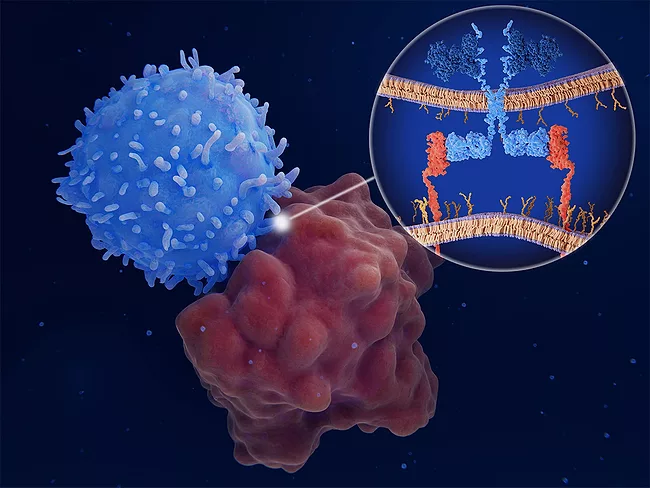
Chimeric antigen receptor (CAR) therapies targeted against CD19 have been widely used for the treatment of B-cell malignancies. However, the down-regulation of CD19 can lead to relapse, and autologous CAR T therapies have limitations that need to be addressed.
Autologous chimeric antigen receptor (CAR) T-cell therapy has been one of the most recent successes in cancer treatment, but limitations, such as manufacturing, costs or antigen escape in therapies directed against only one target that leads to resistance, highlight the need for new approaches. Classical natural killer T (NKT) cells engineered to express CARs constitute a novel type of allogeneic therapy that does not require T-cell receptor (TCR) gene editing, thus avoiding graft-vs.-host disease (GVHD).
Previous studies with mucosa-associated lymphoid tissue lymphoma translocation protein 1 (MALT1) inhibitors have demonstrated their potential as antitumor agents across several tumor models when administered alone or in combination with standard treatments.
Researchers from Interius Biotherapeutics Inc. presented the development and preclinical evaluation of a novel gene therapy candidate, INT-2104, as potential candidate for the treatment of B-cell malignancies.
Poseida Therapeutics Inc. has received FDA clearance of its IND application for P-CD19CD20-ALLO1, an allogeneic dual chimeric antigen receptor (CAR) T-cell product candidate being developed for relapsed or refractory B-cell malignancies in partnership with F. Hoffmann-La Roche Ltd. The company is actively focused on opening clinical sites for a phase I study in adults with relapsed or refractory B-cell malignancies.
Interius Biotherapeutics Inc. has reported preclinical data demonstrating the potential of its lead program to generate biologically active chimeric antigen receptor (CAR) cells directly in vivo for the treatment of B-cell malignancies.
Cellular Biomedicine Group Inc. (CBMG) licensed a pair of candidates for the treatment of non-Hodgkin lymphoma to Janssen Biotech Inc. for development outside of greater China. The candidates are anti-CD19 and CD20 bispecific CAR T-cell therapy C-CAR039 and anti-CD20 CAR T-cell therapy C-CAR066.