It was a mixed day for Daewoong Pharmaceutical Co. Ltd., which disclosed separately on March 28 both the termination of a $336 million licensing deal with CS Pharmaceuticals Ltd. and upbeat plans to unveil three new oncology assets at the upcoming American Association for Cancer Research in April.
Merck KGaA is exercising its option for a global license to commercialize Abbisko Therapeutics Co. Ltd.’s pimicotinib for $85 million. As previously reported by BioWorld, Abbisko out-licensed China rights to its colony-stimulating factor 1 receptor inhibitor, pimicotinib, to Merck in a deal worth up to $605.5 million in December 2023.
Astrazeneca plc is investing heavily in China, signing two R&D deals, worth up to about $8 billion in up-front payments and milestones combined, with Chinese companies Harbour Biomed Ltd. and Syneron Bio, establishing a joint venture with Shenzhen Kangtai Biological Products Co. (Biokangtai) for vaccines, and creating a new R&D center in Beijing through another $2.5 billion investment.
The U.S. FDA rejected, for the second time, Elevar Therapeutics Inc.’s NDA of a novel combination therapy for advanced liver cancer, which comprised Jiangsu Hengrui Pharmaceutical Co. Ltd.’s PD-1 inhibitor camrelizumab and HLB Co. Ltd.’s small-molecule tyrosine kinase inhibitor, rivoceranib.
In a deal that could reach nearly $2 billion, Jiangsu Hengrui Pharmaceuticals Co. Ltd. has licensed a small molecule for treating cardiovascular disease to Merck & Co. Inc., dropping the China-based company into a space with lots of competitors in varying stages of development.
The U.S. FDA’s approval of Telix Pharmaceuticals Ltd.’s kit for preparing prostate-specific membrane antigen-PET imaging for prostate cancer widens the opportunities for patients who live far away from large hospitals. The FDA’s nod for the imaging agent, TLX007-CDx, now branded as Gozellix, has a long shelf life and needs less equipment and preparation compared to some other agents.
Celltrion Inc. is on a biosimilar roll with the U.S. FDA this month, having gained clearance of Stoboclo and Osenvelt as products referencing Amgen Inc.’s biologic, denosumab (Prolia, Xgeva), along with Omlyclo becoming the first and only interchangeable biosimilar to omalizumab (Xolair, Genentech Inc. and Novartis AG).
The antibody-drug conjugate (ADC) juggernaut powers on, with Japan’s Taiho Pharmaceutical Co. set to acquire Araris Biotech AG for up to $1.14 billion. Of that, $400 million will be up front, with the remainder tied to milestones with a maximum value of $740 million, around the progress of three ADCs for treating solid and hematological cancers.
Artificial intelligence (AI) drug developer Insilico Medicine raised $110 million in a series E round led by an Asian private equity fund, Value Partners Group, that will see Insilico advance its pipeline and AI platform developments.
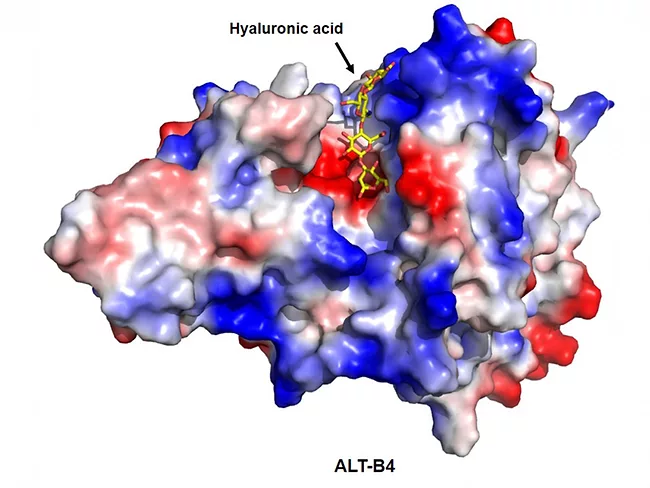
Alteogen Inc. signed its first billion-dollar partnership this year for ALT-B4 technology through two separate contracts with Astrazeneca plc’s U.K.- and U.S.-based Medimmune subsidiaries worth up to $1.35 billion combined.
 RSS
RSS