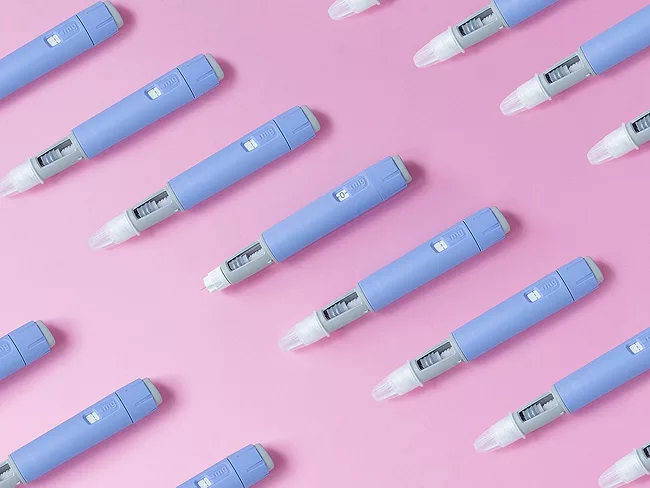
Chinese pharmaceutical and biotech companies are leading development of glucagon-like peptide-1 receptor agonists as Novo Nordisk A/S and Eli Lilly and Co. edge closer to launching blockbuster therapies in China. At the heart of the GLP-1 boom is a nationwide obesity problem driven by a confluence of factors, including the rise of a modern, sedentary lifestyle, according to Clarivate. Despite the rising prevalence of obesity and type 2 diabetes, the gap in obesity therapeutics is “substantial and leaves a solid market opportunity for weight loss drugs,” Karan Verma, principal analyst of healthcare research & data analytics at Clarivate, said.
Asia Pacific is the fastest growing region for health care spending, and by 2030 APAC will account for more than 20% of global health care spending, Tom Lawry, managing director of Second Century Tech told the APACMed Forum 2024 conference held in Singapore, Sept 5-6.
In the wake of shortages for Novo Nordisk A/S’ Ozempic (semaglutide), Australia’s Therapeutic Goods Administration has announced that Wegovy, which has the same active ingredient, is now available in Australia and is advising prescribers to stop prescribing Ozempic off-label for weight loss.
Innovent Biologics Inc.’s glucagon-like peptide-1 receptor (GLP-1R) and glucagon receptor (GCGR) dual agonist, mazdutide, met the primary endpoint and all key secondary endpoints in a phase III type 2 diabetes trial in Chinese adults. “Mazdutide is the first and fastest-developed GLP-1R/GCGR dual agonist in the world, and we are actively promoting the development of mazdutide for weight loss, T2D and other indications,” Lei Qian, Innovent’s vice president of clinical development, said.
News out of the Heart Rhythm Society 2024 meeting May 16-19 highlighted the rapid disruption pulsed field ablation (PFA) devices have wrought in cardiac arrhythmia treatment, so it is little surprise to see that PFAs are among the top five technologies with transformative potential identified by Clarivate plc in its Medical Technologies to Watch in 2024 report. The impact of the other four – continuous glucose monitors (CGM) for diabetes, neurostimulation devices, surgical robotics and renal denervation – has been just as revolutionary, if longer in being realized.
Homerun success of Novo Nordisk A/S’ semaglutide, which recently became the U.S.’s biggest blockbuster drug, is serving as an “inflection point” for obesity therapeutics and fueling the drive for new and improved therapies, speakers said at Bio Korea 2024 on May 8.
Innovent Biologics Inc.’s glucagon-like peptide-1 receptor (GLP-1R) and glucagon receptor dual agonist, mazdutide, met the primary endpoint of superiority in a head-to-head phase III trial in Chinese patients with type 2 diabetes compared to Eli Lilly and Co.’s GLP-1, dulaglutide, for glycemic control.
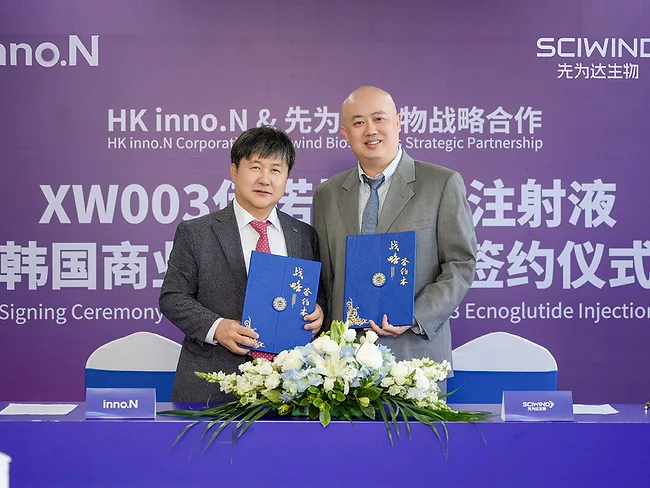
South Korea’s HK Inno.N Corp. said on May 2 that it gained exclusive development and commercial rights to Hangzhou, China-based Sciwind Biosciences Co. Ltd.’s once-weekly, injectable glucagon-like peptide-1 (GLP-1) agonist, XW-003 (ecnoglutide), in South Korea to treat type 2 diabetes and obesity.
Follow-on biologic makers in China have been working to capitalize on looming patent cliffs of blockbuster biologics. Advancing biosimilars of denosumab (Prolia/Xgeva; Amgen Inc.) and semaglutide are the latest examples.
Building D&D Pharmatech Inc. has been a rollercoaster ride, according to CEO Seulki Lee. The U.S. and Korea-based biotech is on another ascent, having scored U.S. FDA fast track designation for its metabolic dysfunction-associated steatohepatitis (MASH) drug, ahead of its third attempt at a public listing.
 RSS
RSS