The Persona IQ combines a knee implant created by Zimmer Biomet Inc. with sensor technology developed by Canary Medical Inc. to capture performance data on range of motion, walking speed, step count and other orthopedic metrics. Liane Teplitsky, Zimmer Biomet’s president of global robotics likens the Persona IQ to a cardiac pacemaker, in this instance collecting important data on the knee implant so doctors working remotely can better understand how the device is performing post-surgery.
Shanghai Sanyou Medical Co. Ltd. will be working with Implanet SA to get the latter’s Jazz platform for treating spinal pathologies approved and distributed in China. “Through this partnership, Sanyou Medical will be Jazz’s exclusive distributor. We are currently working on obtaining registration in China with the authorities. We will have a better view on the commercial launch timing later this year,” Ludovic Lastennet, CEO and founder of Implanet, told BioWorld.
Ganymed Robotics SAS raised a €21 million (US$21.2 million) series B round to develop its robotic system for total knee arthroplasty (TKA). Health care fund Cathay Health led the round, with participation from Credit Mutuel Innovation, Kurma Partners, BNP Paribas Developpement, and individual surgeons. The funds will be used to finalize development of Ganymed’s TKA surgical assistant and support the company’s expansion in France and the U.S.
Just three months after raising $10 million from its IPO on the Paris Euronext Growth market, SMAIO SA (Software Machines and Adaptive Implants in Orthopedics) obtained U.S. FDA 510(k) clearance for its Balance Analyzer 3D surgery planning software and for its patient-specific union rods. This spinal realignment planning software uses medical imaging of the patient’s spine in an upright static position.
More than 1.6 million spinal procedures are performed in the U.S. each year and between 10% and 30% of them fail to achieve their objective, indicating that the field has abundant room for improvement. Both equipment manufacturers and the FDA hope to improve spinal surgery success rates as seen in two clearances granted on May 31.
The U.S. FDA has granted de novo approval for Bonesupport AB’s Cerament G, an antibiotic-eluting bone graft designed to osteomyelitis. The company plans to launch in the U.S. in late September or early October.
Nano-x Imaging Ltd.’s (Nanox) subsidiary Nanox.AI has received the FDA’s 510(k) clearance for Healthost, an artificial intelligence (AI) software device providing qualitative and quantitative analysis of the spine from CT scans.
The NMPA approved two different surgical robots for marketing, a step forward in growth of a sector that remains underdeveloped in China. One of the robots approved for marketing by the NMPA is from Yuanhua Orthopedic Robotic Ltd. and the other is Suzhou Microport Orthobot Co. Ltd. Both robots are used for total knee arthroplasty (TKA), removing damaged cartilage and bones from the surface of the knee joint and replacing them with artificial implants.
The U.S. FDA’s safety and performance-based pathway (SPBP) is intended as a leaner, meaner alternative to the conventional 510(k) pathway that would sidestep some of the presumed problems with the concept of substantial equivalence. The agency recently added four device types to this program, including orthopedic fracture fixation plates.
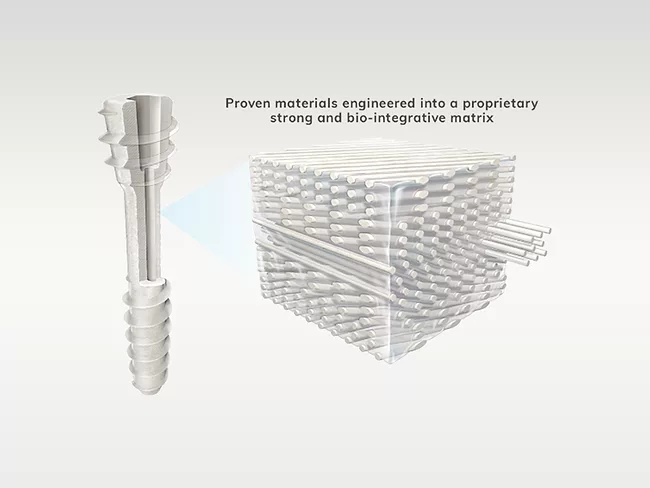
Ossio Inc. has received FDA clearance for Ossiofiber suture anchors used to fix soft tissue to bone in the shoulder, foot and ankle. This is the most recent of clearances for the company’s intelligent bone regeneration technology which began in 2019 as a possible alternative to permanent fixation implants for the foot and ankle alone.
 RSS
RSS