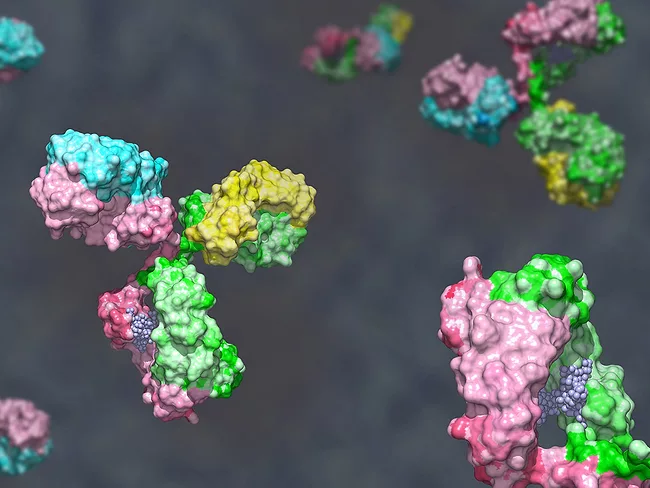
Current anticancer approaches, such as antibody or CAR T-cell therapies, rely on targeting tumor-associated antigens rather than tumor-specific antigens, with the consequent on-target, off-tumor effects.
Aptevo Therapeutics Inc. is advancing APVO-711, its bispecific antibody targeting PD-L1 x CD40 that combines checkpoint inhibition with immune activation in a single molecule.
The use of mimicking antibodies that activate death receptors (DRs) to selectively induce cell death in cancer cells has shown limited clinical success so far, primarily due to suboptimal efficacy and safety concerns, particularly hepatotoxicity. Emerging strategies to enhance efficacy include the development of bispecific antibodies that simultaneously target DRs and tumor-specific antigens.
Abtherx Inc. has signed a technology license agreement with Rondo Therapeutics with the aim of accelerating Rondo’s pipeline of bispecific antibodies. Rondo aims to advance the field of immuno-oncology, with a focus on treating solid tumors that fail to respond to current therapies.
Aclaris Therapeutics Inc. has gained IND clearance from the FDA for ATI-052, a bispecific anti-thymic stromal lymphopoietin (TSLP)/interleukin-4 receptor (IL-4R) monoclonal antibody being developed to treat certain immuno-inflammatory diseases. A phase Ia/Ib trial, including a proof-of-concept portion in an undisclosed indication, will begin in the current quarter.
Tharimmune Inc. has announced preclinical data from its expanded pipeline with HS-1940, a dual-target multispecific biologic engineered to bind to both programmed cell death protein 1 (PD-1) and vascular endothelial growth factor (VEGF), and HS-3215, a dual-target biologic binding to HER2 and HER3 receptors. Both use the proprietary Epiclick technology, a multispecific antibody engineering platform.
Hepatitis B virus (HBV) infection is associated with liver diseases, including chronic hepatitis, which notably increases the risk of cirrhosis and hepatocellular carcinoma (HCC) development. Although some of the current treatment strategies promote virological suppression, they are insufficient to halt HCC development.
Researchers from Abl Bio Inc. have published preclinical data for ABL-112, an Fc-competent bispecific antibody (BsAb) targeting TIGIT and 4-1BB (TIGIT x 4-1BB), being developed for the treatment of cancer.
Prostate cancer (PC), often referred to as a cold tumor, typically presents a poor immune response, making it difficult for immune-based therapies to be effective. Metastatic castration-resistant PC (mCRPC) presents a highly aggressive phenotype often refractory to systemic treatment.
Harbour Biomed Ltd. has announced the launch of Élancé Therapeutics with an aim to improve the treatment of obesity. Élancé seeks to address challenges in obesity treatment, by increasing overall body weight loss and fat mass loss, while preserving and even increasing muscle and lean mass.
 RSS
RSS