A research team at the Korea Advanced Institute of Science and Technology (KAIST) has developed tattoo ink made of liquid metal and carbon nanotubes that can work as a bioelectrode. This technology could translate to a tattoo that can function as a health-monitoring device.
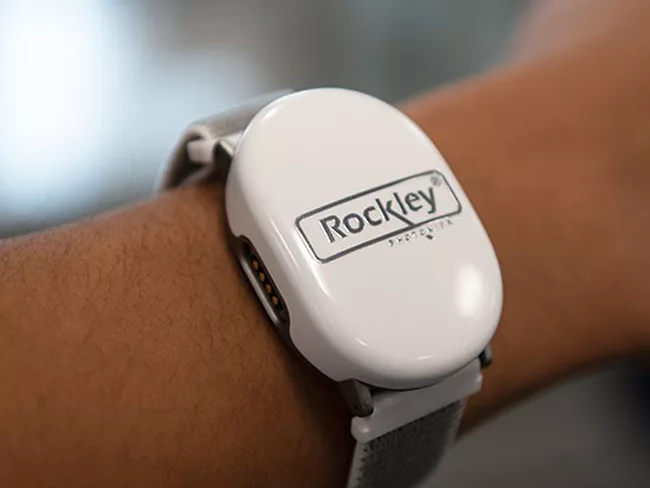
Medtronic plc inked an agreement to combine its patient care technologies with a wearable, remote monitoring platform developed by Pasadena, Calif.-based Rockley Photonics Inc. The Bioptx contains compact, photonics-based sensors inside a wristband to monitor a range of biomarkers beyond standard blood pressure, heart rate, pulse oximetry and glucose levels, making Rockley and Medtronic’s development partnership, said Rockley Chair and CEO Andrew Rickman, “a terrific match.”
Isono Health Inc. received FDA clearance for its Automated Three-dimensional Ultrasound with Artificial intelligence (ATUSA) system for breast imaging, a wearable, compact automated whole breast ultrasound system that can acquire high-quality images without requiring a skilled operator. The ultrasound scan takes two minutes to scan the entire breast volume and offers 3D visualization of the breast tissue.
Metabolic health platform Ultrahuman Healthcare Ltd. has acquired consumer wearable company Lazy Design Pvt Ltd. India (known as Lazyco) to expand the biomarkers complementing its current wearable, the Ultrahuman M1.
With an ambitious goal of bringing 24/7 electroencephalogram (EEG) capabilities to hospitals across the country, Epitel Inc. closed a $12.5 million series A financing round that it plans to use to fund the initial pilot for commercialization of its wearable, wireless EEG platform. The Epilog platform received FDA clearance for use in hospital emergency departments and critical care units last year.
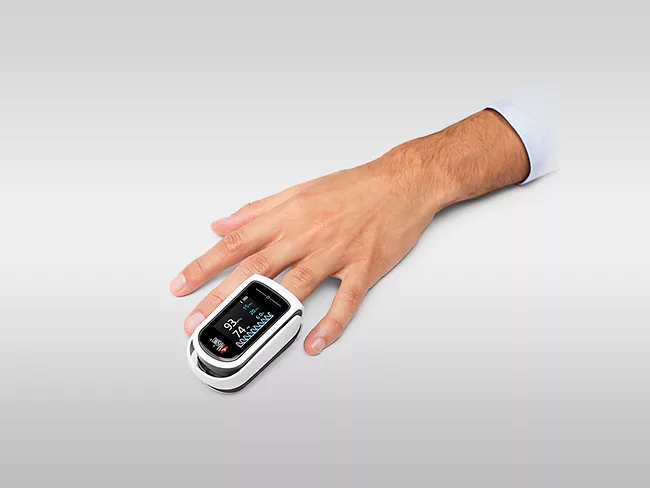
In a move that stunned and dismayed analysts and investors, Masimo Corp. announced a definitive agreement to acquire Sound United LLC Tuesday evening for $1.025 billion. Masimo’s stock (NASDAQ:MASI) plunged on the news of its intended purchase of the high-performance consumer audio products company, plummeting 39% from $228.84 at Tuesday’s close to $139.60 at Wednesday’s opening bell. Volatility led the Nasdaq to suspend trading in the stock for four minutes before 10 am. The stock recovered slightly during the day to close Wednesday at $147.00.
Digital health innovation was front and center at this year’s Consumer Electronic Show (CES) in Las Vegas. The four-day event included a major product announcement from Abbott Laboratories and a keynote presentation delivered by CEO Robert Ford. This marked the first time a health care company has been invited to take the main stage.
Jelikalite Corp. has received a breakthrough device designation from the FDA for its wearable neurostimulation device Cognilum. The home-based system aims to reduce symptoms of moderate to severe autism spectrum disorder in pediatric patients aged 2 to 6 years. The designation was based on the results of a double-blind, placebo controlled clinical trial of 30 pediatric patients with moderate to severe autism, which showed the technology can significantly improve symptoms.
Fist Assist Devices LLC received a breakthrough device designation from the FDA for its Fist Assist Model FA-1 device for patients with end-stage renal disease (ESRD). The pre-surgical dilation device promotes arteriovenous (AV) fistula creation in renal failure patients with inadequate vein size for creation of an AV fistula for hemodialysis. An AV fistula is a surgical connection between an artery and a vein used as an access point for dialysis.
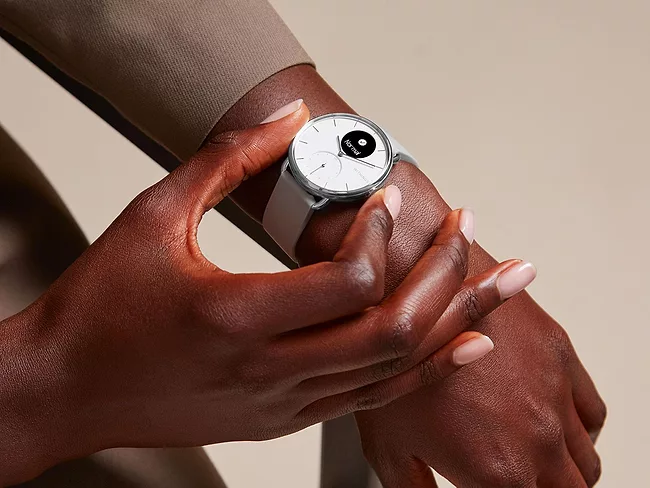
This year saw continued advances in smartwatches as they increasingly move from wellness assistants to medical monitors. Nowhere has that been clearer than in cardiovascular health, where multiple wearables now allow users to quickly detect atrial fibrillation, a notoriously shy condition previously only detectable in early stages by chance in a physician’s office or by wearing a cumbersome Holter monitor for 24 to 48 hours.
 RSS
RSS