Dublin-based Medtronic plc. has invested considerable resources into its renal denervation program, but the company has not completed its regulatory journey for the U.S. market just yet. Medtronic failed to persuade an FDA advisory committee of the virtues of its Symplicity Spyral device due to inconsistent results from the two major studies presented at the hearing but vowed to keep working on the application despite the sustained headwinds.
The U.S. Federal Trade Commission has picked Henry Liu of the law firm of Covington & Burling to run the agency’s Bureau of Competition, a seat that was vacated earlier this year when Holly Vedova retired.
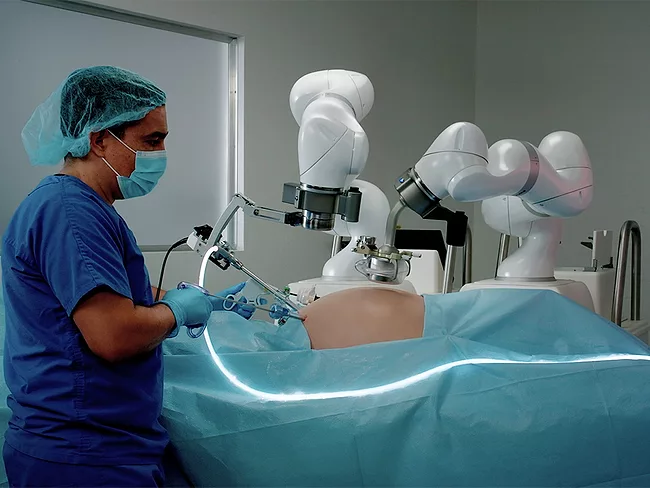
Levita Magnetics International Corp. received uplifting news this week as the U.S. FDA cleared its magnetic-Assisted Robotic Surgery (MARS) minimally invasive surgical platform. MARS builds on the company’s first product, the Levita magnetic surgical system, by providing greater control of surgical instruments to surgeons. The platform is cleared for use in bariatric, colorectal, gallbladder and prostate surgeries.
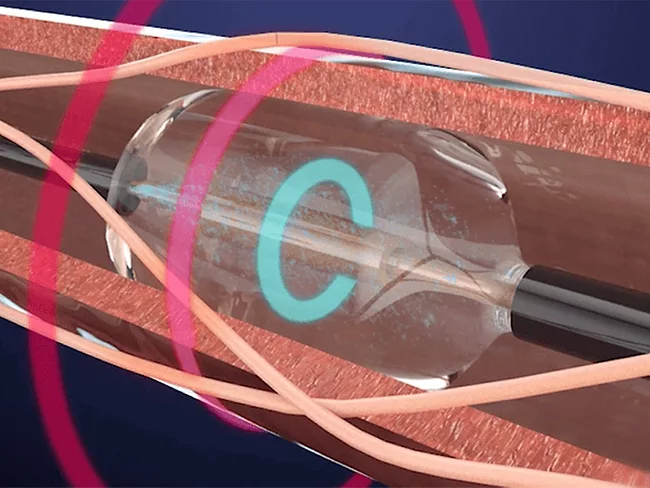
The age of renal denervation as a treatment for hypertension may have finally arrived in the U.S. with the affirmative U.S. FDA advisory vote for the Paradise system for renal denervation by Recor Medical Inc., of Palo Alto, Calif. The 12-member advisory committee vote unanimously that the data suggested the ultrasound-based device was safe and voted 8-3 in support of the Paradise’s efficacy, an outcome that the agency may find difficult to refute, given the large public health impact of hypertension in the U.S.
The process of discovery is resource-consuming in any type of litigation, but this is especially the case for patent litigation due to the exceptional importance of attorney-client privilege in patent prosecution. However, a U.S. judicial advisory committee is considering a rewrite of the rules to ease some of this burden in a move that could cut both the expense and time consumed by patent litigation, a development that is sure to draw cheers from across the spectrum of innovators in the life sciences.
The U.S. FDA is in the midst of a shake-up of several major offices, including the Office of Regulatory Affairs, but its commissioner, Robert Califf, believes there are even greater issues faced by the agency. Califf said during an Aug. 22 public forum that prices for generic drugs are too low to encourage manufacturers to continue to produce these products, adding that the issue is sufficiently severe to constitute a national security risk.
The markets for ventricular assist devices (VADs) and intraortic balloon pumps (IABPs) are hardly littered with competition, but the few companies that work in these two device categories have faced seemingly routine recalls over the past couple of years. The U.S. FDA recently reported yet another round of class I recalls for a single model in both Abiomed Inc.’s Impella line of VADs and Datascope Corp.’s Cardiosave line of IABPs, but the agency’s apparent unwillingness to force either manufacturer to withdraw any of these recalled products seems to suggest that product shortages would quickly follow any such move on the FDA’s part.
Recruitment underway for Toronto-based Vielight Inc. has commenced recruitment for a clinical trial in the U.S. to study how brain stimulation photobiomodulation (PBM) might mitigate long-term cognitive impairment from long Covid. The study intervention comes on the heels of Canadian approval of a device to treat the acute version of Covid, involving light emitting diodes (LEDs) placed inside the nasal cavity and on the chest to deliver near infrared (NIR) light to the body.
U.S. federal preemption of state liability law for medical devices is firmly established for PMA devices, but this is not the case for devices that are cleared via the U.S. FDA‘s 510(k) program. However, some courts have gone a step further in disallowing defendants in product liability litigation from entering evidence of 510(k) clearances from the FDA, a practice that played a role in a $3.3 million verdict against Murray Hill, N.J.-based C.R. Bard Inc. that the U.S. Court of Appeals for the Seventh Circuit decreed is not eligible for a new trial.
Some U.S. FDA inspections go better than other ones, but the agency’s inspection of the Boston plant operated by a subsidiary of Princeton, N.J.-based Integra Lifesiences Holding Corp. was not one of those with a quick resolution. The agency said in a July 17 warning letter that Integra will have to obtain certification for the site in each of the next three years after finding considerable fault with operations, including one citation the agency said is a carryover from a warning letter issued in 2019.
 RSS
RSS