Pancreatic cancer is among the most lethal cancers and the fourth leading cause of cancer deaths worldwide, where 90% of cases fall into the pancreatic ductal adenocarcinoma (PDAC) type.
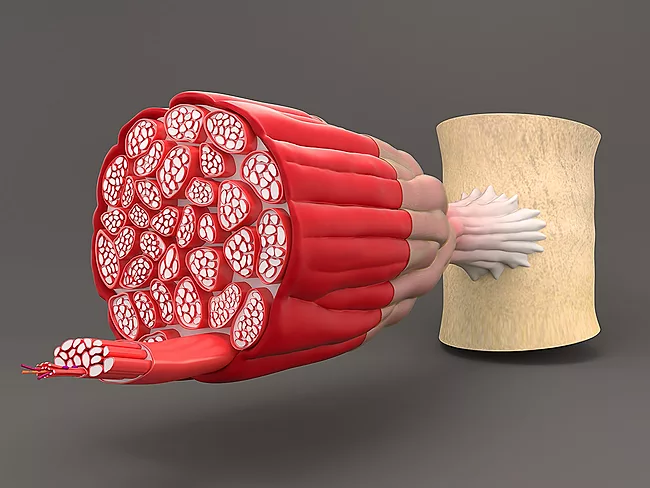
Satellos Bioscience Inc. has developed and presented data for a compound that targeted the process of muscle regeneration based on modulation of satellite stem cell polarity.
Facioscapulohumeral muscular dystrophy (FSHD) is a severe muscle disorder caused by aberrant DUX4 mRNA expression in skeletal muscle. DUX4 activates downstream target transcriptome, known as D4T, leading to myofiber loss and muscle weakness.
Duchenne muscular dystrophy is a severe and progressive disorder caused by mutations in the dystrophin (DMD) gene that lead to malfunction or absence of dystrophin. This protein stabilizes the sarcolemma and protects muscle cells during contraction.
Centessa Pharmaceuticals plc recently detailed the discovery and preclinical characterization of a novel potent and selective orexin OX2 receptor agonist, ORX-142.
It was hypothesized that the MEK1/2 inhibitor ATR-002 could reduce inflammation and clear Staphylococcus aureus infection during cystic fibrosis, thus potentially showing a dual effect.
Khalifa University and The University of Queensland presented preclinical data for a novel acid-sensing ion channel 1 (ASIC1) inhibitor, Hi1a, evaluated in models of multiple sclerosis (MS).
The signaling of TNF receptor (TNFR) superfamily member 4 (OX40) and its ligand (OX40L) plays a crucial role in the development of immunological and inflammatory disorders due to triggering a subset of T-cell responses.
As in other muco-obstructive diseases, the airways in cystic fibrosis (CF) are characterized by goblet cell and glandular hyperplasia, with overproduction of mucins MUC5 and MUC5AC, resulting in viscous mucus, respiratory blockade and recurrent infections and inflammation.
 RSS
RSS