After five years, the U.S. FDA has finally released a final rule for over-the-counter hearing aids along with an associated guidance, a development that was stipulated by the FDA Reauthorization Act (FDARA) of 2017. Xavier Becerra, Secretary of the U.S. Department of Health and Human Services, was among several HHS officials who appeared on the Aug. 16 briefing to tout the rule, each of which promised that the rule would spark competition that would in turn take a significant bite out of the cost of acquiring a hearing aid.
The link between the use of antipsychotic medications and the risk of sudden cardiac arrest may not have yet earned universal recognition among cardiologists, but the U.K. National Institute of Health and Care Excellence (NICE) has seen enough to believe the hypothesis has some merit. The agency recently proposed that the Kardiamobile 6L device by Alivecor Inc., of Mountain View, Calif., be covered for patients taking antipsychotic medications, a policy which if adopted would reflect what NICE sees as an unmet need for a population at grave risk.
It is one thing to watch a U.S. FDA inspection fail to meet with the agency’s expectations regarding compliance with the Quality System Regulation, but it’s another to have four opportunities to respond to the inspectional findings and still end up with a warning letter.
The question of whether an artificial intelligence (AI) algorithm should enjoy the status of an inventor has been making the rounds in various nations, but the U.S. Court of Appeals for the Federal Circuit has rejected the notion based on a plain reading of the statute. The court said that the statute is unambiguous in that only natural persons can claim inventorship, but the question will be appealed to the Supreme Court, which will have an opportunity to put this debate to rest.
Surgical mesh product liability litigation has fed a massive volume of billable hours for attorneys on both sides of these lawsuits, but a recent case went the way of Coloplast AS unit Coloplast Corp., of Minneapolis, which prevailed over a litigant in a case heard in a Minnesota district court. Despite the win, the case sustains an ongoing debate over whether the gatekeeping function for expert testimony was appropriately exercised, an issue that may soon be clarified by an advisory body on judicial procedures.
Implementation of the new regulations for medical devices and in vitro diagnostics in the EU have presented a number of problems, including a serious crunch in the availability of notified bodies (NBs) to review premarket filings.
The notion of a device that disappears from the human body once its work is done has driven massive investments in bioresorbable coronary artery scaffolds and stents, but these devices have had a difficult time getting to and staying on the market. The U.K. National Institute of Health and Care Excellence determined recently that these devices are not ready for routine use and should be deployed only in clinical trials.
President Joseph Biden signed into law the CHIPS and Science Act of 2022, a bill that calls for investment of $280 billion overall into the development and manufacturing of semiconductor products and which should ease the crunch on these products for medical device manufacturers. However, some have estimated that bringing new production capacity online can take three to five years, suggesting that the med-tech industry will need to continue to devise workarounds to the current supply crunch for the immediate future.
Intravascular ultrasound (IVUS) is an established method for gaining an appreciation of the sources of closure of the coronary arteries, but its use in the peripheral vasculature is not quite as well established. Nonetheless a new paper makes the case that IVUS may be appropriate for widespread use in connection with diseases of the peripheral vasculature, a position that could lead to a considerable expansion of sales of IVUS systems.
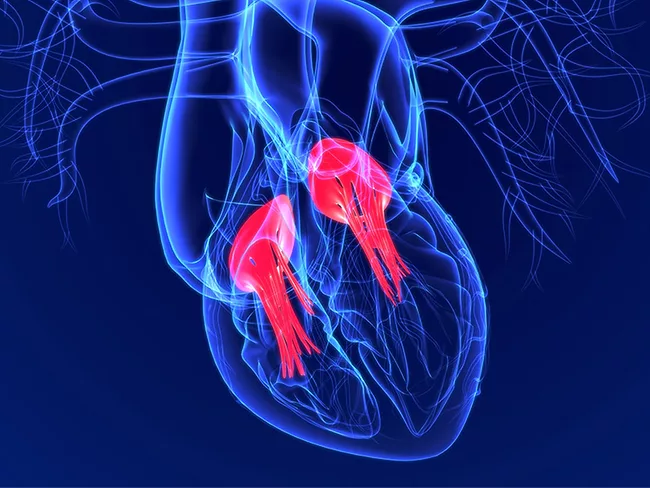
The U.K. National Institute for Health and Care Excellence (NICE) issued a pair of health technology assessments related to regurgitation of the tricuspid valve, one each for valve leaflet repair and for valve annuloplasty.