Surgical mesh product liability litigation has fed a massive volume of billable hours for attorneys on both sides of these lawsuits, but a recent case went the way of Coloplast AS unit Coloplast Corp., of Minneapolis, which prevailed over a litigant in a case heard in a Minnesota district court. Despite the win, the case sustains an ongoing debate over whether the gatekeeping function for expert testimony was appropriately exercised, an issue that may soon be clarified by an advisory body on judicial procedures.
Implementation of the new regulations for medical devices and in vitro diagnostics in the EU have presented a number of problems, including a serious crunch in the availability of notified bodies (NBs) to review premarket filings.
The notion of a device that disappears from the human body once its work is done has driven massive investments in bioresorbable coronary artery scaffolds and stents, but these devices have had a difficult time getting to and staying on the market. The U.K. National Institute of Health and Care Excellence determined recently that these devices are not ready for routine use and should be deployed only in clinical trials.
President Joseph Biden signed into law the CHIPS and Science Act of 2022, a bill that calls for investment of $280 billion overall into the development and manufacturing of semiconductor products and which should ease the crunch on these products for medical device manufacturers. However, some have estimated that bringing new production capacity online can take three to five years, suggesting that the med-tech industry will need to continue to devise workarounds to the current supply crunch for the immediate future.
Intravascular ultrasound (IVUS) is an established method for gaining an appreciation of the sources of closure of the coronary arteries, but its use in the peripheral vasculature is not quite as well established. Nonetheless a new paper makes the case that IVUS may be appropriate for widespread use in connection with diseases of the peripheral vasculature, a position that could lead to a considerable expansion of sales of IVUS systems.
The U.K. National Institute for Health and Care Excellence (NICE) issued a pair of health technology assessments related to regurgitation of the tricuspid valve, one each for valve leaflet repair and for valve annuloplasty.
When medical device manufacturers think of U.S. federal government enforcement, the Sarbanes-Oxley Act (SOX) of 2002 might not be the first element of the statute to come to mind. However, the Securities and Exchange Commission (SEC) used SOX to snare Suralign Holdings Inc. for pushing orders to customers ahead of schedule to draw the related revenue forward, an allegation that led to restitutions and penalties amounting to nearly $3 million.
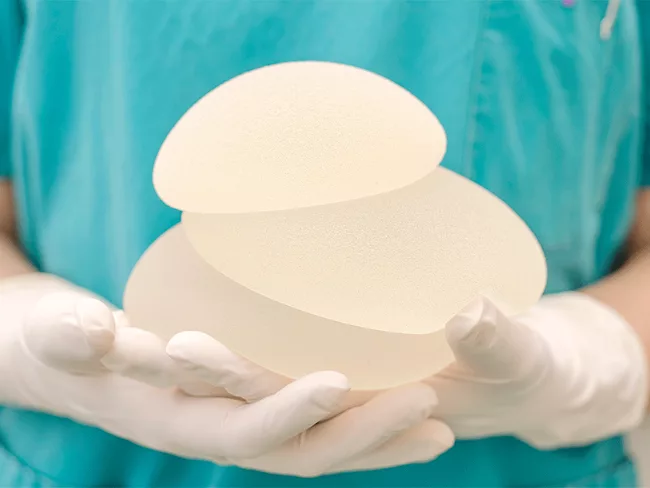
The U.S. FDA has updated its data on the number of fatalities across globe associated with breast implant-associated anaplastic large cell lymphoma (BIA-ALCL), which has now reach 59 fatalities. That number is up from 33 reported in July 2019 but is also a number the agency continues to assert may be a significant undercount.
The U.S. Senate and House of Representatives have not yet come to terms on FDA user fee legislation, a quinquennial source of melodrama that leaves the agency in an awkward position with current employees. However, FDA principal deputy commissioner Janet Woodcock said recently that prospective employees are also watching how Congress handles its business, adding that some of these pending hires may take jobs elsewhere rather than wait on Congress to send a user fee bill to the White House.
Makers of biotech therapies and in vitro diagnostics may be understandably weary of hearing about patent subject matter eligibility under Section 101 of the Patent Act, but Sen. Thom Tillis (R-N.C.) is prepared to take another swipe at the problem. Tillis announced Aug. 3 that the Patent Eligibility Restoration Act of 2022 is intended to reverse some of the deleterious effects of U.S. Supreme Court jurisprudence on Section 101 questions, a proposal that may be the last, best chance to address what many believe is a fundamentally broken judicial understanding of subject matter eligibility.