The U.K. Medicines and Healthcare Products Regulatory Agency (MHRA) is still considering a drastic overhaul of the 2002 medical device regulatory framework, but may have sent a signal that its new framework won’t deviate too far from established regulatory approaches. The agency reported June 16 that it has signed on with both the International Council for Harmonization (ICH) for drugs and the International Medical Device Regulators Forum (IMDRF) for devices, providing members of both industries with at least some modest confidence that access to the 67 million strong U.K. market won’t suffer from a new set of unique regulatory hurdles.
The U.S. Department of Justice (DOJ) has kept a close eye on medical technology for a number of years, but the department’s consumer protection branch has often lagged behind other DOJ offices where enforcement is concerned.
Quantitative imaging (QI) is making an increasingly larger footprint in clinical practice, and the U.S. FDA has rounded out a 2019 draft guidance spelling out the agency’s expectations regarding technical performance assessment of this class of products. Developers of software that provide quantitative data from imaging studies should expect to conduct studies that ensure the software controls for a wide range of sources of error, suggesting that studies of these algorithms could prove expensive.
Regulatory harmonization for medical technology often seems more the stuff of gauzy dreams than bare-knuckle reality, but the Medical Device Single Review Program (MDSRP) is at the top of the list for a lot of device makers. Jeff Shuren, director of the U.S. FDA’s Center for Devices and Radiological Health (CDRH) device center, told an audience at this year’s annual meeting of the Food and Drug Law Institute (FDLI) that while the agency is very keen on the MDSRP concept, the agency would need help from Congress with the statute in order to take part, and thus the FDA will not be taking part in the MDSRP effort for now.
U.S. FDA Commissioner Robert Califf offered the keynote address at this year’s annual meeting of the Food and Drug Law Institute (FDLI), revisiting recent events that have roiled the agency’s staff and reputation. Califf made a point of emphasizing the need for new statutory authorities in connection with the supply chains for FDA-regulated products, and remarked that his return to the agency will not be a reversion to the norm in this context.
The EU’s Medical Device Coordination Group (MDCG) has advised the device industry that many manufacturers seem ill prepared for the transition to the Medical Device Regulation (MDR), which will be fully in force for all devices as of May 2024. MDCG said that that any leniency shown after that date will be granted only for devices that address an urgent public health need, potentially leaving many existing authorizations out in the cold.
Developers of artificial intelligence (AI) and machine learning (ML) algorithms in medical radiology tend to think of regulatory approval as the primary hurdle to market, but there is also the question of how to pay for the use of these products. Public and private payers obviously hold the purse strings, but appealing to payers is still not always as straightforward proposition as some would like, reinforcing the notion that coverage and reimbursement still combine to serve as one of the highest hurdles to market for AI and ML.
Artificial intelligence (AI) and machine learning (ML) algorithms for use in medical radiology have made tremendous inroads into clinical practice, but one of the key stakeholder groups, physicians, aren’t always persuaded of the benefits of these software products. In this second installment of a six-part series, BioWorld asked Bibb Allen, Jr., chief medical officer for the Data Science Institute of the American College of Radiology, what physicians want, and what physicians see as a trend toward me-too AI.
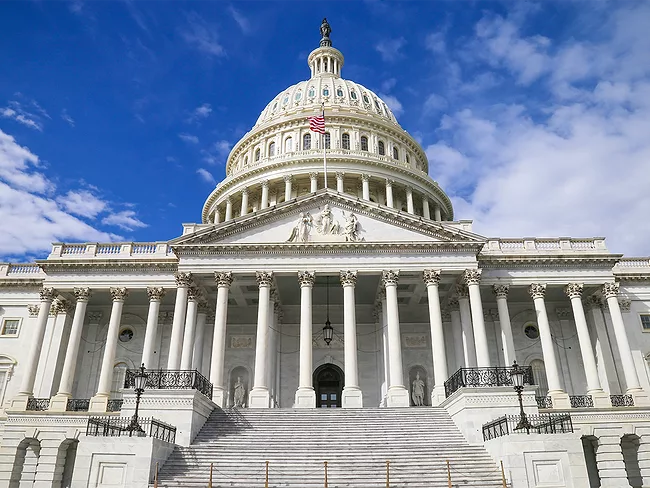
The U.S. House of Representatives voted June 8 to pass the legislation reauthorizing a number of user fee programs at the FDA, a welcome bit of good news for FDA-regulated industries. Nonetheless, there are several substantive differences between H.R. 7667 and the parallel Senate bill, differences that may take some doing to overcome before a final bill can be forwarded to the Oval Office.
The issue of life science espionage continues to reverberate across the U.S., and a new report by the Office of Inspector General (OIG) suggests that vulnerabilities in the U.S. have not been adequately addressed. The OIG report said that more than two thirds of NIH grantees failed to meet at least one requirement for investigator disclosures about their activities related to foreign entities, including governments, a problem OIG says is in dire need of a fix.