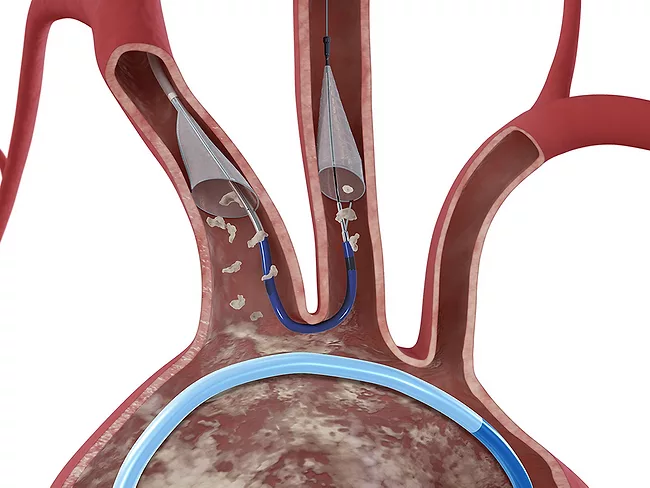
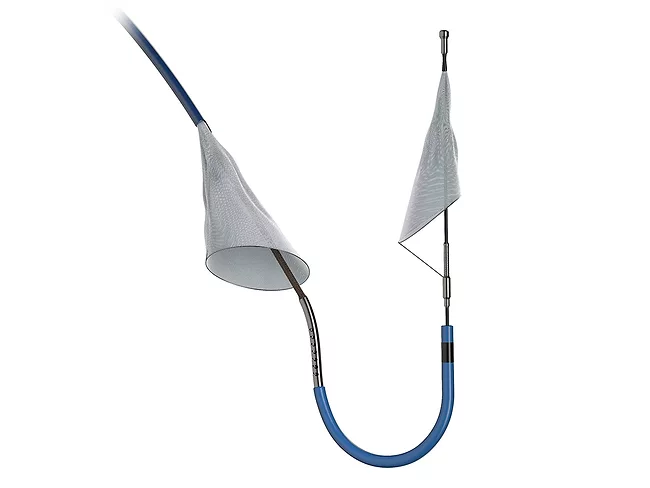
Counterintuitively, use of cerebral embolic protection failed to reduce the incidence of stroke in the 72 hours following a transcatheter aortic valve replacement or implantation found a late-breaking clinical trial presented at ACC.25, the American College of Cardiology’s annual scientific session held March 29-31 in Chicago and simultaneously published in the New England Journal of Medicine.
Boston Scientific Corp.’s Sentinel cerebral protection system missed its primary endpoint of reduced stroke in the PROTECTED TAVR clinical trial. The data did, however, show a significant reduction in risk of disabling stroke in the immediate days after a transcatheter aortic valve replacement (TAVR) procedure.
Keystone Heart Ltd. had the unusual experience of being the sponsor of a rare class II device appearance before an FDA advisory committee, which considered whether the company’s Triguard 3 device was substantially equivalent (SE) to a predicate device. However, the company’s bid for an SE result was unsuccessful, likely leaving Keystone with a considerable additional regulatory lift before the company can get to market.
The Medicare inpatient draft is always an event due to its impact on medical technology. Now, several products soon may see their new technology add-on payments (NTAP) expire because of eligibility. The Centers for Medicare and Medicaid Services (CMS) said both Claret Medical Inc.’s Sentinel embolic protection device and Procept Biorobotics Corp.’s Aquabeam device have used up their NTAP eligibility, and hospitals may see lower rates for using those devices starting Oct. 1
HONG KONG – Yokneam, Israel-based Serenno Medical Ltd. has unveiled a device for automatic monitoring and detection of kidney damage in patients. Known as Sentinel, the device is a continuous urine output (UO) monitor that measures urine flow rate and volume in real time.