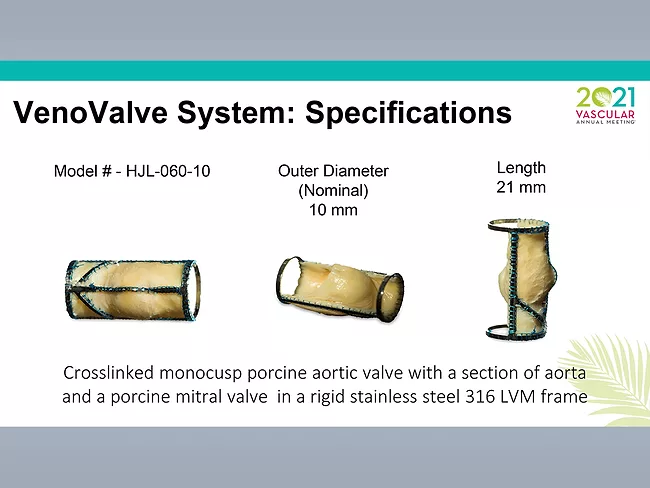
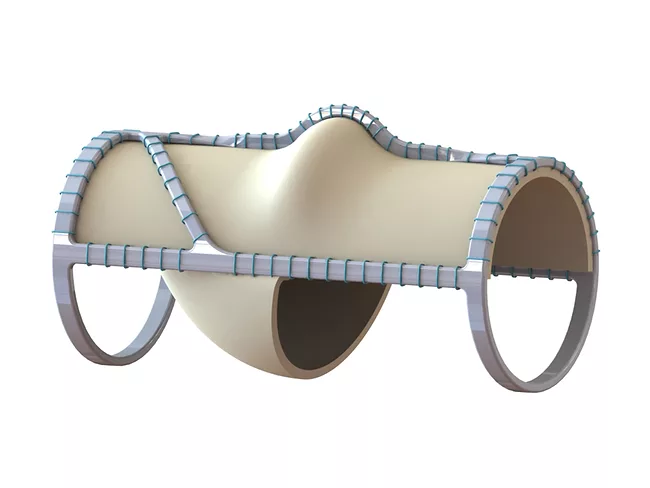
The pivotal, multicenter trial commissioned by Envveno Medical Corp. is intended to show its first-in-class Venovalve implant is safe and effective for treating deep venous chronic venous insufficiency (CVI), which occurs when damaged valves inside the veins of the leg prevent blood from flowing up the leg and into the heart and lungs.
The FDA granted 510(k) clearance to Sky Medical Technology Ltd.’s Geko device for patients with venous insufficiency and/or ischemia. The neurostimulation device is worn at the knee and increases blood flow in lower limb soft tissue of patients. The company said it will initiate a controlled market release in partnership with U.S. clinicians in a bid to reshape venous insufficiency treatment.
Intervene Inc. received breakthrough device designation from the FDA for its treatment for chronic venous insufficiency (CVI), Blueleaf endovenous valve formation system, which makes new venous valves in the leg using the patient’s own vein tissue. The catheter-based system splits and stretches the vein wall to create a new leaflet. In a recently published study, 14 patients underwent the procedure, of which 13 successfully had at least one new valve created. No patients experienced adverse events during the procedure and no deep venous thromboses developed through a one-year follow up period.
Jorge Ulloa of Hancock Jaffe Laboratories Inc. presented positive results from a first-in-human trial of implantation with its Venovalve device at the Society for Vascular Surgery annual meeting in San Diego. Two years following surgery, outcomes included more than 60% improvements in reflux and disease manifestations and 93% decrease in pain in patients with chronic venous insufficiency with no safety issues or venous ulcer recurrences.
The FDA granted an investigational device exemption (IDE) to Hancock Jaffe Laboratories Inc. for Venovalve, clearing the way for the company to begin a pivotal trial of the implantable valve in patients with chronic venous insufficiency (CVI) of the deep veins of the leg. The company’s first patent covering the device was issued by the U.S. Patent and Trademark Office on April 7.