
Gilead Sciences Inc. and privately held Insitro Inc. entered a three-year collaboration to discover and develop therapies for patients with nonalcoholic steatohepatitis (NASH). Insitro will create NASH disease models and find targets that influence the disease through machine learning to predict patient responses to therapeutic interventions, while Gilead handles the chemistry and development of up to five targets.
Insitro receives $15 million up front, with near-term payments of up to $35 million based on operational milestones. It is also eligible to receive up to $200 million for each of the five Gilead targets for achieving preclinical, development, regulatory and commercial milestones, and up to low double-digit tiered royalties on net sales. Insitro has the right to co-develop and co-detail in the U.S for programs it opts into.
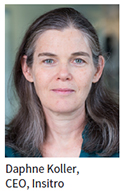 Insitro was launched by Stanford professor and Coursera founder Daphne Koller, who is the company CEO. She has studied AI and human biology for the past 20 years. She created Insitro as an integrated drug discovery company focused on using AI and functional genomics to fuel predictive modeling and drug development.
The company name is straight from the lab. "The [machine learning] models that are developed will then help guide subsequent experiments, providing a tight, closed loop integration of in silico and in vitro methods (an insitro paradigm)," Koller wrote in 2018 in Medium when she launched the company.
The Gilead collaboration is complementary fit, she said.
"I think that they have significant interest in NASH. It's a complex disease," Koller told BioWorld. "They feel like in addition to the more hypothesis-driven approaches that we bring a data-driven, unbiased way of exploring the factors to modify a complex disease."
The company's platform, Insitro Human (ISH), applies machine learning, a function of AI, along with human genetics and genomics to generate in vitro models, which drive therapeutic discovery and development. The results should provide insights into disease progression, suggest the target candidates, and predict patient responses to potential interventions.
Machine learning systems learn from data rather than being programmed to follow a set of instructions. They are being widely applied to look for associations – for example, to link genes with disease or to group together DNA profiles of patients in precision medicine. It has its critics, such as Genevera Allen, founding director of Rice University's Center for Transforming Data to Knowledge.
"The question is, can we really trust the discoveries that are currently being made using machine learning techniques applied to large datasets?" Allen told attendees of February's 2019 American Association for the Advancement of Science meeting. "The answer in many situations is, probably not without checking." (See BioWorld, Feb. 20, 2019)
Machine learning is the best way forward, Koller asserted, especially regarding NASH.
"We're taking a completely fresh look at this by not basing what we do on what others have published," she said. "We create an in vitro disease model that allows us to perturb the system in different ways and see what modifications should be made, what the biology is telling us is going on."
First steps in the collaboration are to interpret clinical trial data from Gilead, Koller added, then in parallel build the in vitro system using machine learning. In the third and final year of the collaboration, Gilead and Insitro will explore the targets they have identified.
Gilead's liver disease pipeline, which has long been strong in the hepatitis battle, is today is focused on NASH along with primary sclerosing cholangitis (PSC) and primary biliary cirrhosis. Most prominent in that lineup is the FXR agonist GS-9674, which is highly protein bound and intestinally focused, minimizing the systemic effects of FXR agonism, which can include deleterious effects on serum lipid and pruritus. The FDA recently granted the candidate orphan status in PSC. (See BioWorld, Nov. 13, 2018.)
Picked up in Gilead's $470 million 2015 acquisition of Phenex Pharmaceuticals AG, GS-9674 appears so far to be proving its value. At 24 weeks of treatment with the drug, NASH patients enrolled in the study's active arms saw significant improvements in hepatic steatosis, serum bile acids and liver biochemistry. (See BioWorld Today, Jan. 7, 2015.)
Jefferies & Co. equity research said in a note Tuesday it liked what Gilead is up to. While Gilead stock (NASDAQ:GILD) closed down at $64.54 per share Tuesday, Jefferies set a $95 per share price target, which was 16 times Jefferies' 2019 earnings per share estimate. The estimate is based on a pipeline-adjusted discounted cash flow model and the company cited competition, pipeline disappointments and worse than expected sales as risks.
South San Francisco-based Insitro, which launched last May, also announced its series A funding of more than $100 million from multiple investors, including a16z, Arch Venture Partners, Foresite Capital, GV and Third Rock Ventures, with additional investments from Alexandria Venture Investments, Bezos Expeditions, Mubadala Investment Co., Two Sigma Ventures, Verily and other undisclosed investors.