
BEIJING – Friedhelm Blobel, CEO and president of Sciclone, knows about running a specialty pharmaceutical company in China. His company, based in Foster City, Calif., and listed on Nasdaq, has a 17-year track record in China selling its $100 million-a-year drug Zadaxin.
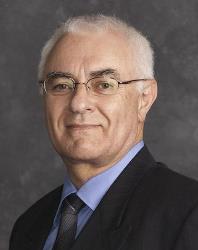 He has attended all the past Bio Conventions in China and at this year’s conference, allowed BioWorld to shadow him through a gauntlet of meetings in Beijing to see what it takes to find a novel drug with commercialization prospects for the China market – a market that analysts predict will be the biggest in the world and more than double in size by 2020.
8:15 a.m. We meet for the first time over breakfast. Rachel Zhang, from business development, has flown up from Sciclone’s Shanghai headquarters. She will be present throughout the day of eight one-on-one partnering sessions and a Sciclone presentation to be given by the CEO.
Blobel joins us looking no less distinguished for lack of a tie, orders a skim milk latte. He was up late talking with East Coast investors on the third quarter earnings call. Even though it ran long, he said it was enjoyable – “Nothing like good news to share, especially after the rough patch we had last year,” he said. Before we can get much further, we are off to our first session.
9:00 a.m. We sit down in a closet-sized room and note the irony of being in a cavernous hall – the meeting was held in the National Convention Center overlooking the futuristic blue bubble cube known as the National Aquatic Center built for the 2008 Olympics – only to be squeezed into a tiny space. First up is a Korean biopharma with focused R&D on central nervous system and metabolic diseases. It turns out their knowledge of Sciclone is limited to the company website – Blobel has a lot of ground to cover.
Sciclone has a unique business model, he explains. Once a drug discovery company in the U.S., it decided to go with what Blobel calls the common sense approach, to “focus on what was working.” That meant switching to a sales focus for its proprietary drug, Zadaxin.
Zadaxin is a pure chemical formulation of thymalfasin, an immune stimulator especially for immune-compromised patients. It’s particularly beneficial for indications prevalent in China: hepatitis B virus (or severe hepatitis, as it’s called in China), certain cancers and as a vaccine adjuvant.
Blobel explains that thymalfasin has long been well known to doctors as a traditional Chinse medicine treatment. “We did not have to convince doctors (in China) to use the drug.”
The thymosin market here is worth roughly $600 million annually, and thymalfasin is the most potent agent in that class, representing about 40 percent of the market. Sciclone’s imported version, Zadaxin, holds the largest market share as a single drug, with revenues of about $100 million. From the get-go, he said, they have had to contend with generic competitors, and Zadaxin has close to 10 today.
“But despite what China lacks in intellectual property protection, it can offer opportunities due to its fairly unique pricing system for orginator drugs. These receive a pricing advantage and can benefit from the National Drug Reimbursement List,” he said.
With Zadaxin, Blobel has inherited a few things: a good cash position and a strategic lesson, namely the importance of avoiding selling generics in China.
When the Koreans ask what kind of drugs Sciclone is looking for, Blobel offers a line he will say throughout the day: “Differentiated products – ones that are ideally on the market or close to the market in China.” He followed that with another statement: “Generics are a different sales model.”
As he explains, the only way Sciclone sells a drug is on its uniqueness and efficacy. For salespeople with stiff competition and nothing to differentiate their products with doctors, the concern is they may find themselves too close to the red envelope. “It is wrong and unacceptable for Sciclone,” he said.
The red envelope is the accepted way to give gifts in Chinese culture.
As they huddle over the Korean’s one-page pipeline chart, they discuss opportunities for Sciclone to acquire or in-license drugs and use some of that close-to $100 million cash burning a hole in Sciclone’s pocket.
Blobel sees one interesting candidate and draws a line at the Phase IIb study – indicating that when the drug gets to that point it could be of interest. The Koreans agree to send over nonconfidential data for Sciclone medical experts to consider, but given the energy in the room it seems unlikely to go far.
From there we meet with a New York-based multinational corporation (MNC). Blobel catches up with people they know in common and discuss careers that have crossed paths with Sciclone’s China Operations CEO, Hong Zhao, back in Shanghai.
They all agree it doesn’t matter if it’s Shanghai/Beijing, Boston or the West Coast – in each place in this industry you have a pool of about the same 60 to 70 good people. The world is very small.
This company knows Sciclone well. Out of the gate they say they are looking for strategic partnerships rather than commercial alliances.
Blobel, therefore, is saved his introduction. They aren’t looking to hire his sales force – such as Baxter International Inc. and Pfizer Inc. are doing to sell oncology drugs on a promotional basis. Though friendly, it seems unclear what the execs from the New York MNC want.
But before too long they ask for an update on the status of the Department of Justice and SEC subpoenas and investigation into Sciclone’s alleged Foreign Corrupt Practices Act (FCPA) violations in China. (See BioWorld Today, Aug. 10, 2010.)
Blobel is open: “From a partnering perspective, it is an overhang.”
He mentions that Sciclone is complying with all the government requests as best it can, but the company doesn’t control the process; it is at the receiving end rather than the driver. There is no certain timeframe for the investigation’s closure.
“It consumes a lot of management time. Investors hate that it is not resolved,” he said ruefully.
It looks discouraging, but as a seasoned pro, Blobel gets to the silver lining. “We are a very different company now. We have made huge internal compliance changes. It was certainly not easy. We have a new compliance officer going through all the Chinese receipts looking for fakes. We are ahead of the game, having had an earlier start over many companies operating in China.”
The MNC mentions that they are on “high alert since the GSK case. We are looking for a rigorous system. Nobody can guarantee 100 percent compliance.”
The Glaxosmithkline plc scandal and its impact on the industry were not visible in the conference panels. But many large pharmas were hit by bad news as disgruntled employees made their way to the press following the Chinese government’s corruption investigation of GSK – alleging ¥3 billion (US$490 million) was channeled illegally to doctors via travel agencies. (See BioWorld Today, Nov. 6, 2013.)
“With the mushrooming of the GSK case, MNCs may want to reduce their sales exposure to the China market. We can be a good option,” suggests Blobel.
We switch rooms and meet a German antibody biotech. After a few words in Blobel’s native tongue, the meeting switches to English. He compliments the German firm for the great deals it has made recently.
Blobel left Germany a few decades ago for the U.S., with a eight-year stint in Japan. During the day, he meets with two German companies but not a single homegrown Chinese company.
That might be because he met with almost every interesting Chinese company he could find several years ago in the run-up to what eventually became the acquisition of Novamed Pharmaceuticals Co. (See BioWorld Today, April 20, 2011, and Sept. 15, 2011.)
Blobel tells me Novamed’s purchase for $55 million put Sciclone on the map in China. It also increased the company’s sales force to 600 people.
The Germans ask a lot of questions about China. Blobel generously shares a range of China nuggets with the calm confidence of one who has been there and done that.
“When you set your pricing, you register the price with the National Development Reform Commission (NDRC). After eight or nine years, you get listed on Reimbursement Drug List (RDL). The fastest possible timeframe is four years. Before you get your reimbursement approved, your price will be reduced by the government. Unlike other markets, the price always goes down; it never goes up.” He also notes that he is “the only non-Chinese in the company. We believe in local capabilities.” And Sciclone imports, he added. “When you have an import license you can buy from whomever you like. When you have a manufacturing license then you must manufacture in China.”
11:00 a.m. We grab a quick coffee before he heads to the panel room and knocks out a well-rehearsed presentation to a small group that swells by the end.
Blobel is aware that Sciclone could suffer from being a “one-trick pony” and is working hard to diversify the portfolio risk. In the second quarter, the company in-licensed two novel cardiovascular drugs: Neucardin, from Shanghai-based Zensun Sci and Tech Ltd., and Proflow, from the Taiwan Liposome Co. (See BioWorld Today, May 20, 2013, and July 22, 2013.)
His talk wraps up and he deftly answers questions from a Spanish audience member concerned that foreign companies might face a bias from the Chinese authorities and asked whether they are less likely to have drugs approved. Blobel’s answer is no, as long as firms do their paperwork the right way. It seems everybody has the same chance to struggle with the overworked China Food and Drug Administration (CFDA) officials.
From there we head to the next partner session.
This small U.S. biotech company, like one more to follow, is in Blobel’s backyard – they chuckle at the irony of flying halfway around the world to meet a company from Foster City.
The rep has an easy energy and Californian vibe that stands out in a day of serious faces. He launches into a pitch for his new drug for hospital-acquired infections that has been partnered in 80 countries but not in China. He tells a compelling story of how the biotech saved its drug from languishing in the hands of an MNC unable to navigate the FDA regulatory doldrums. The drug, he said, has shown immediate results for patients weakened after surgery.
The smooth flow is convincing. Then it comes to nailing down the China potential.
Blobel is cautious. “Antibiotics are a horrible market in China, too many generics.” But he likes the product and admits there is real need for antibiotics that won’t contribute to immune resistance.
He prods with questions until he learns the drug is complex to manufacture and hard to copy. That gets his interest: The process offers built-in protection from knock-off competitors. It looks like a more solid prospect, and Blobel asks for data, with a promise to meet closer to home in the Bay Area.
12:40 p.m. We arrive late for lunch and get the last pickings of the Chinese buffet. Coffee is imbibed and we roll right into the afternoon meetings.
Blobel provides context for the next meeting, which is with a government-backed investment council representative and a Ministry of Commerce official. It is not likely that they will find common ground, as he knows they would like to discuss land for manufacturing sites.
After a few uninspired exchanges via translator, the meeting quickly concludes. But not before Blobel grabs a chance to air his views when asked for suggestions on facilitating foreign business – he mentions the need for greater speed and predictability from the CFDA in the drug review process. The representative’s response is a noncommittal: Check the CFDA website for review times.
Next is a German company working on a drug that specifically targets lung cancer in Asian populations. Trials are being held in Japan but not yet China. That is an unusual development path, since global trials are off the cards and could poison the data. The company rep said, “Our market is here, our patients are here,” but it’s his first trip to China.
They discuss intellectual property in China, composition of matter and biomarker rights. It’s another one that catches Blobel’s interest. “We need to look at the data and if our medical team is excited then we can work through the rest,” he said.
“Liver cancer is huge in China – in that regard it is very attractive and a great fit for Sciclone. The more unusual development path (Asia-only trials) we need to wrestle with.”
Sciclone prefers late-stage drugs first approved in the West, but it also knows that many of the best drugs are snapped up at earlier stages. It’s a tough balance for a CEO to strike. “We cannot run just a China-only study – 200 to 300 patients that is far beyond what we can manage. We all know some Phase III trials fail. Our investors don’t like to take the binary biotech risk.”
Another room, another company. This time another California biotech but with an easy-on-the-eyes iPad presentation.
Slide after slide, the case unfolds for a nanosized pain reliever for hospital use, so potent it comes with its own medical device for secure self-dosing. It is described as a cross between an iPhone and Pez dispenser. The benefits are encouraging; it targets patients in the most severe pain and overcomes the drawbacks of morphine.
While Blobel admires its design, he knows it is a no-go for China. He has an opioid in the pipeline, one that has been stalled by a government freeze on approvals for the past five years. “It’s a good idea and will work great in developed markets. But China is not ready,” he said.
The Communist Party takes drug addiction very seriously, remembering well the Opium War. There is a real concern that without proper supply chain controls government can’t ensure powerful opioids don’t get siphoned off and into the wrong hands.
As Blobel goes through the China challenges, it seems as no surprise. Likely the American has heard the discouraging news before. He said he hopes they can find commercial partners with the government affairs capabilities they need for approval. “It’s a technology very much like the cell phone vs. the landline. Why install antiquated technology?” he muses on its advantages over morphine.
Two more meetings, two more MNCs: one Asian with $300 million in China revenues and the other from the East Coast. The folks in both meetings seem uncertain of what Sciclone does and were reaching out.
But Blobel knows both companies well. Sciclone has had past partnering discussions with them, but the people in the meetings were in new roles and not aware of the history. They also were largely figuring out the China scene – and Blobel shared his hard-earned insights.
4:45 p.m. It’s a long day, but Blobel is still willing to chat about China and the challenges Sciclone faces operating in a developing market. The day went pretty well: by my count there were four prospects. Though Blobel admits none of his current partners were found this way, one can never tell what will turn up.
After four weeks in China, he is keen to get back home to California. In a month he’ll be back in Shanghai. As he said, “China is just a too exciting and too complicated an opportunity to pass up.”