Some of the most exciting news out of the European Society for Medical Oncology Congress 2022 in Paris surrounded the rapidly evolving field of multi-cancer early detection (MCED), which offers the dual benefits of identifying malignancies at a more easily treated local stage and enabling screening for the 70% of cancers that lack recommended screening tests.
Merck KGaA provided details on the discovery of MSC-4106, an orally active lead compound binding to the lipidation pocket (P-site) of the TEAD1 transcription factor and capable of disrupting its interaction with the transcriptional cofactors YAP and TEAZ, thereby preventing the formation of the YAP/TAZ-TEAD transcriptional complex.
A team of researchers at Toyohashi University of Technology in Japan have come up with a semiconductor sensor that can detect minute traces of biomarkers for infections or diseases.
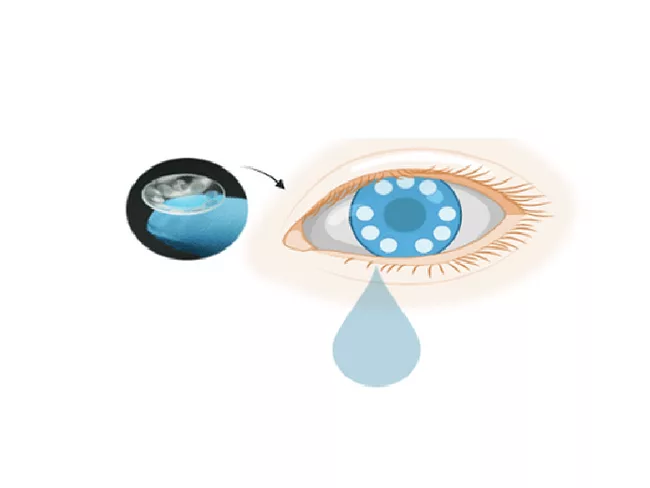
Researchers from the Terasaki Institute for Biomedical Innovation (TIBI) in Los Angeles are developing a contact lens that can capture and detect exosomes. These are nanometer-sized vesicles found in bodily secretions which have the potential to be diagnostic cancer biomarkers. The team published its work and findings in August 2022 in Advanced Functional Materials.
Carbon Medtech (Shenzhen) Co. Ltd. reported that it has raised “tens of millions of yuan” from its pre-A+ round financing. This financing was jointly led by Jinding Capital and Shenzhen Small & Medium Enterprises Credit Financing Guarantee Group Co. Ltd.
Becton Dickinson & Co. and Laboratory Corp. of America Holdings (Labcorp)are teaming up to develop, market and commercialize flow cytometry-based companion diagnostics (CDx) for cancer and other diseases. The agreement also paves the way for BD and Labcorp to collaborate with pharmaceutical partners.
Guardant Health Inc. tripled the number of cancers that can be monitored for minimal residual disease (MRD) or risk of recurrence using its Reveal liquid biopsy, adding breast and lung cancers. The test is currently used to detect circulating tumor DNA in blood for patients treated for stage II or III colorectal cancer (CRC).
Viome Life Sciences Inc. launched its Cancerdetect test for oral and throat cancer, the first in a developing portfolio of tests that use mRNA technology and an artificial intelligence (AI)-driven platform. The saliva-based oral and throat cancer test demonstrated 95% specificity and 90% sensitivity in identifying these notoriously difficult to diagnose malignancies in a recent study.
The U.S. FDA has granted 510(k) clearance to a blood-based biomarker assay for disease monitoring of patients with metastatic breast cancer (MBC). The Divitum Tka assay, developed by Uppsala, Sweden-based Biovica International AB, measures the activity of the enzyme thymidine kinase-1 (TK1) which is highly associated with cell proliferation and a predictive marker of tumor aggressiveness. It is the first liquid cancer cell proliferation biomarker assay to be approved by the FDA for use in monitoring metastatic breast cancer.
Thales SA signed a major partnership with the Curie Institute to use very high-intensity electron FLASH radiotherapy (FLASH-RT) in cancer therapy. Based on its experience in the field of particle accelerators, “we have all the manufacturing facilities and human know-how necessary to ramp research and development for this new technology,” Charles-Antoine Goffin, vice president, microwave & imaging subsystems at Thales, told BioWorld.





.webp?height=488&t=1658440060&width=650 "Centre de protontherapie a l'Institut Curie (Orsay)")