Surge Therapeutics Inc. landed $26 million in funding through a series A fundraising round to accelerate development of its intraoperative immunotherapy hydrogel.
Surge Therapeutics Inc. landed $26 million in funding through a series A fundraising round to accelerate development of its intraoperative immunotherapy hydrogel. The biodegradable injectable is designed to enable delivery of immunotherapy directly into the site of tumor resection and overcome the immunosuppressive effects associated with surgery.
Lattice Medical SAS reported the first successful breast reconstruction using Mattisse technology, a totally resorbable, 3D-printed implant which naturally regenerates fatty tissue. The procedure was performed at the Institute of Clinical Oncology in Tbilisi, Georgia. It was the work of cancer specialist Gia Nemsadze and his team. This was an immediate breast reconstruction for a 62-year-old patient with breast cancer. The surgical procedure lasted one and a half hours, allowing the mastectomy to be completed, immediately followed by the breast reconstruction.
In an expansion that will surely have other companies wondering why they didn’t move on the opportunity first, Icad Inc. partnered with Solis Mammography to identify cardiovascular risk based on incidental information commonly found in mammograms—and generally ignored.
A number of devices, imaging systems and in vitro diagnostics have become available for colorectal cancer (CRC) screening over the years, several of which are of very recent origin, a marker of sustained interest and investment in these products. The problem for industry is that a new randomized trial conducted in Europe suggests that the impact of CRC screening on all-cause mortality is zero compared to no screening, a finding that could prompt policymakers to revisit their stances on screening to the detriment of sales of these devices and diagnostics.
Following on a trifecta of regulatory wins, Optellum Ltd. raised $14 million in a series A funding round to commercialize its artificial intelligence (AI)-enabled lung cancer diagnostic platform. Optellum’s Virtual Nodule Clinic, which helps physicians identify and monitor patients at-risk of lung cancer, has received U.S. FDA clearance, CE-MDR in the European Union and UKCA in the U.K.
The European Commission (EC) is proposing a novel cancer screening program that would improve cancer outcomes by fostering more frequent cancer screenings among European Union (EU) member nations. The primary focus is on screening for breast, cervical and colorectal cancers, but the plan carries a lofty target of providing screening services for 90% of those who qualify for screening.
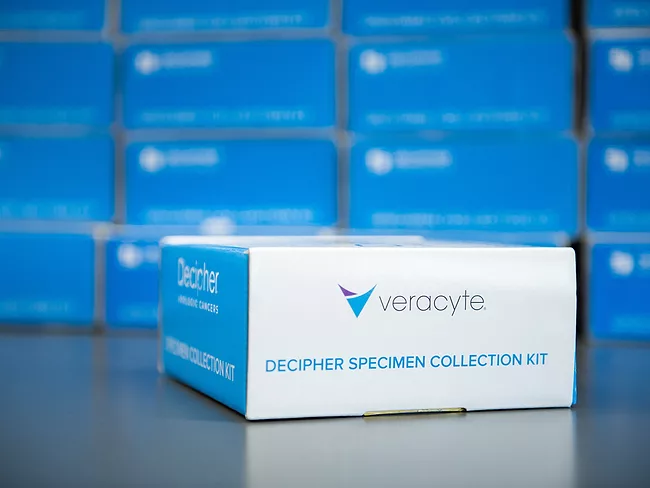
Aggressive prostate cancer disproportionately affects—and kills—African American men, but identifying which men are at highest-risk has proved challenging, particularly in younger patients. Veracyte Inc.’s Decipher prostate genomic classifier could help identify these men with early, localized prostate cancer at the greatest risk of aggressive disease, a new study published in the Journal of the National Cancer Institute found.
Challenges scheduling time for a mammogram, frustration waiting for the exam itself and pain from the test have caused any number of women to cry. Namida Lab Inc. may take the inconvenience and anxiety out of breast health assessment with its Auria test, but the tears will stay. Like a growing number of assays, the test uses tear-based analytics to determine cancer risk.
The toxicity associated with oncology therapies is the stuff of legend with clinicians and patients, and thus the U.S. FDA and manufacturers have been working to fine tune these dosing regimens. However, the FDA's Oncology Center of Excellence (OCE) includes a programmatic effort to optimize dosing regimens, which led to an editorial by FDA officials that calls on industry to consider whether the maximum tolerated dose paradigm is really the optimal approach to oncology drug development.