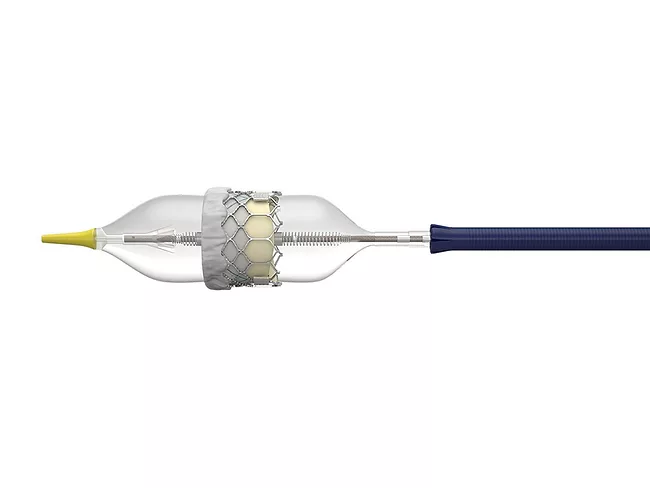
Jenavalve Technology Inc. presented first real-world data for a study evaluating the safety and efficacy of its Jenavalve Trilogy transcatheter aortic valve implantation (TAVI) system for the treatment of severe aortic regurgitation (AR). The data, presented at the EuroPCR meeting on May 18, met the primary safety and efficacy endpoints with no major adverse events and no moderate or severe AR at discharge.
Peijia Medical Ltd. has acquired exclusive rights to Jenavalve Technology Inc.’s transcatheter aortic valve replacement (TAVR) products for the treatment of aortic regurgitation (AR) and aortic stenosis (AS). Suzhou, China-based Peijia is now able to develop, manufacture, and commercialize the TAVR products in Greater China.
The history of Medicare coverage of transcatheter aortic valve replacement (TAVR) devices has not lacked for controversy despite the massive positive impact on outcomes. Ashwin Nathan, of Hospital of the University of Pennsylvania, said a new analysis made clear that the expansion of centers qualified to perform TAVR procedures has been nearly all in high population density areas with an existing TAVR program, thus leaving out the still-forgotten rural patient.
Medtronic plc reported positive interim results on the first 171 patients implanted with Evolut transaortic valve replacement (TAVR) devices in its OPTIMIZE PRO clinical trial. The postmarket, prospective, multicenter study is assessing procedural outcomes, including pacemaker rate, associated with in-procedure techniques and post-procedure TAVR care pathways when using the self-expanding, supra-annular Evolut Pro and Pro+ TAVR systems in patients with symptomatic severe aortic stenosis.
Temporary cardiac pacing is often required for hospitalized cardiac patients, particularly for increasingly common transcatheter aortic valve replacement (TAVR) procedures. Startup Atacor Medical Inc. has raised a $25 million series B round to back its development of a novel extracardiac temporary pacing system. Intriguingly led by an undisclosed corporate partner, the financing is slated to get the company through a U.S. and European pivotal trial, as well as regulatory review in those regions. The San Clemente, Calif.-based startup also aims to continue developing interim and permanent iterations of its system.
Jenavalve Technology Inc., of Irvine, Calif., has won an FDA breakthrough device designation for its namesake transcatheter aortic valve replacement device, but Jenavalve said it will file for a humanitarian device exemption in the second half of 2020, suggesting that the device won’t be commercially available for at least another year.
BEIJING – Chinese transcatheter heart valve developer Venus Medtech (Hangzhou) Inc. on Tuesday saw its share prices jump around 20% on its debut on the Hong Kong Stock Exchange (HKEX), an excellent start for a prerevenue med-tech IPO.
Edwards Lifesciences Corp. added more than $20 billion so far this year to its market cap to exceed a $50 billion valuation. Executives worked to convince Wall Street that 2020 and beyond are lining up to be additional banner years for the cardiovascular med-tech giant at the company’s annual investor meeting. While the newly introduced guidance for next year from Edwards was largely in line or a bit better than analysts had anticipated, its share price remained relatively flat on the event.
TORONTO – If you’ve successfully expanded your medical technologies business once, why not do it a second time? The answer was quick in coming Nov. 5, when Quebec City-based Opsens Inc. announced its next goal: To accelerate development of products beyond its current line of technologies for measuring coronary pressure into the structural cardiology space.
Medtronic plc, of Dublin, reported good news in terms of its quarterly results Tuesday, with key revenue segments coming in line with or beating expectations. Wells Fargo's Larry Biegelsen noted that coronary and structural heart sales of $955 million exceeded the consensus of $949 million and his organization's $923 million estimate. The company pointed to its transcatheter aortic valves as helping in the boost, following the expansion into the low-risk patient population.