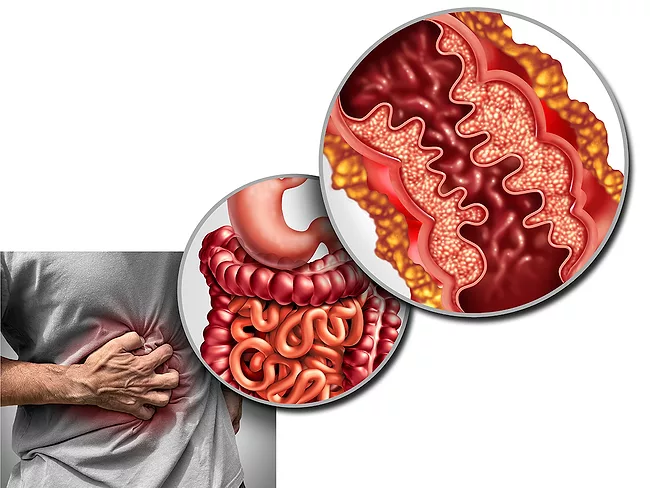
It is well known that mutations in the cystic fibrosis transmembrane regulator (CFTR) gene are causative of cystic fibrosis, a lethal autosomal recessive Mendelian disorder. Several studies have also pointed to an association between CFTR mutations and inflammatory bowel disease (IBD).
For a whopping $7.1 billion up front, Roche AG is buying Telavant Holdings Inc., a firm that is owned by Roivant Sciences Ltd. and Pfizer Inc. The deal also includes $150 million on the back end, and Roche gains rights to develop, manufacture and commercialize a fully human monoclonal antibody targeting tumor necrosis factor-like ligand 1A, RVT-3101, for treating inflammatory bowel disease (IBD) and possibly other diseases in the U.S. and Japan. Pfizer retains the rights for the rest of the world.
Abivax SA’s debut on the U.S. market received a somewhat chilly reception Oct. 20, as the firm priced on the low end of its proposed range and ended the first day of trading in the red. But the company managed to pull in about $235.8 million in gross proceeds, the majority of which will support late-stage efforts for obefazimod, an oral candidate with a novel mechanism of action it hopes to advance in the lucrative inflammatory bowel disease space.
Pfizer Inc. may have a blockbuster on its hands with the U.S. FDA’s approval of Velsipity (etrasimod), a selective sphingosine-1-phosphate (S1P) receptor modulator for adults with moderately to severely active ulcerative colitis (UC).
Sosei Group Corp. and Verily Life Sciences LLC, an Alphabet company, have announced the successful validation and nomination of a first G protein-coupled receptor (GPCR) target into early drug discovery for immune-mediated diseases with an initial indication focus of inflammatory bowel disease (IBD).
Teva Pharmaceutical Industries Ltd. is partnering with Sanofi SA in a 50-50 collaboration to develop and commercialize its anti-TL1A candidate, TEV ‘574, initially for inflammatory bowel disease (IBD), in a deal that comes with an up-front payment of €469 million (US$500 million) and up to €940 million in development and launch milestones.
Teva Pharmaceutical Industries Ltd. is partnering with Sanofi SA in a 50-50 collaboration to develop and commercialize its anti-TL1A candidate, TEV ‘574, initially for inflammatory bowel disease (IBD), in a deal that comes with an up-front payment of €469 million (US$500 million) and up to €940 million in development and launch milestones.
Atomwise Inc. has nominated a development candidate focused on TYK2 inhibition, discovered by leveraging its proprietary artificial intelligence (AI) drug discovery platform, Atomnet.
Neuroimmune modulation using vagus nerve stimulation (VNS) reduced Crohn’s disease symptoms and improved patient quality of life, a study published in the Journal of Crohn’s and Colitis found. The research by Setpoint Medical Corp. could provide a better option for patients with the autoimmune disorder than biologics, which often fail to work over time and can cause significant adverse effects.
In the gastrointestinal tract, intraepithelial lymphocytes are tasked with protecting the epithelium against pathogens and participating in wound repair and correct mucosal barrier functioning. In a study published in the Sept. 15, 2023, issue of Science, researchers at King’s College London and collaborators have identified a specific subset of gamma-delta (γδ) T cells in the human gut, Vγ4 cells, which seems to protect against inflammatory bowel disease (IBD) progression.