At the recent ASPET meeting, University of Minnesota and University of Montana researchers presented data from studies to determine the ability of the Toll-like receptor 7 (TLR7) and TLR8 agonist INI-4001 to enhance the efficacy of the heroin vaccine M-sKLH for the treatment of opioid use disorder.
Researchers from the National Institutes of Health recently presented preclinical data for the dopamine D3 receptor antagonist VK-4-116, which has potential for the treatment of opioid use disorder (OUD).
Cessation Therapeutics Inc. has announced outcomes of a new study demonstrating that its anti-fentanyl monoclonal antibody treatment, CSX-1004, may provide robust and durable protection from life-threatening respiratory depression caused by high doses of fentanyl. The findings come from the company’s ongoing series of proof-of-concept studies in nonhuman primates.
A U.S. FDA advisory panel saw a number of problems in the clinical trial for the Avertd test for opioid use disorder (OUD), including the fact that the study failed to enroll a sufficiently ethnically diverse body of subjects. Perhaps more damning was that the advisory panel was uncertain as to whether the 15 single nucleotide polymorphisms (SNPs) evaluated in the test were helpful in sorting out which patients were truly at high risk of OUD, leading to an 11-2 vote that the probable benefits of the test do not outweigh the risks.
GATC Health Corp. has announced that the new drug candidates discovered by its proprietary artificial intelligence (AI) drug discovery and prediction platform to treat opioid use disorder (OUD) and fentanyl addiction have entered preclinical development.
A wearable biosensor developed by Scottish startup Pneumowave Ltd. has been tapped for a clinical trial investigating respiratory depression at King’s College London (KCL). Pneumowave’s respiratory monitoring platform will be used to collect breathing data from patients at risk of experiencing slow and shallow breathing as a side effect of opioid medication.
The FDA gave Pear Therapeutics Inc. a second breakthrough device designation with the company’s Reset-A prescription digital therapeutic (PDT) for alcohol use disorder getting the regulatory agency’s speed pass. The news comes a week out from the vote of stockholders of blank-check company Thimble Point Acquisition Corp. Inc. on a combination with Pear that will take the digital therapeutic company public.
Orexo AB enrolled the first patient in a pivotal trial of its digital therapeutic Modia plus sublingual buprenorphine/naloxone for treatment of opioid use disorder (OUD). Orexo’s Zubsolv, the combination of buprenorphine and naloxone used in the study, has been employed to help U.S. patients with OUD since 2013.
Orexo AB enrolled the first patient in a pivotal trial of its digital therapeutic Modia plus sublingual buprenorphine/naloxone for treatment of opioid use disorder (OUD). Orexo’s Zubsolv, the combination of buprenorphine and naloxone used in the study, has been employed to help U.S. patients with OUD since 2013.
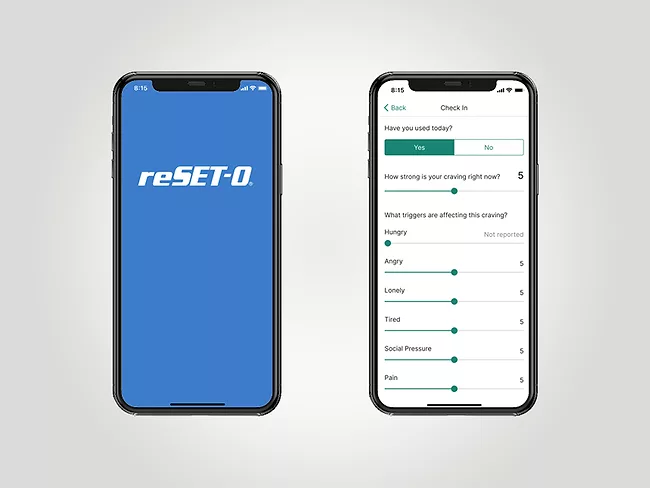
Pear Therapeutics Inc. released nine-month, real-world data showing long-term reduction in costly health care utilization categories, including inpatient stays and emergency department visits, in patients with opioid use disorder (OUD) who utilize its Reset-O prescription digital therapeutic. The findings suggest that Reset-O could help to stabilize patient outcomes long-term when used in conjunction with outpatient treatment.