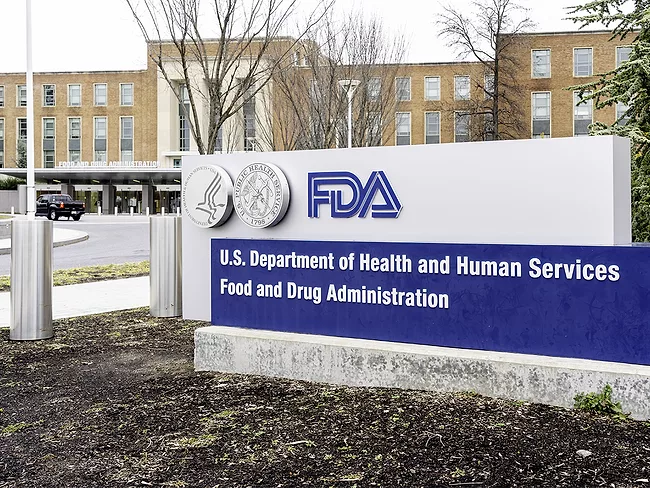
The FDA’s Center for Devices and Radiological Health has withdrawn its December 2017 final guidance for clinical evaluation of software as a medical device, a development that seems to align with recent relaxation of digital health product regulation, but which might also be seen as the consequence of an ill-advised case of regulatory copy and paste.
The International Medical Device Regulators Forum (IMDRF) has issued a draft guidance for predetermined change control plans for software as a medical device. The problem for advocates of regulatory harmonization is that the IMDRF draft overlaps awkwardly with the FDA’s approach, which has issued separate policies for the AI subset of device software functions and a separate guidance for all other devices, including non-AI software.
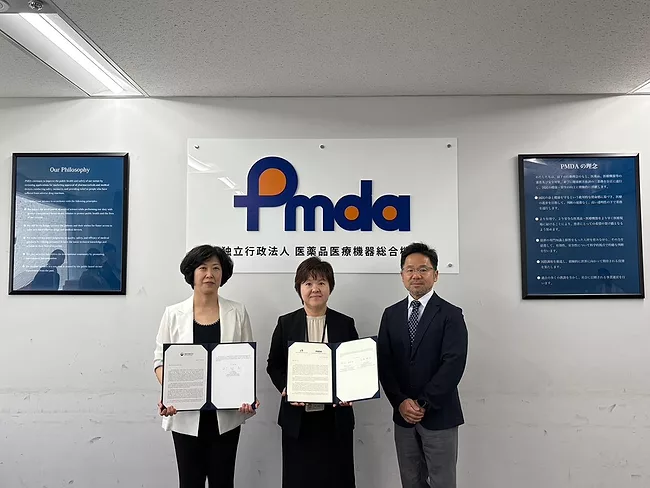
South Korea’s Ministry of Food and Drug Safety signed a confidentiality agreement with Japan’s Ministry of Health, Labour and Welfare and Pharmaceuticals and Medical Devices Agency to boost bilateral regulatory cooperation in the field of medical devices.
A new guidance by the International Medical Device Regulators Forum for good machine learning practices draws heavily on a 2021 playbook provided by Canada, the U.K. and the U.S., an outcome that also supports the notion that there is no point in reinventing a highly functional regulatory wheel.
Michelle Tarver, the acting director of the U.S. FDA’s device center appeared on a Sept. 24 webinar to discuss her priorities for the agency going forward, one of which is global health equity.
Hiiti Sillo, director of the WHO’s office for regulation and safety, told an audience at this year’s IMDRF meeting in Seattle that WHO is putting the finishing touches on a streamlined product application dossier process, one of several work products that should be ready for publication sometime in 2025.
A trio of regulators devised a series of good machine learning practices in 2021, a key point of consideration for many algorithms that will eventually be used in thousands of medical applications in the coming years.
Regulatory harmonization and reliance are the orders of the day at this year’s meeting of the International Medical Device Regulators Forum (IMDRF), but that does not mean individual regulators are waiting for IMDRF to act on their own imperatives.
The International Medical Device Regulators Forum will meet in Washington in March 2024, a location which would seem to guarantee robust attendance. The meeting agenda includes an extensive amount of time for specialized regulatory pathways, an effort to promote the incentives for development of orphan and pediatric devices across the globe.
The U.S. FDA is still sorting through the feedback for its proposal to modestly align the Quality System Regulation with ISO 13485, but the agency has posted a draft four-year plan for regulatory harmonization that is substantially broader in scope than just quality management system considerations. While this proposal addresses a significant need for device makers working in multiple markets, the objectives include an assessment of at least nine non-FDA harmonization proposals by the end of fiscal year 2025, a clear indicator that harmonization will continue to be every bit the slog it has proven to be in recent years.