PARIS – Siemens Healthineers AG has unveiled its growth plans for 2025 at its annual general meeting. The Erlangen, Germany-based medical technology giant, valued at nearly $67 billion on the Frankfurt stock exchange, is ramping growth. “We are setting ourselves the objective of annual growth of up to 8% on a like-for-like basis up to 2025, compared with a previous objective of 5%,” said Ralf Thomas, supervisory board chairman, Siemens Healthineers AG. Adjusted earnings per share should, accordingly, rise by 15% a year over that period as part of this strategic plan, compared with a target of at least 10% previously.
With the rates of nonalcoholic steatohepatitis (NASH) rapidly rising, Glympse Bio Inc. and Laboratory Corp. of America Holdings Inc. (Labcorp) have announced new tests that can assess the risk of the liver condition without the traditional biopsy.
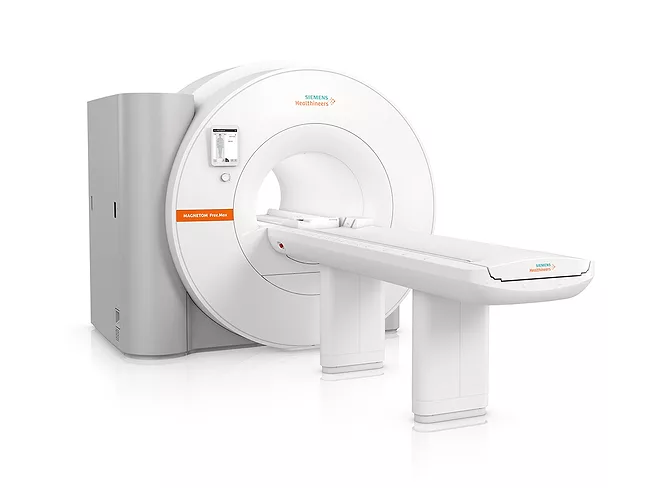
In the season of college bowl games, two long-time rivals are vying for another title, the right to claim being the first to install Siemens Healthineers AG’s Magnetom Free.Max magnetic resonance imaging (MRI) system. Both the Ohio State University and the University of Michigan said they were first in the U.S. to put in the recently approved system.
The FDA has granted clearance of Siemens Medical Solutions Inc.’s photon-counting computed tomography (CT) scanner, Naeotom Alpha. The new diagnostic imaging device uses a photon-counting detector that measures individual X-rays that pass through a patient's body, as opposed to current systems that use detectors that measure the total energy contained in X-rays at once. The scanner then transforms the information from the X-ray photons into a detailed three-dimensional image, which can be used by physicians to assist diagnosis or treatment preparation planning.
The U.S. FDA has granted 510(k) clearance to Siemens Healthineers AG for AI-Rad Companion Organs RT, the newest module in its platform of artificial intelligence-based software assistants. The radiation therapy planning aide joins earlier AI-Rad Companion modules for interpreting magnetic resonance imaging (MRI) studies of the brain and prostate, as well as one for chest computed tomography (CT) studies.
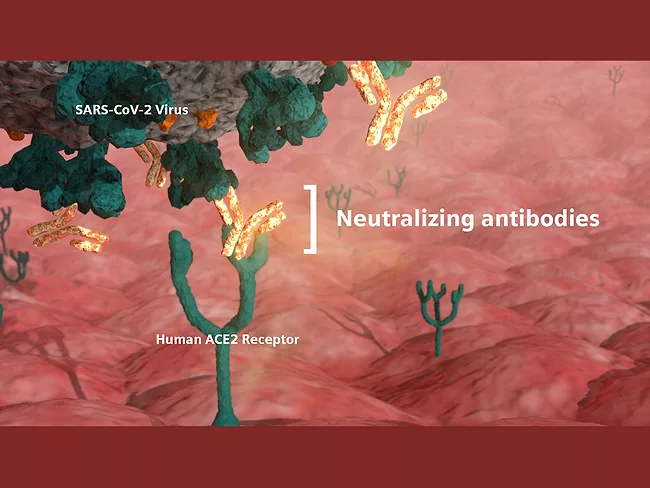
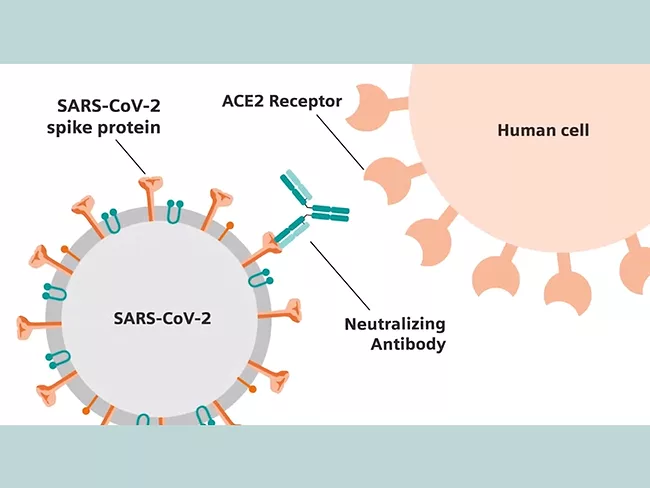
Hot on the heels of news that two vaccines for COVID-19 are nearing market readiness, two companies have broken away from the pack of assay manufacturers to offer quantitative antibody tests that can verify whether the vaccines provide effective, lasting protection. Siemens Healthineers and Imanis Life Sciences both claim to be first to develop scalable, quantitative neutralizing antibody tests.
Siemens Healthineers AG snagged a key role in the mystery playing out across the world's pandemic stage – what do antibody test results mean in terms of immunity to SARS-CoV-2 and how do different tests assessing different proteins compare? The U.S. CDC and the Joint Research Centre (JRC) of the European Commission tapped the Erlanger, Germany-based company to take the lead in developing a process to standardize antibody assays.
LONDON – Ion Beam Applications SA (IBA) has taken a giant step into China, sealing a €100 million-plus (US$118.2 million) licensing deal with a local company to manufacture, install and maintain its proton beam cancer therapy systems.
LONDON – Ion Beam Applications SA (IBA) has taken a giant step into China, sealing a €100 million-plus (US$118.2 million) licensing deal with a local company to manufacture, install and maintain its proton beam cancer therapy systems.
The U.S. FDA has greenlighted two new modules for Siemens Healthineers’ AI-Rad Companion platform, giving radiologists new artificial intelligence (AI) tools to assist in interpreting magnetic resonance imaging (MRI) studies of the brain and prostate. The AI-Rad Companion Brain MR for Morphometry Analysis and AI-Rad Companion Prostate MR for Biopsy Support join earlier intelligent software modules for Chest CT.