Alongside its duties in evaluating safety and effectiveness of drugs and their postmarketing monitoring, the U.K. Medicines and Healthcare products Agency (MHRA) has now been handed a further brief to support economic growth.
While biomedical resources in the form of specialized tools, hundreds of thousands of published papers and huge repositories of ‘omics, health records and other data, are growing exponentially, discovery is getting slower and more expensive. That is the perspective from which scientists at Stanford University approached the development of their artificial intelligence (AI) research assistant Biomni.
While biomedical resources in the form of specialized tools, hundreds of thousands of published papers and huge repositories of ‘omics, health records and other data, are growing exponentially, discovery is getting slower and more expensive. That is the perspective from which scientists at Stanford University approached the development of their artificial intelligence (AI) research assistant Biomni.
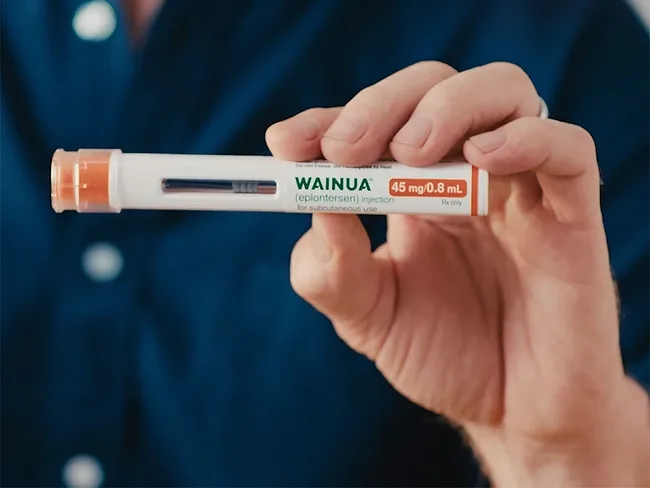
News of the unexpected phase III failure of the gene silencing drug Wainua (eplontersen) in the treatment of transthyretin-mediated amyloid cardiomyopathy sent Astrazeneca plc’s shares (NYSE:AZN) down $10.88 to close July 9 at $178.40.
The gene therapy specialist formerly known as EG427 has a new name and fresh momentum, after closing a €33 million (US$37.7 million) series C that will further advance clinical development of the lead program in chronic neuro-urology indications.
Novartis AG is to pay $1.1 billion up front to acquire Myricx Bio Ltd., a preclinical-stage antibody-drug conjugate (ADC) specialist that is advancing a novel and more potent class of payload. With the first two programs due to enter clinical development before the end of the year, the Swiss pharma also will pay up to $400 million more in potential milestones. The centerpiece of the deal is London-based Myricx’s N-myristoyltransferase inhibitors, which in preclinical testing have prompted complete and durable tumor regression at well-tolerated doses in a range of solid tumors.
Novartis AG is to pay $1.1 billion up front to acquire Myricx Bio Ltd., a preclinical-stage antibody-drug conjugate (ADC) specialist that is advancing a novel and more potent class of payload. With the first two programs due to enter clinical development before the end of the year, the Swiss pharma also will pay up to $400 million more in potential milestones. The centerpiece of the deal is London-based Myricx’s N-myristoyltransferase inhibitors, which in preclinical testing have prompted complete and durable tumor regression at well-tolerated doses in a range of solid tumors.
With more and more approved products, cell and gene therapies (CGTs) are moving from the initial stronghold in academic medical centers, and these complex biologics are now available across a wider network of treatment centers.
Ipsen SA announced its second acquisition of the week, saying it will pay €700 million (US$797 million) for Memo Therapeutics AG and its phase III-ready drug potravitug, a treatment for BK virus-associated infections and nephropathy in immune-compromised kidney transplant patients.
The academic authors of the paper describing the pivotal trial of Amgen Inc.’s Tavneos (avacopan) have retracted it from The New England Journal of Medicine because the primary endpoint assessments of nine patients were “re-adjudicated” after the database was locked and the study unblinded.