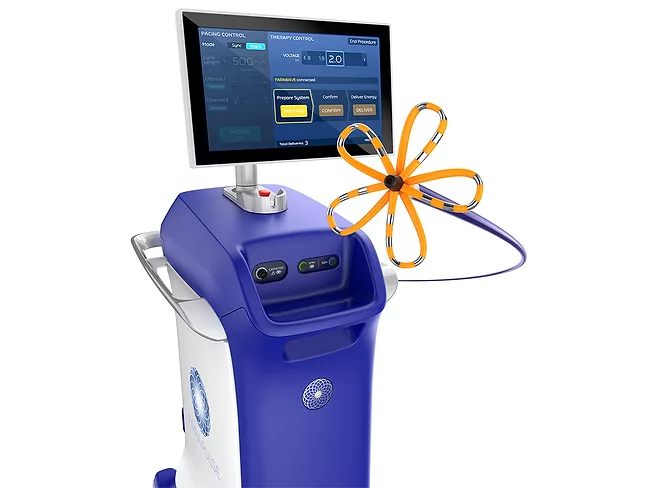
Growth in the first quarter for Boston Scientific Corp.’s blockbuster products, Farapulse and Watchman, pushed the company well over analysts’ expectations and gave management confidence to raise its guidance for the year to 15% to 17% up from 12.4% to 14.5%, despite a projected $200 million in tariff impacts.
Three years after the U.S. FDA approval of Abbott Laboratories’ Amplatzer Amulet, results of its investigational device exemption trial failed to notably differentiate Abbott’s left atrial appendage occluder system from Boston Scientific Corp.’s market-dominant Watchman device beyond the ability to forego anticoagulants quickly after implantation.
Left atrial appendage (LAA) occlusion procedures are designed to reduce the risk of thromboembolism in patients who have non-valvular atrial fibrillation, but a study presented at the 2023 Transcatheter Cardiovascular Therapeutics annual meeting in San Francisco demonstrated that about half of patients continue to have LAA leaks – and potentially the risk of dangerous blood clots and stroke – a year after the procedure.
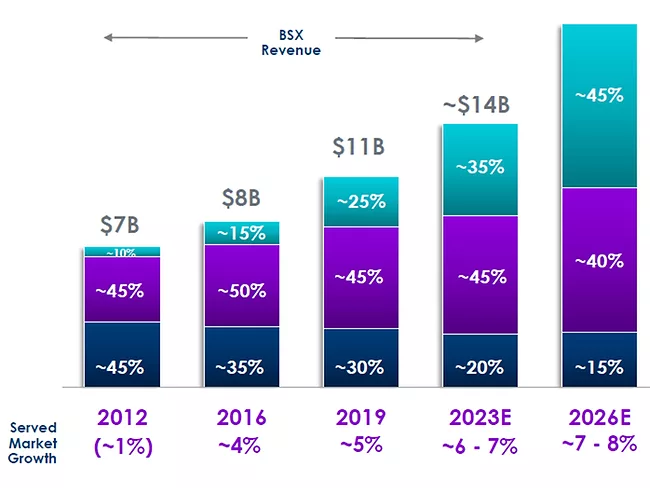
At its Investor Day on September 20, Boston Scientific Corp. unveiled an ambitious long-range plan to become “the highest performing med-tech large-cap company” in terms of financial performance, sales growth, EPS, execution and talent retention.” That’s a notable step up from its 2021 goal of being just one of the top performers.
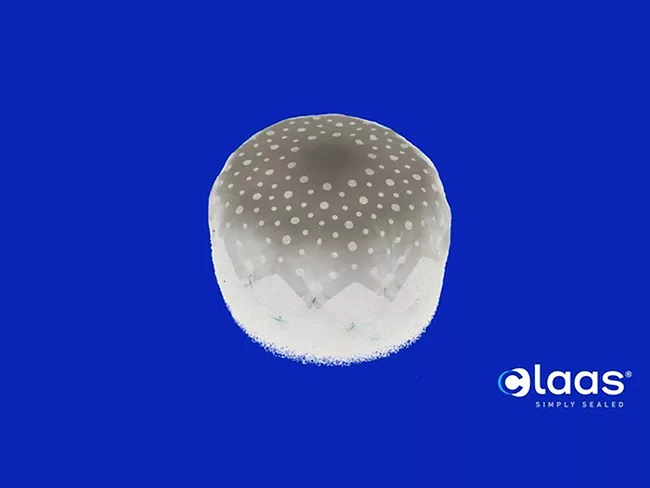
Conformal Medical Inc. plugged the gap in funding needed to complete enrollment in the pivotal CONFORM trial for its left atrial appendage occlusion (LAAO) technology with completion of an oversubscribed $35 million series D fundraising round. The Conformal left atrial appendage seal (CLAAS) system is designed to close off the left atrial appendage in individuals with non-valvular atrial fibrillation to cut the risk of stroke and avoid the use of anticoagulants.
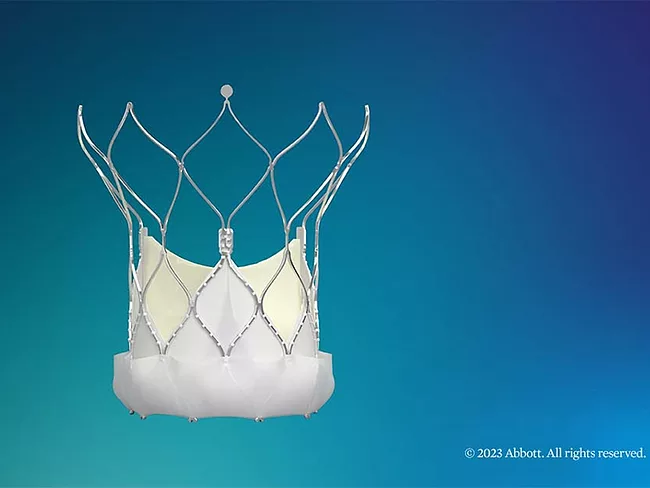
Abbott Laboratories continues to push its presence in the cardiovascular market with offerings for the left atrial appendage (LAA) closure and transcatheter aortic valve implant (TAVI) markets, both of which generated affirmative data presented at this year’s edition of the annual meeting of Cardiovascular Research Technologies (CRT 2023) in Washington.
The 2022 Transcatheter Cardiovascular Therapeutics annual meeting highlighted mostly positive outcomes from major trials conducted by nearly all the big players in the cardiac device market. Here’s our round-up of the meeting’s high points, with updates from Abbott Laboratories, Abiomed Inc., Boston Scientific Corp., Edwards Lifesciences Corp., Inari Medical Inc., Medtronic plc and Recor Medical Inc.
Feops SA reported that its Heartguide product has received de novo authorization from the FDA for pre-operative planning of left atrial appendage occlusion (LAAo) with the Boston Scientific Corp. Watchman device. The software platform is designed to help physicians virtually model clinical scenarios with different implant positions and sizes of the Watchman device using digital twin technology based on patient-specific virtual replicas of the heart. It is currently commercially available in the EU, U.K., Canada and Australia for transcatheter aortic valve implantation and LAAo workflows.
The FDA posted an advisory for health care professionals regarding a “potential for differences” between men and women in connection with the use of left atrial appendage (LAA) closure devices. The agency said that differences in procedural outcomes as described in a new medical journal article included a procedure-associated death rate of 0.3% among women undergoing the procedure, triple the rate of 0.1% in men.
A large health system in Minnesota recently became the first in the world to have completed a structural heart procedure, or any other surgical procedure for that matter, using any kind of 4D hologram technology. The technology was developed by venture capital-backed startup Echopixel Inc., and it is intended to improve both surgical precision and outcomes in minimally invasive procedures.