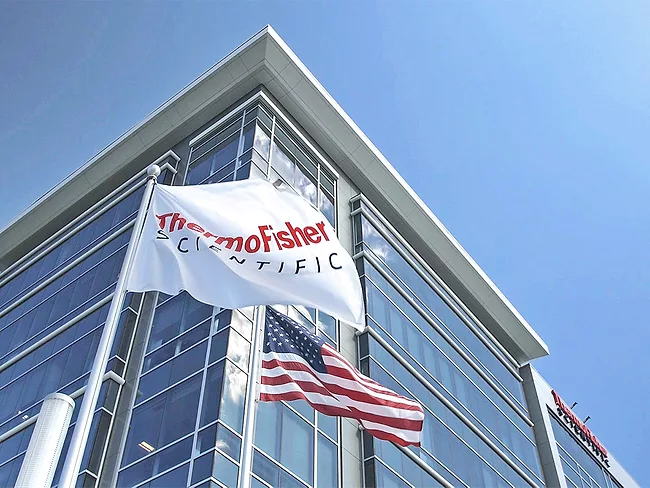
The FDA’s emergency use authorization (EUA) program is still active in the area of tests and test kits, which is due in part by the emergence of the Delta variant of the SARS-CoV-2 virus and the associated warnings that the effectiveness of vaccines may be declining. One example of the sustained emphasis on testing is the EUA granted to Thermo Fisher Scientific Inc. for two PCR test kits that can detect the latest variants of the virus, a demonstration that the demand for these updated tests seems unlikely to ebb anytime soon.
The U.S. Senate and the House of Representatives have reintroduced the Verifying Leading-edge IVCT Development (VALID) Act, a bill that would authorize the FDA to regulate lab-developed tests (LDT). The question of the agency’s statutory authority to regulate LDTs is part of a long-running debate, but the immediate question is whether Congress will see fit to deal with the question this year rather than wait until 2022, when the next device user fee will require legislative authorization.
The FDA’s legal authority to regulate lab-developed tests (LDTs) has come into question on several occasions in a number of venues, and the issue is enjoying new life yet again thanks to more activity on Capitol Hill. While two competing pieces of legislation are back in play, the most critical question may be whether the FDA has any authority left at all after the August 2020 rescission letter from the Department of Health and Human Services.
The U.S. Department of Health and Human Services (HHS) has awarded a contract for validation of lab-developed tests (LDTs) for the pandemic to a private company, a move that was apparently an effort to address the resource crunch at the U.S.
As is the case with many national governments, the U.S. federal government does not routinely measure its activities in the calendar year, but we at BioWorld don’t share that outlook. CY 2020 was odd in more ways than one from a regulatory standpoint, and thus we offer our version of a regulatory top 10 for a year that might not look much better in the rear-view mirror than it has looked as a current event.
The draft version of the U.S. Medicare national coverage analysis for blood-based biomarker tests for colorectal cancer (CRC) engendered a large body of support, but several stakeholders recommended that the Centers for Medicare & Medicaid Services (CMS) avoid prescriptiveness regarding the sensitivity and specificity for any tests that would be covered under the policy.
The question of whether the U.S. FDA will review emergency use authorizations (EUAs) for lab-developed tests (LDTs) for the COVID-19 pandemic has bounced around frequently in recent weeks, and Brett Giroir of the Department of Health and Human Services has resurrected the issue.
The controversy over the U.S. FDA’s authority to regulate lab-developed tests (LDTs) took on a new set of considerations due to the COVID-19 pandemic. However, a June 22 memo by HHS General Counsel Robert Charrow pokes holes in the FDA’s argument on several fronts. Among these is the question of whether an LDT can be regulated by the FDA, given that a test is not usually offered for sale across state lines.
The U.S. FDA’s stated policy is that it will not review emergency use authorizations (EUAs) for lab-developed tests (LDTs) for the COVID-19 pandemic, but that doesn’t mean labs are completely shut out. The FDA’s Toby Lowe said that a lab that wants to pair an assay that already has an EUA with a new software installation on lab instrumentation can work with the assay developer to update that EUA.
The U.S. FDA’s device center has declared it will not review emergency use authorization (EUA) requests for lab-developed tests (LDTs) for the COVID-19 pandemic, but on the agency’s most recent town hall, on Oct. 14, FDA officials were uncertain as to whether labs should file those EUAs, leaving labs in a state of limbo yet again.