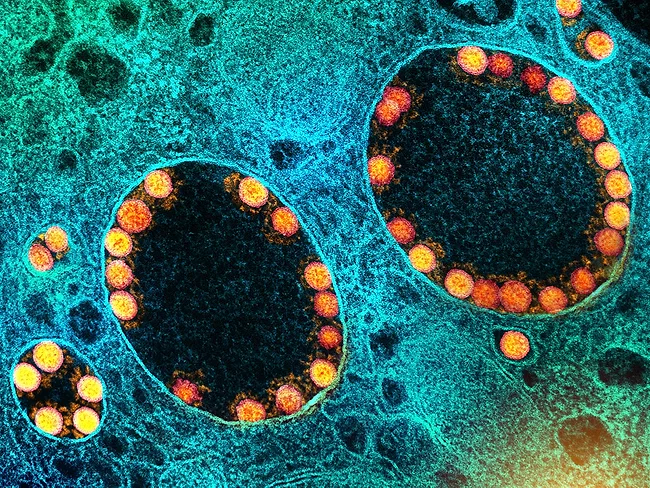
Maxwell Biosciences Inc. has announced data on the utility of its Claromer drug discovery platform for the treatment and prevention of SARS-CoV-2, and potentially other respiratory viruses, through a series of preclinical in vitro and in vivo studies.
The U.S. Government Accountability Office (GAO) recently published a report on the pandemic-driven expansion of telehealth for Medicare beneficiaries, and pointed to some privacy and security risks of which patients may be unaware. However, GAO also noted that the CMS does not yet have a good handle on the rate of telehealth fraud and has not yet collected reliable data on telehealth outcomes, two gaps that will have to be filled if Congress is to comfortably vote to make permanent some of these pandemic-driven telehealth policies.
The COVID-19 pandemic may or may not be over, depending on which member of the U.S. government’s executive branch one asks, but the FDA’s device center has drawn much tighter lines around its emergency use authorization (EUA) program for COVID-19 tests.
Valneva SE is approaching a crucial point with its troubled efforts to develop a COVID-19 vaccine, having announced Sept. 26 it’s in talks with a potential partner for its next-generation jab. The company cautioned the negotiations could take several months and may not succeed. The company’s problems with its COVID-19 vaccine, which is based on an inactivated whole virus, have weighed on its shares (Paris:VLA), which collapsed from a 52-week high of more than €29 (US$28.29) in December 2021 to €5.74 at the close of trading Sept. 26.
As doctors and public health officials brace for a possible fall coronavirus surge, one of the challenges continues to be predicting who will have a mild, moderate or severe case of COVID-19.
President Joseph Biden’s recent statement that the COVID-19 pandemic is over may or may not reflect popular fatigue with the associated public health emergency (PHE), but the statement struck a different tone in some quarters on Capitol Hill. Sen. Richard Burr (R-N.C.) was one of several who argued that the need for the PHE had thus necessarily run its course, with Burr specifically calling into question the need for additional funding for COVID-related federal health efforts.
The U.S. response to the emergence of the COVID-19 pandemic may by now be the stuff of public health policy lore, with both the FDA and the CDC contributing to the chaos in the first months of the pandemic. The Office of Inspector General has issued an analysis of the situation, and while OIG revisited some of the known miscues, the report also made the case that a national strategy for pandemic response will be needed if federal government efforts in the future are to be less a hazard to the lives of American citizens than those seen in the first half of 2020.
The U.S. NIH is not generally regarded as a wellspring of concepts and policies in the world of artificial intelligence (AI), but that perception may change soon thanks to the agency’s Bridge2AI program. The agency announced recently that it will drop $130 million into this program over four years in an effort to develop standards for data used in AI research, a key development for device makers seeking to sell products that use these complex algorithms.