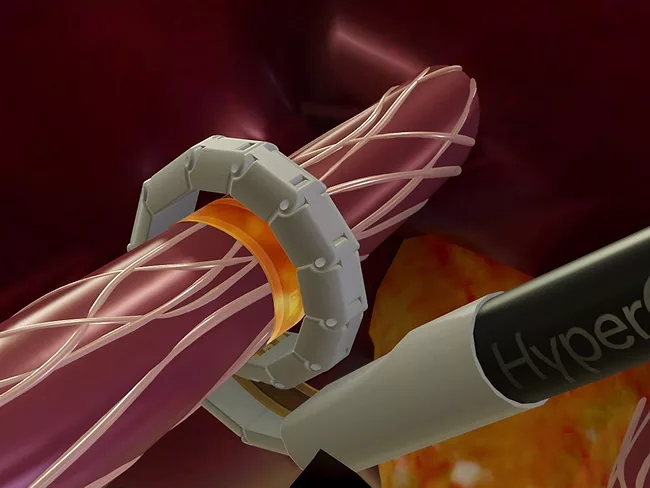
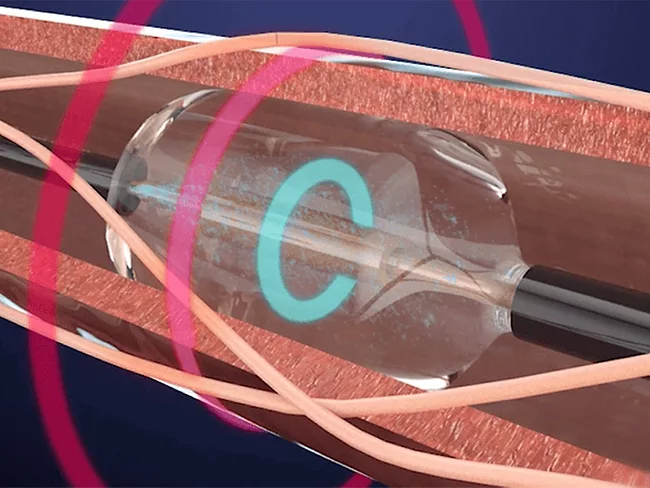
As renal denervation (RDN) makes a comeback for treatment-resistant hypertension, Deepqure Inc. is advancing its RDN medical device dubbed Hyperqure with the U.S. FDA granting clearance for a U.S.-based study.
Sky Labs reported it has more comparative study data to back its ring-type medical device for blood pressure (BP) called CART BP, which CEO Jack Lee noted has the potential to “replace existing blood pressure monitors.” Sky
Biospectal SA has received a CE MDR class IIa medical device certification for its optical fingertip blood pressure monitoring app, Optibp. The device records fingertip blood flow optically and transforms the information into a pulse wave that it analyzes to estimate blood pressure.
Recor Medical Inc. finally received U.S. FDA approval for its Paradise ultrasound renal denervation (RDN) system for the treatment of hypertension after more than ten years of research and clinical trials. Paradise is the first RDN system to reach the U.S. market, and its approval is good news for the technology after years of disappointment in the data from trials and concerns over the efficacy of RDN devices.
The European Society of Hypertension (ESH) has recommended that renal denervation (RDN) be offered as an adjunctive therapy to patients with resistant hypertension. Releasing new and updated guidelines on the management of arterial hypertension, the ESH said recent randomized controlled trials showed that endovascular RDN can be associated with a significant, albeit not marked, office and ambulatory blood pressure reduction in patients with uncontrolled hypertension.
Renal denervation (RDN) was described as the “comeback kid” at the recent EuroPCR conference in Paris where participants argued that following the success seen in several sham-controlled trials, there is now no doubt about the safety and the efficacy of the technology as a treatment for hypertension. The device-based procedure should now be used as a therapy option to reduce high blood pressure in patients, delegates heard.
Cardiai Inc. has developed a small, portable monitor that continuously measures patients’ blood pressure (BP) at regular intervals for up to seven days, well beyond the single measurements historically done in a doctor’s office.
Medtronic plc reported six-month results from the full cohort of its Spyral HTN-ON MED study, showing a statistically significant reduction in office-based blood pressure, a key secondary endpoint. However, the trial missed its primary efficacy endpoint of a reduction in 24-hour systolic blood pressure, compared with a sham procedure.
Onward Medical NV reported initial patient enrollment in its Hemon early feasibility study and first-in-human trial of its ARC implantable pulse generator. The study will examine stabilization of hemodynamic function in patients with a spinal cord injury. It is taking place at Lausanne University Hospital (CHUV). “Implanting into a human for the first time is an important step forward for our neurostimulation technology, designed to help refine and implement epidural stimulation therapy in patients with spinal cord injury,” Dave Marver, CEO of Onward, told BioWorld.
PARIS – Researchers at the Institute for Surface Technologies and Photonics in Weiz, Austria, and the Institute of Scientific and Industrial Research Osaka University, Japan, have invented new ultra-flexible health monitoring patches that use harvested bio-mechanical energy. “These new devices represent a wireless e-health patch for accurate pulse and blood pressure monitoring,” Andreas Petritz, from the Institute for Surface Technologies and Photonics (the materials research unit of Joanneum Research FmbH), told BioWorld.