Researchers from Chongqing Medical University and affiliated organizations reported findings from studies they performed to assess the role of zinc-finger protein 334 (ZNF334) in cervical cancer.
A new non-invasive device which enables women to test themselves at home for signs of the cancer-causing human papillomavirus strains in menstrual blood, has been developed with support from the Venture Builder Incubator at the University of Edinburgh.
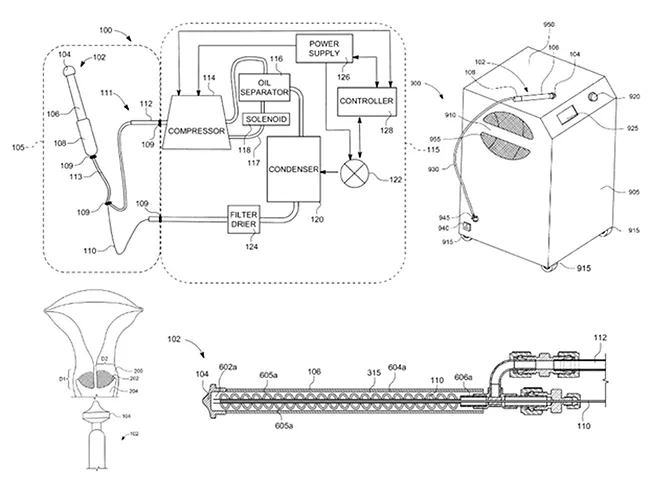
The first patenting from San Francisco-based Ananya Health Inc. describes its development of a closed-loop cryoablation platform to freeze abnormal cells before they become cervical cancer. The company’s device achieves ablative temperatures without consumable gas, making the procedure portable, battery-powered, and ten times cheaper than traditional cryoablation.
Oncohost Ltd. provided new details on a novel application for its proteomic pattern analysis technology at Biomed Israel last week. While its initial development focused on using a single blood sample to guide selection of first-line immunotherapy for cancer based on likelihood of response, the Prophet platform now also predicts severe adverse immune-related events, Oncohost CEO Ofer Sharon told BioWorld.
Nine Square Therapeutics Inc. has disclosed mucolipin-1 modulators reported to be useful for the treatment of metabolic disease, neurodegeneration, aging, immunological disorders, inflammatory disorders, cardiovascular disorders, lysosomal storage disease and cancer.
Ten days early, the U.S. FDA granted full approval under priority review to Pfizer Inc. and Genmab A/S’s antibody-drug conjugate Tivdak (tisotumab vedotin) to treat cervical cancer.
Barinthus Biotherapeutics plc’s immunotherapeutic against persistent, high-risk human papillomavirus (HPV) infections, VTP-200, was generally well-tolerated in a phase Ib/II study, but did not demonstrate significant signs of efficacy, pooled top-line data show.
Researchers at Oncopia Therapeutics Inc. (dba Proteovant Therapeutics Inc.) and University of Michigan have synthesized proteolysis targeting chimera (PROTAC) compounds comprising a Von Hippel-Lindau disease tumor suppressor (VHL) binding moiety covalently linked to a probable global transcription activator SNF2L2 (SMARCA2; BAF190B; SNF2-α) and/or transcription activator BRG1 (SMARCA4; BAF190A; SNF2-β) targeting moiety through a linker.
Prelude Therapeutics Inc. has divulged proteolysis targeting chimera (PROTAC) compounds comprising an E3 ubiquitin ligase binding moiety covalently linked to a probable global transcription activator SNF2L2 (SMARCA2; BAF190B; SNF2-α) and transcription activator BRG1 (SMARCA4; BAF190A; SNF2-β) targeting moiety. They are described as potentially useful for the treatment of cancer.
Asieris Pharmaceuticals Co. Ltd plans to submit a China NDA in the second quarter following positive phase III data for its cold light photodynamic drug-device combination product, Cevira, which is used as nonsurgical therapy for treating high-grade cervical dysplasia.