Combining multiple kinase inhibitors may present off-target risks or unbalanced inhibition among different targets, that may be solved using rationally designed small molecules. Researchers from Mekanistic Therapeutics Inc. and collaborators described the in vitro and in vivo profile of MTX-531.
Several cancer types are treated with epidermal growth factor receptor (EGFR)-targeting agents (EGFR inhibitors), but this treatment is associated with dermal toxicity in up to 90% of cases, where 80% of cases have rash, among other issues. This skin toxicity is mainly driven by elevation of Staphylococcus aureus and the proinflammatory cytokine IL-36γ. Skin keratinocytes’ cutaneous immune defense is impaired by EGFR inhibitors.
Dizal (Jiangsu) Pharmaceutical Co. Ltd. has described EGFR (HER1; erbB1) inhibitors reported to be useful for the treatment of cancer and autoimmune disease.
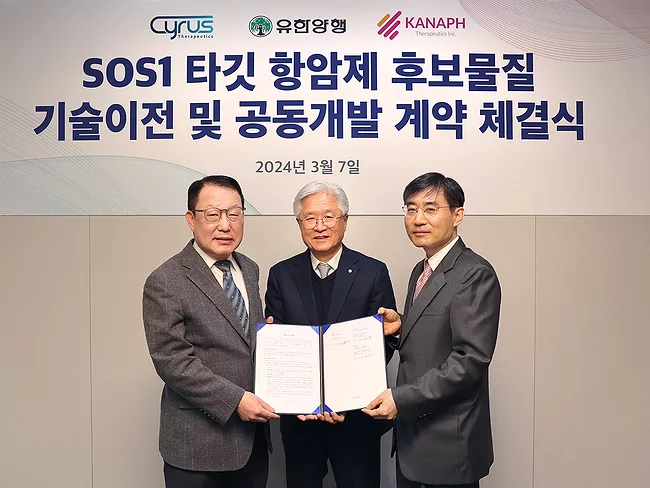
Yuhan Corp., of Seoul, South Korea, added a new potential cancer drug to its oncology pipeline, licensing a son of sevenless homolog 1 (SOS1) inhibitor co-developed by Cyrus Therapeutics Inc. and Kanaph Therapeutics Inc. for ₩208 billion (US$156.3 million).
Yuhan Corp., of Seoul, South Korea, added a new potential cancer drug to its oncology pipeline, licensing a son of sevenless homolog 1 (SOS1) inhibitor co-developed by Cyrus Therapeutics Inc. and Kanaph Therapeutics Inc. for ₩208 billion (US$156.3 million).