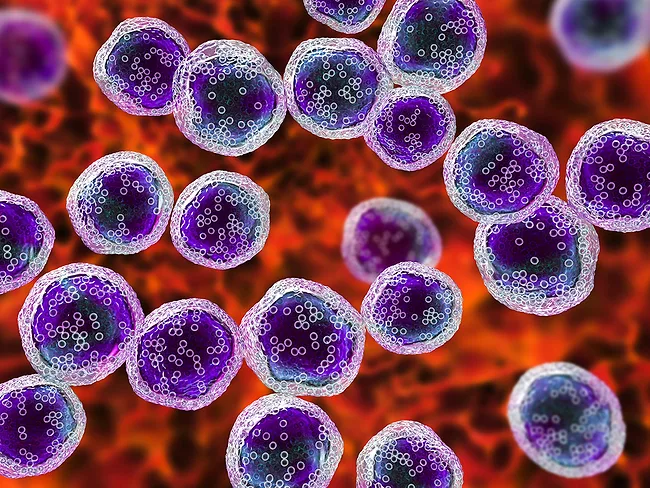
Oncoprotein Myc is known to be dysregulated in about 70% of cancers, and it is highly expressed in leukemias and lymphomas. Targeting Myc has not been successful and is still an unmet clinical need for cancer patients.
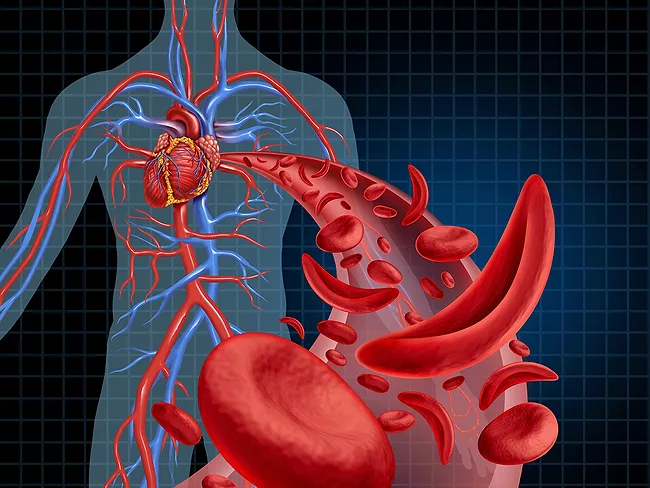
The primary reason for hospitalization of patients with sickle cell disease (SCD) is an acute systemic painful vaso-occlusive episode (VOE), which serves as an antecedent to acute chest syndrome (ACS). It has been previously demonstrated that P-selectin-dependent neutrophil-platelet aggregation and the complement pathway activation contribute to the vaso-occlusive pathophysiology in SCD.
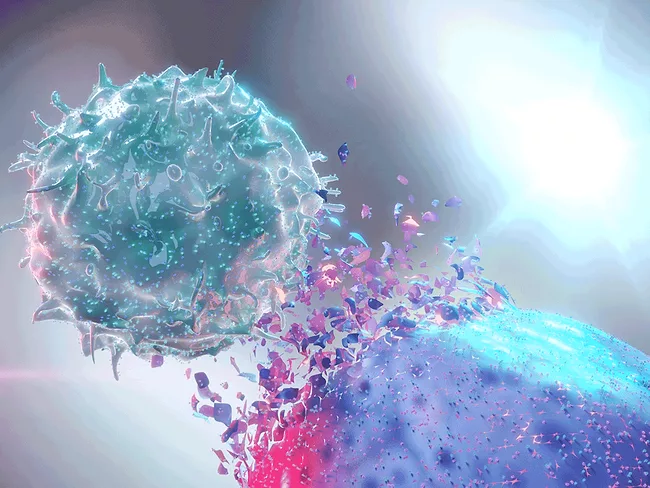
Researchers from Cytovia Therapeutics Inc. have presented preclinical data for the novel natural killer (NK) cell engager antibody CYT-338, which was designed using the proprietary FLEX-NKTM platform. CYT-338 contains a novel FLEX-linker to redirect NK cells expressing NKp46 activation receptor to kill CD38-expressing tumors, including multiple myeloma (MM). It was observed that the addition of CYT-338 led to dose-dependent enhancement iNK and PBNK cytolysis of the MM tumor spheroids.
Acute myeloid leukemia (AML) is characterized by hematopoietic precursors arrested in early stages of development. Approximately 20,000 diagnoses and 11,000 deaths occur annually in the United States despite treatment advances.
Researchers from Kbluebio Inc. and affiliated organizations recently reported the discovery and preclinical evaluation of a novel prohibitin-2 (PHB2) ligand as a potential candidate for the treatment of multiple myeloma (MM).
Approximately 20,000 patients diagnosed with non-Hodgkin lymphomas died in 2022 despite current treatments; 30-40% of these cases involved diffuse large B-cell lymphoma (DLBCL). Monoallelic mutations in histone acetyltransferases (HATs) occur in over 39% of germinal center DLBCLs. Activation of intact wild-type alleles offers an opportunity to overcome the mutated allele.
The histone-lysine N-methyltransferase 2A (KMT2A; also known as mixed-lineage leukemia 1 [MLL1])-fusion proteins require direct interaction with the nuclear scaffolding protein menin in order to form menin-KMT2A complex, which plays a key role in the transcription of multiple leukemogenic target genes. On the basis of this, it is hypothesized that blocking the menin-KMT2A interaction by small-molecule inhibitors could be a promising new strategy for the treatment of KMT2A-altered and NPM1-mutant acute myeloid leukemia (AML).
Type I JAK2 inhibitors improve symptoms and outcomes of patients with myeloproliferative neoplasms (MPNs), but mutant allele JAK2 VF remains unchanged with this therapy. Type II JAK2 inhibitors bind the inactive conformation of the kinase domain and reduce the fraction of JAK2 VF mutant allele in vivo, suggesting an improved approach for JAK2 inhibition. Ajax Pharmaceuticals Inc. presented preclinical data on the type II JAK2 inhibitor AJ1-10502 for the treatment of MPNs.
Hepcidin deficiency in hereditary hemochromatosis (HH) leads to increased absorption of dietary iron and thus iron overload. Rusfertide is a hepcidin mimetic peptide that has shown efficacy at reducing the need for therapeutic maintenance phlebotomy in patients with HH. Researchers aimed to evaluate the benefits of cotreatment with a hepcidin mimetic peptide plus the rusfertide analogue PN-23114 (Protagonist Therapeutics Inc.) at 7.5 mg/kg t.i.w. and phlebotomy in a murine model of HH.

.webp?height=488&t=1670008838&width=650 "Acute myeloid leukemia")