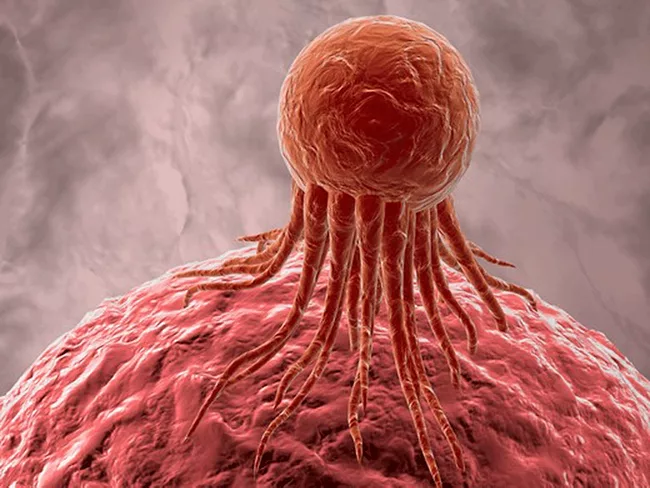
Researchers at China Pharmaceutical University and Shanghai Institute of Materia Medica of the Chinese Academy of Sciences have disclosed short transient receptor potential channel 5 (TRPC5) and/or short transient receptor potential channel 4 (TRPC4) ligands reported to be useful for the treatment of cancer and more.
By combining both tumor diagnosis and treatment in entities such as fluorescent probes, theranostic represents a new avenue in the development of selective, safe and low-risk resistance strategies.
Researchers from China Pharmaceutical University published the design and preclinical characterization of novel potent and selective CDC2-like kinase 2 (CLK2) inhibitors as potential candidates for the treatment of osteoarthritis.
It has been previously demonstrated that while cancer cells with defects in ataxia telangiectasia mutated kinase (ATM) signaling are susceptible to ataxia telangiectasia and Rad3-related (ATR) inhibition following treatment with DNA-damaging drugs, normal cells can tolerate ATR inhibition by activating an ATM-mediated compensatory DNA damage response.
Researchers from China Pharmaceutical University published data detailing the discovery and preclinical evaluation of novel tubulin polymerization inhibitors as potential anticancer agents.
China Pharmaceutical University scientists have published details on the discovery and preclinical evaluation of a glutathione peroxidase 4 (GPX4) and cyclin-dependent kinase (CDK) dual inhibitor being developed for the treatment of cancer.
In efforts to design microtubule polymerization inhibitors with the ability to induce immunogenic cell death (ICD), investigators from China Pharmaceutical University have discovered novel isoquinoline analogues based on podophyllotoxin and diphyllin that act as dual tubulin polymerization and V-ATPase inhibitors.
Alanine-serine-cysteine transporter 2 (ASCT2) is a glutamine (Gln) transporter that is required for cell proliferation and is overexpressed in tumors such as non-small-cell lung cancer (NSCLC). Researchers from China Pharmaceutical University have reported on the discovery and preclinical characterization of a novel series of ASCT2 inhibitors that led to the identification two lead compounds.
Because selective BET inhibitors present better efficacy and safety than pan-BET inhibitors, current research is focused on the development of BD1- or BD2-selective inhibitors.
Multiple sclerosis (MS) is an autoimmune disorder of the central nervous system (CNS) caused by nerve inflammation that affects over 2 million people globally. Bromodomain and extra-terminal domain (BET) proteins, containing BD1 and BD2 bromodomains, are among the proteins dysregulated in MS.