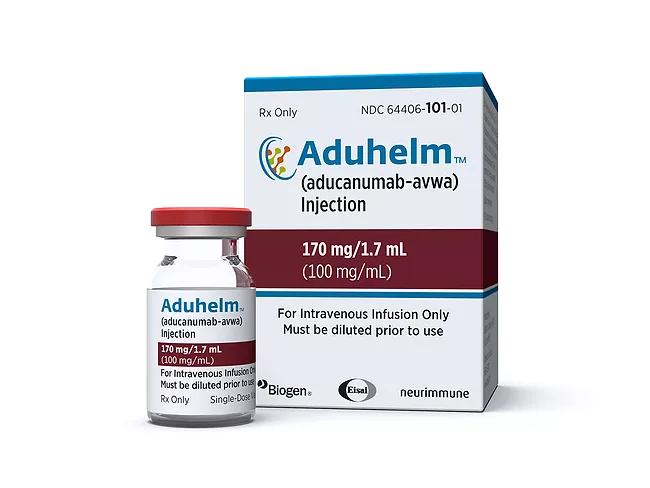
By granting accelerated approval for Biogen Inc.’s Aduhelm (aducanumab) for Alzheimer’s disease (AD), the FDA is “essentially confirming that the beta-amyloid hypothesis has been validated,” Mizuho analyst Salim Syed said in an alert to investors. Shares of Cambridge, Mass.-based Biogen (NASDAQ:BIIB) closed $395.85, up $109.71, or 38.3%, as Wall Street hailed the first new AD therapy to reach the market since 2003.
The significant risks and high costs associated with neurological R&D has tended to keep companies and investors on the sidelines over the past few years. However, thanks to research progress and the development of new technologies, business development and investing in the space is heating up once again.
Almost three years after announcing it would quit development of its humanized immunoglobulin G1 candidate, birtamimab, in light chain (AL) amyloidosis, Prothena Corp. plc is revving the program back up with a new focus, sending shares (NASADQ:PRTA) 30.5% higher to close at $14.35 on Feb. 2.
Yumanity Therapeutics Inc. said that Merck & Co. Inc. is making a big bet on its nascent neurodegenerative disease pipeline, licensing exclusive rights to programs addressing amyotrophic lateral sclerosis (ALS) and a rare type of dementia in a deal with up to $500 million in potential milestone payments. The collaboration also includes an up-front payment, money toward a series C financing and potential royalties on net sales of the licensed programs, though the value of those elements wasn't disclosed.
With an increasingly aging global population, neurological disorders have become a major cause of death and disability worldwide. Despite the significant investments that continue to be made in research and development in the neurological field, the discovery of new drugs targeting many CNS disorders, including Alzheimer’s and Parkinson’s diseases, has proved to be difficult.