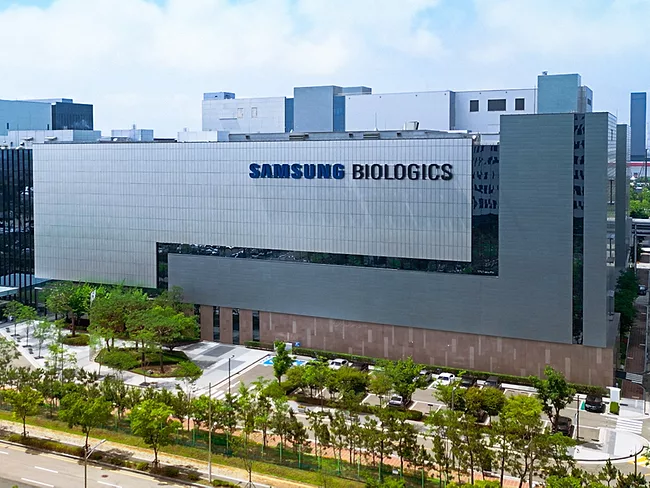
Two South Korean conglomerates – Samyang Holdings Corp. and Samsung Biologics Co. Ltd. – listed their newly spun-off biopharmaceutical units on Korea Exchange’s (KRX) main trading board Nov. 24.
Two South Korean conglomerates – Samyang Holdings Corp. and Samsung Biologics Co. Ltd. – listed their newly spun-off biopharmaceutical units on Korea Exchange’s (KRX) main trading board Nov. 24.
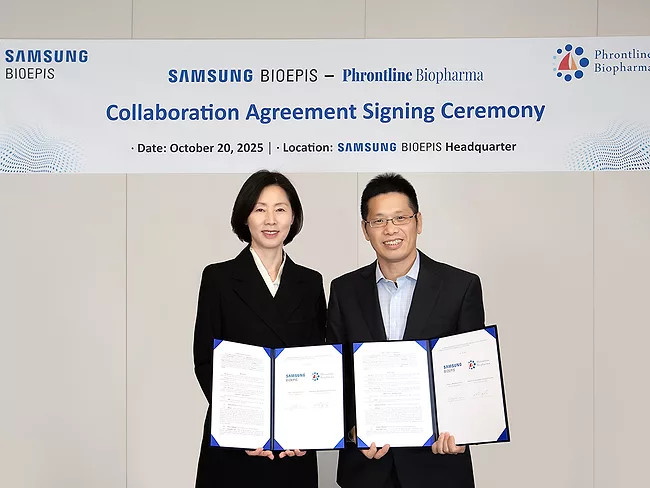
Samsung Bioepis Co. Ltd. announced Oct. 21 the signing of a license deal to codevelop, manufacture and commercialize two of Phrontline Biopharma Suzhou Co. Ltd.’s novel bispecific dual-payload antibody-drug conjugate (ADC) candidates.
Samsung Biologics Co. Ltd. plans to establish a new holding company and to spin off its biosimilar division, Samsung Bioepis Co. Ltd., by October. The corporate restructuring will draw clear lines between Samsung Biologics’ CDMO operations and Samsung Bioepis’ biosimilar business.
Samsung Biologics Co. Ltd. plans to establish a new holding company and to spin off its biosimilar division, Samsung Bioepis Co. Ltd., by October. The corporate restructuring will draw clear lines between Samsung Biologics’ CDMO operations and Samsung Bioepis’ biosimilar business.
Korean pharmaceutical stocks rose across the board May 13, a day after U.S. President Donald Trump signed off on the most favored nation executive order, a drug pricing policy expected to benefit biosimilar makers in the U.S., according to Celltrion Inc.
First quarter 2025 results presentations were the first chance analysts have had to quiz pharma companies in public about their exposure to the threat of U.S. import tariffs and what action they are taking to mitigate the risks.
South Korea’s Ministry of Food and Drug Safety approved 18 biosimilar products in 2024, making it a record year for domestic biosimilar approvals since the agency’s first nod of Celltrion Inc.’s Remsima, a reference product of Remicade (infliximab), in 2012.
First quarter 2025 results presentations were the first chance analysts have had to quiz pharma companies in public about their exposure to the threat of U.S. import tariffs and what action they are taking to mitigate the risks. BioWorld reporters have listened in to the analyst meetings and filleted out responses to the tariff question by CEOs and senior executives, to get an overview of how the sector as a whole is responding. One thing is very clear: While pharmaceuticals are for now exempt from tariffs, the industry has been bracing for their imposition whilst at the same time lobbying strongly against them, on the grounds that drug shortages could result.
South Korea’s Ministry of Food and Drug Safety approved 18 biosimilar products in 2024, making it a record year for domestic biosimilar approvals since the agency’s first nod of Celltrion Inc.’s Remsima, a reference product of Remicade (infliximab), in 2012.