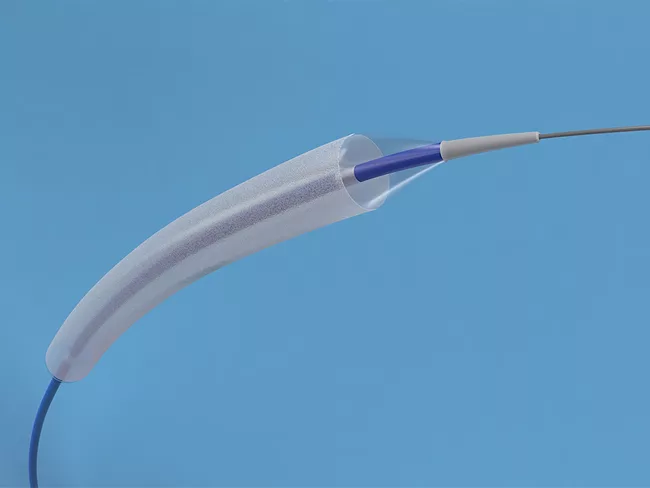
Results of the Shortcut study, presented last week at the Transcatheter Cardiovascular Therapeutics meeting in San Francisco, indicated that cutting balloon angioplasty matched intravascular lithotripsy in coronary artery preparation of calcification for stent placement.
The prevalence of valvular heart disease in the U.S. is tough to peg with any great precision, but an extrapolation of data from a new study would put the number at roughly 10.6 million people, a staggering number when the clinical and fiscal implications are considered.
Stakeholders of all stripes have wondered whether transcatheter aortic valve replacement devices could match their surgically implanted cousins for device durability, but seven-year data from the Partner 3 trial seems to suggest that patients, physicians, payers and regulators need not fret as the topline numbers showed no statistically significant difference for outcomes such as mortality and morbidity.
Medtronic plc’s SPYRAL HTN-ON MED trial demonstrated significantly greater reduction in blood pressure with the Symplicity Spyral renal denervation procedure at three years than a sham procedure in a study presented as featured clinical research at the 2025 Transcatheter Cardiovascular Therapeutics conference in San Francisco.
Cordis Corp. has quite a bit to crow about in this latter part of October 2025 with the unveiling of results of two studies that back the Miami Lakes, Fla.-based company’s Selution SLR drug-eluting balloon (DEB) for both de novo coronary artery stenosis and in-stent restenosis.
Penumbra Inc.’s 'resoundingly positive' results from its STORM-PE trial could see current guidelines for anticoagulant use in pulmonary embolism swept away in favor of mechanical thrombectomy. A deluge of favorable comments by experts and analysts followed the presentation during a late-breaking session at Transcatheter Cardiovascular Therapeutics, the annual scientific symposium of the Cardiovascular Research Foundation, which showed more than 50% improvement in treatment effect from Penumbra’s computer-assisted vacuum thrombectomy system plus anticoagulation compared to anticoagulation alone within two days with no increase in major adverse events.
Doctors and device makers are habituated to the notion that more devices equal better outcomes, but one presenter at this year’s Transcatheter Cardiovascular Therapeutics meeting in San Francisco argued that this is not always the case. James McCabe of Beth Israel Deaconess Medical Center in Boston said cardiologists may want to start thinking about whether a cardiology implant should stay implanted, a mindset that is anything but intuitively attractive to the modern practicing physician.
The first year of data from the TRISCEND II study of the Evoque tricuspid valve by Edwards Lifesciences Corp. confirm the notion that reduced regurgitation has a big impact on patient well-being. While one-year data support the device’s safety, cardiovascular mortality at one year does not seem to decisively favor the device over medical management.
The ACURATE study of the Accurate neo2 TAVR device by Boston Scientific Corp., failed to demonstrate the device is non-inferior to established devices, but the COVID-19 pandemic threw up some roadblocks.
The contest between the two main classes of antiproliferatives for circulatory system use continues as seen in a presentation at this year’s Transcatheter Cardiovascular Therapeutics.
 RSS
RSS