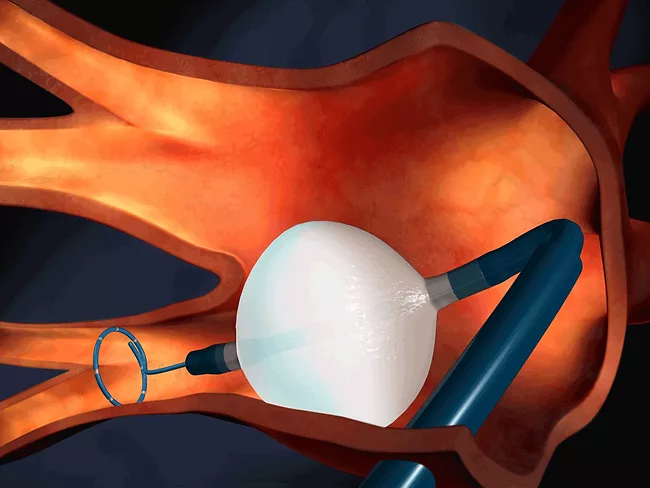
Boston Scientific Corp. has exercised an option as part of a 2020 agreement to acquire Farapulse Inc. in full, folding the startup’s pulsed electric field ablation technology for the treatment of atrial fibrillation and other cardiac arrhythmias into its own electrophysiology portfolio. With a 27% stake in Farapulse already, it will pay about $295 million for the remainder.
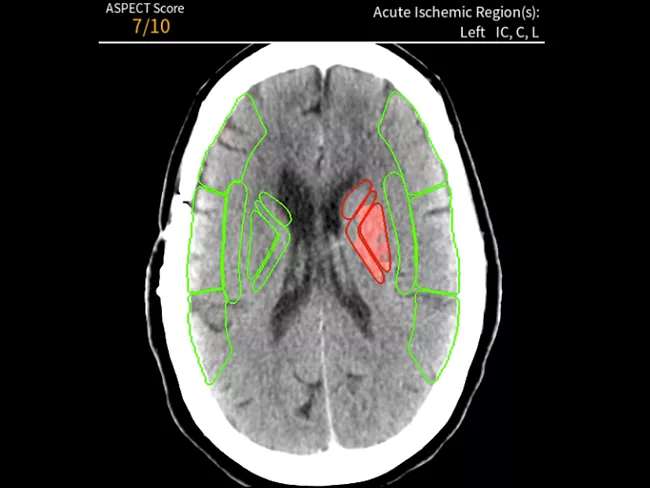
Avicenna.AI has enjoyed a head-spinning series of regulatory nods for its artificial intelligence (AI)-based solutions for serious vascular conditions including stroke, pulmonary embolism (PE) and aortic dissection. The Marseille, France-based company gained CE mark for its tool that quantifies the severity of a stroke based on a CT scan of the brain and displays regions that have suffered infarcts in late May, followed by CE mark and FDA 510(k) clearance for its product that permits emergency triage of PE and aortic dissection from CT-scan imaging in early June.
Medtronic plc won expanded FDA 510(k) approval for its Arctic Front family of cardiac cryoablation catheters for alternative treatment of recurrent symptomatic paroxysmal atrial fibrillation (AF) as an alternative to the current standard first-line treatment, antiarrhythmic drug (AAD) therapy. The Arctic Front family of catheters are the first catheter ablation devices in the U.S. approved to help physicians improve AF patient outcomes before drug failure. They have also been proven to shorten the time to diagnosis, according to Dublin-based Medtronic.
Cleerly Inc. snapped up $43 million in a series B fundraising round to develop artificial intelligence (AI)-enhanced imaging to better understand heart disease and more accurately project patient outcomes. Vensana Capital led the round with participation from the American College of Cardiology, Cigna Ventures, Dititx Partners, Lrvhealth (formerly Long River Ventures), New Leaf Venture Partners and returning investors.
Paris – Cardinor AS has secured $1.44 million to commercialize development of a novel ELISA (enzyme-linked immunosorbent assay) blood test that uses secretoneurin as a blood-based biomarker for heart disease and sudden cardiac arrest. London-based Intuitive Investments Group plc participated in this third seed round, along with existing Belgium and German investors.
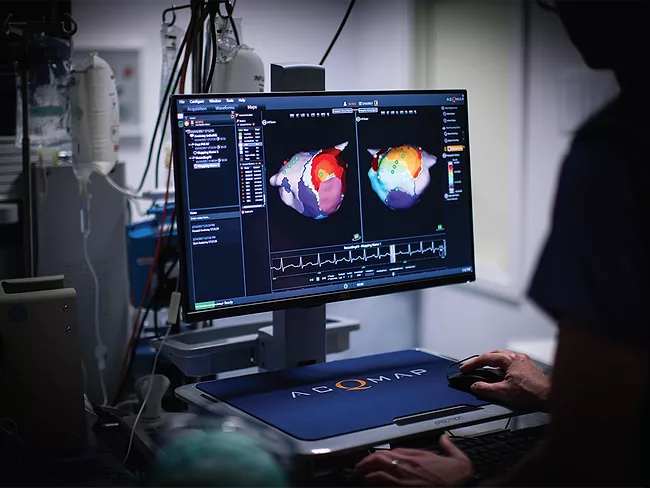
Acutus Medical Inc. scored big with regulators in recent weeks. The company, which focuses on devices to diagnose and treat cardiac arrhythmias, received FDA approval to launch an investigational device exemption clinical trial for its Acqblate Force sensing ablation catheter and system in atrial fibrillation just two weeks after gaining CE mark approval for a broad suite of electrophysiology products.
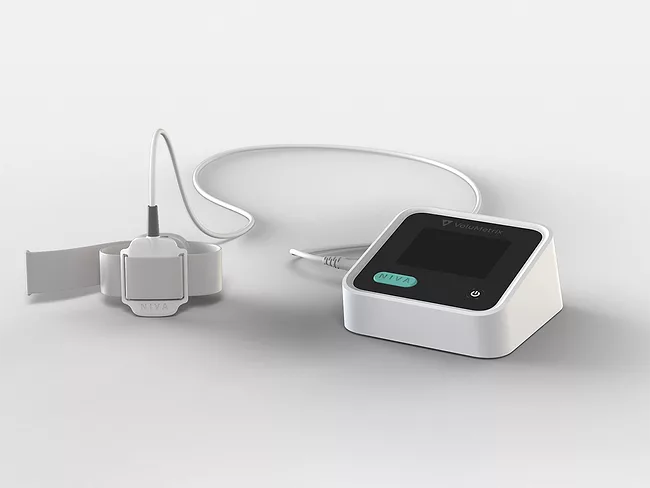
The FDA granted breakthrough device designation to Volumetrix LLC for its NIVAHF monitoring system for heart failure. The device is the first application of the company’s noninvasive venous waveform analysis (NIVA) technology, which captures and analyzes vital information about blood volume to assess patient status.
The controversy over the use of paclitaxel in devices for the peripheral vasculature has taken a significant bite out of sales, but a new study serves to help reverse the narrative regarding mortality. According to a study of more than 168,000 Medicare patients, stents and angioplasty balloons coated with paclitaxel (PTX) were non-inferior to non-coated devices for mortality out to nearly three years, a finding that may encourage clinicians to return to normal utilization patterns and thus help to restore sales volumes.
Neovasc Inc. has hit pause on its Tiara transfemoral mitral valve replacement (TF) program and is cutting its workforce by more than 40%, citing the additional time and substantial investment required to develop the program and the associated costs. The changes are expected to extend its cash runway from about 18 months to more than three years. The changes were implemented with about 18 months to remain solvent as part of a series of actions to focus on enhancing current shareholder value and focusing investments on near-term value drivers, namely the Reducer stent and the Tiara transapical mitral valve replacement (TA) system.
PARIS – Affluent Medical SAS aims to raise $40 million on the Euronext Paris regulated market to finalize the development of three minimally invasive prostheses in urology and interventional cardiology. The Aix-en-Provence, France-based med-tech will issue 3,387,210 new shares. Affluent has already received subscription pledges exceeding $24 million, including $12 million from funds managed by Paris-based Truffle Capital.
 RSS
RSS